I have worked with wool sweaters for many years, and I often hear one question from brand teams: what is australian wool? I understand why this question matters. Australian wool has a strong name in the global knitwear industry. Many brands connect it with softness, warmth, comfort, and premium quality. Yet I also know that the name alone does not tell the full story.
I see Australian wool as a fiber source with many possible grades and uses. It can be used for fine-gauge sweaters, luxury knitwear, outdoor layers, and structured winter products. Yet the final quality depends on more than the country of origin. I need to check the sheep breed, fiber micron, wool grade, yarn spinning, twist, ply, finishing, and garment structure. These details decide whether the final sweater feels soft, holds its shape, and performs well after real wear.
I usually explain this topic with a simple AIDA path. I first get attention by showing Australian wool and Australian merino wool samples side by side. I build interest by explaining the difference between origin, breed, and fiber grade. I create desire by showing how the right wool can improve softness, warmth, breathability, and product value. I guide action by helping the brand choose the right yarn for the right sweater, instead of using Australian wool only as a marketing phrase.
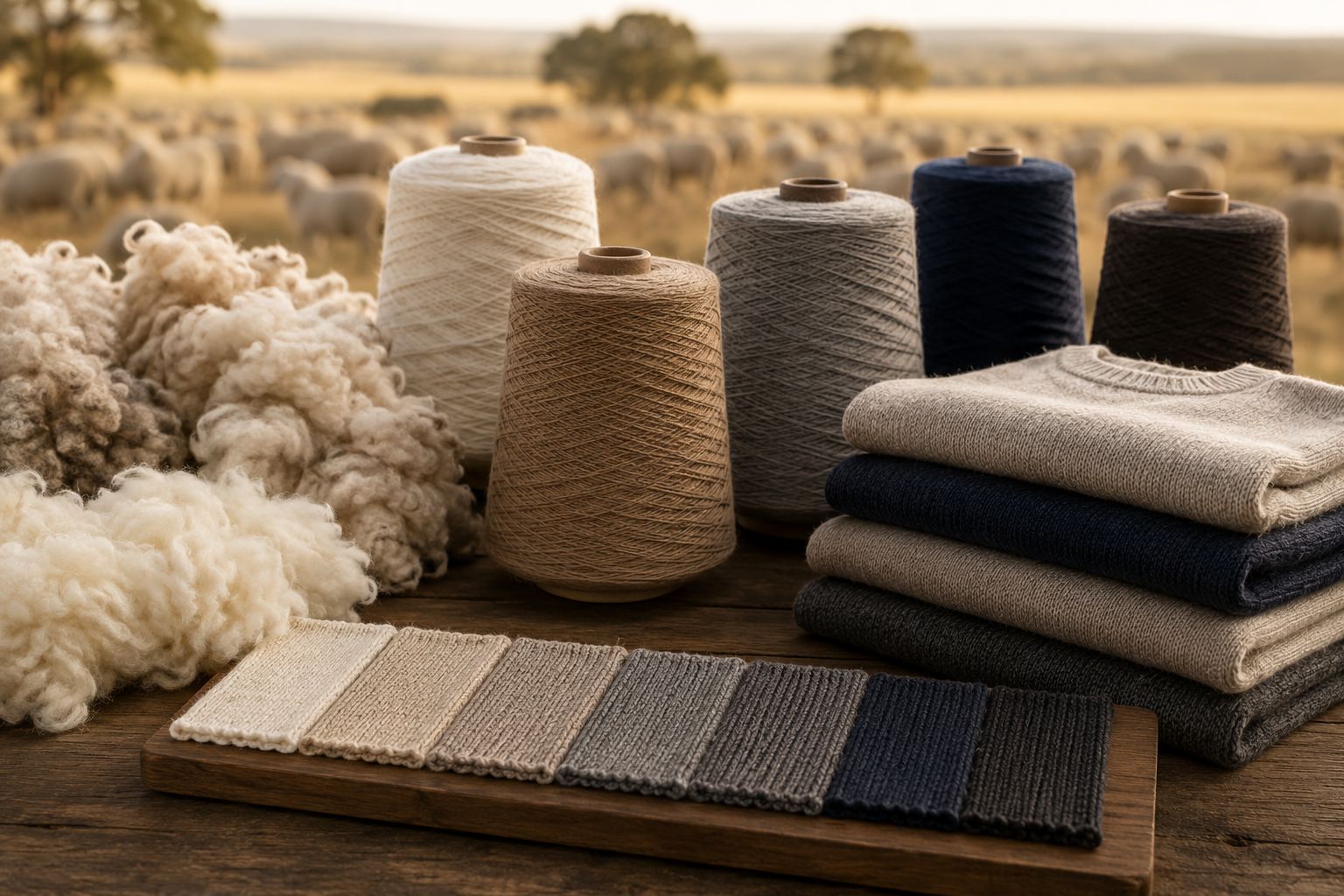
Australian wool means wool that comes from sheep raised in Australia. It is not one single fiber type. It includes different wool grades, different micron levels, and different end uses. Australian merino wool is the most famous and premium category, but it is still only one part of Australian wool. This difference is important for product naming, marketing, and customer trust.
This is where the PAS problem often appears. The problem is that many buyers and consumers mix Australian wool, Australian merino wool, and regular wool together. The pain is that unclear language can create wrong expectations. A customer may expect every Australian wool sweater to feel like ultra-fine merino. A brand may then face complaints about softness, pilling, price, or care. The solution is to explain the fiber clearly and develop the product honestly.
| Point I Check | Why It Matters | What I Look For |
|---|---|---|
| Fiber Origin | It supports the material story and supply chain message. | I check whether the wool is Australian and whether it is traceable. |
| Sheep Breed | Breed affects fiber character and final hand feel. | I check whether the yarn is merino or another wool type. |
| Micron Level | Finer fibers usually feel softer against the skin. | I match micron to the product use and price point. |
| Yarn Twist and Ply | Yarn engineering affects pilling, strength, and recovery. | I balance softness with durability. |
| Finishing | Finishing changes hand feel and wash stability. | I check washing, softening, and superwash treatment if needed. |
| Testing | Testing helps control bulk quality. | I review pilling, shrinkage, and wash recovery. |
Is Australian Wool Good Quality?
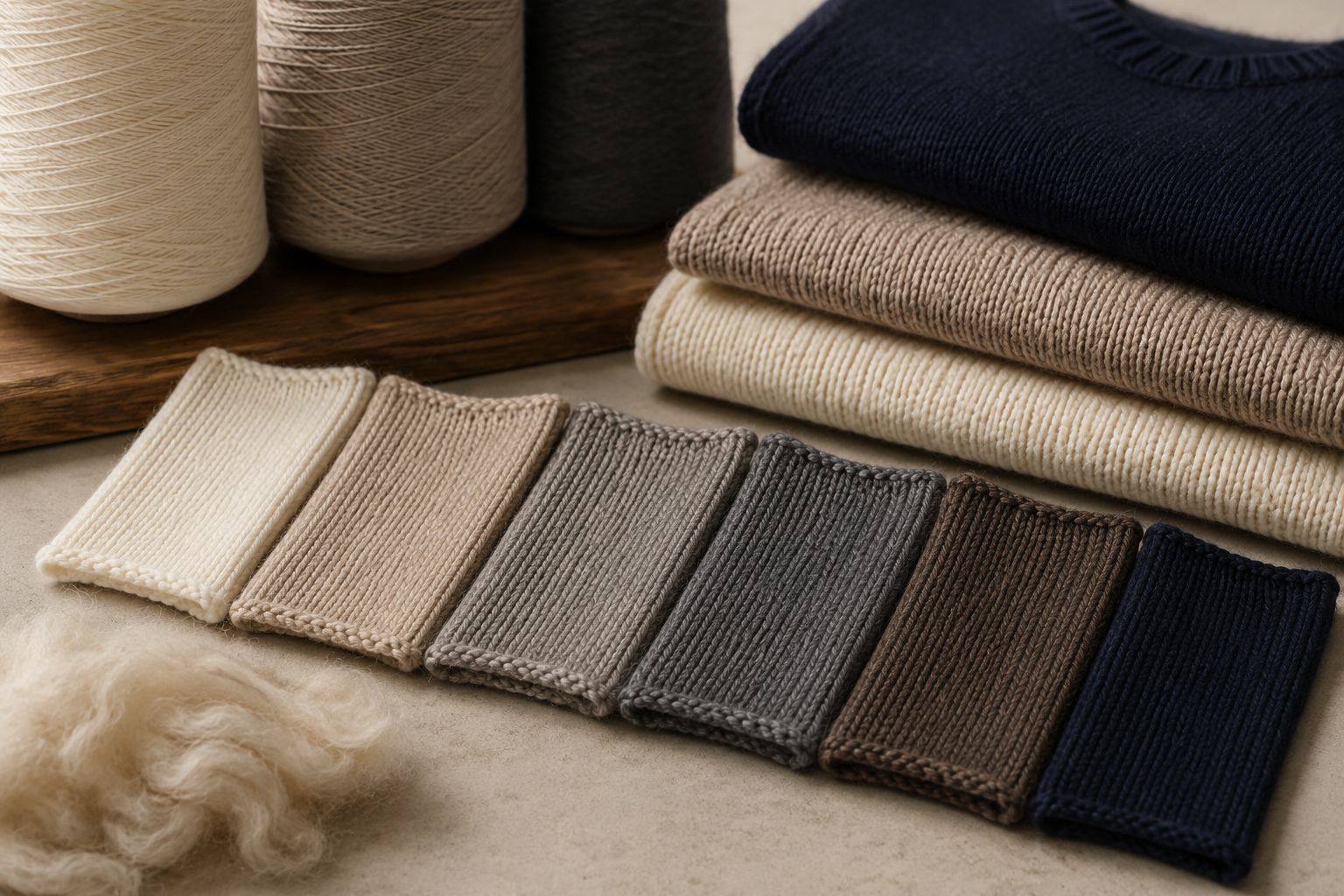
Yes, Australian wool can be very good quality, especially when it is fine Australian merino wool. I value it because it can offer softness, warmth, breathability, and good comfort close to the skin. These qualities are important for premium menswear sweaters, cardigans, fine-gauge pullovers, and refined winter layers.
Still, I never judge quality by origin alone. Good Australian wool must be selected and processed correctly. A fine fiber can lose value if the yarn spinning is poor. A premium yarn can fail if the stitch structure is wrong. A beautiful sample can still disappoint customers if it pills badly, shrinks after washing, or loses shape after wear. This is why I connect fiber quality with yarn engineering and garment development.
Dive Deeper: When I review Australian wool for a sweater program, I start with micron because micron has a direct effect on softness. A lower micron fiber usually bends more easily against the skin. This can reduce prickly feeling and improve comfort. Yet I also check fiber length and strength because these points affect yarn quality. If fibers are too short or inconsistent, the yarn surface may become hairier. This can increase pilling or reduce surface cleanliness. Spinning also matters. A well-spun yarn can bring out the best parts of the fiber. Twist and ply are also important. A very soft low-twist yarn may feel luxurious at first touch, but it may pill faster or relax too much. A stronger twist can improve stability, but it may feel less soft. I need to balance these factors for the product target. I also check finishing. Washing, softening, and superwash treatment can change the final hand feel and wash performance. So when a brand asks if Australian wool is good quality, my answer is yes, but only when the fiber grade, yarn structure, finishing, and testing all support the same product goal.
For a high-end brand, this detail matters because the customer does not only buy a fiber name. The customer buys the full wearing experience. If the sweater feels soft, keeps shape, and stays comfortable after use, the material story becomes stronger. If the sweater fails after a few wears, the origin story cannot save the product.
Is Australian Wool the Same as Merino Wool?
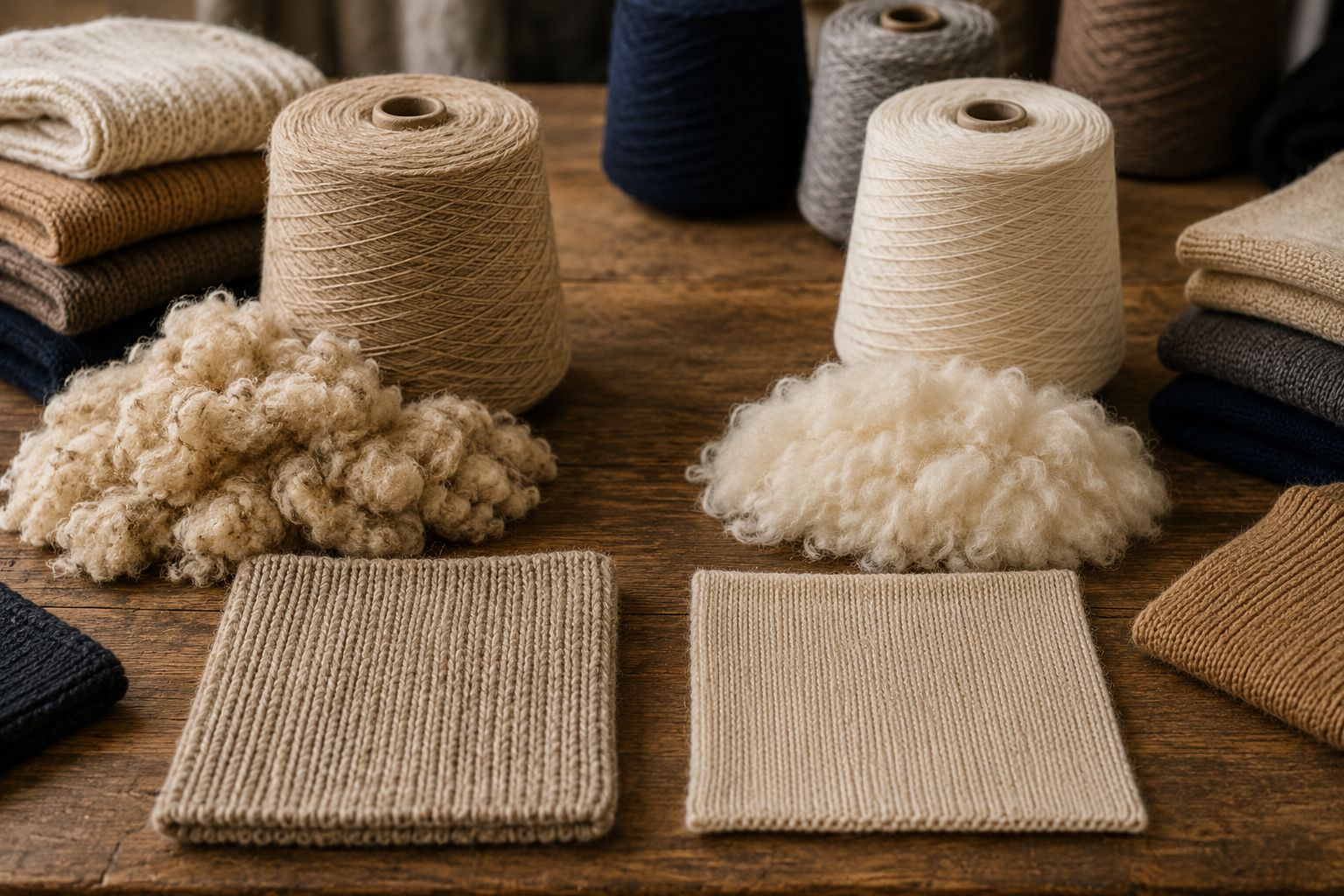
Australian wool is not exactly the same as merino wool. Australian wool is an origin term. It means the wool comes from Australia. Merino wool is a breed and fiber category term. It comes from merino sheep and is known for fine fibers and soft hand feel. Australian merino wool means merino wool produced in Australia. This is the category that many premium knitwear brands want.
This distinction is important. If I label a sweater as Australian wool, I should not let customers assume it is always ultra-fine merino. If I label it as Australian merino wool, then the product message becomes more specific. If the garment is a blend, I should also explain the blend clearly. Clear language helps the brand avoid confusion and build trust.
Dive Deeper: I have seen product teams use fiber names too loosely. They may write “Australian wool” because it sounds premium, even when the yarn is a blend or when the wool is not fine merino. This can create a gap between marketing and product reality. I do not think that is good for long-term brand value. A product name should match the material. If the sweater uses Australian merino wool, the brand can explain softness, temperature comfort, and premium fiber selection. If the sweater uses a wool blend, the brand can explain why the blend exists. Maybe the blend improves strength, reduces cost, supports easier care, or creates a specific texture. These are all valid reasons, but they should be presented honestly. I also think brands should avoid making Australian wool sound automatically better than every other wool in every situation. A chunky winter sweater may need a stronger wool. A fine business sweater may need fine Australian merino. A luxury lightweight sweater may need extra-fine merino. The best communication is specific, honest, and connected to the product use.
For me, this is also a consumer education issue. Customers are becoming more careful with fiber claims. They want to know what they are paying for. A clear distinction between Australian wool, Australian merino wool, and wool blends can reduce returns and improve customer confidence.
Which Wool Is Famous in Australia?
Australian merino wool is the most famous wool from Australia. It is widely used in premium knitwear because it can be fine, soft, breathable, and comfortable against the skin. I often consider it for high-end sweaters, fine-gauge cardigans, lightweight crew necks, and business knitwear that needs a refined look.
Yet I do not use Australian merino wool in every product automatically. The product use must guide the choice. If the sweater needs a very soft skin feel, fine Australian merino can be an excellent option. If the sweater needs a heavy winter structure, a different wool grade or a blend may work better. If the sweater needs more durability, I may adjust twist, ply, gauge, or blend composition.
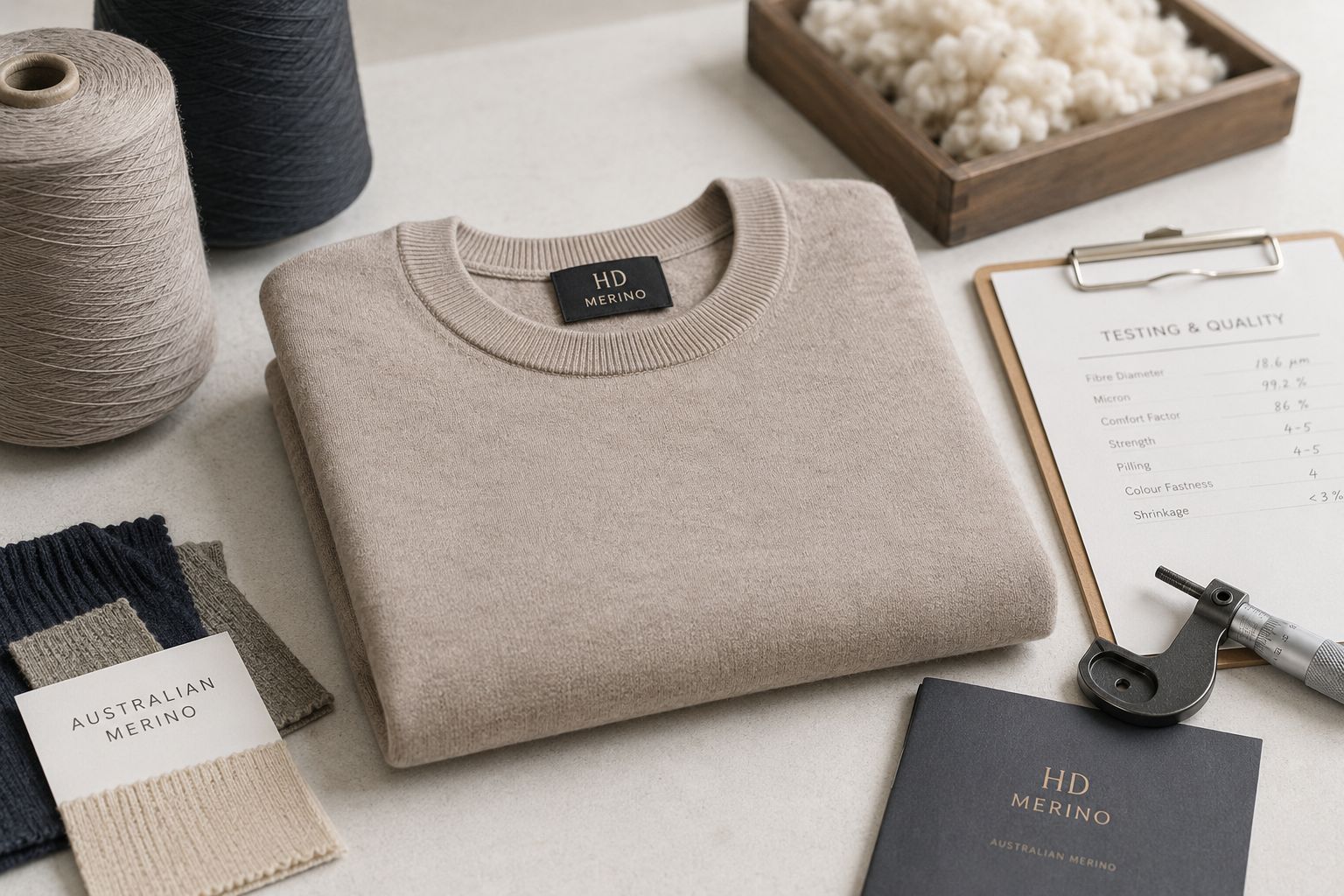
Dive Deeper: Australian merino wool has strong advantages, but the factory must turn those advantages into a stable garment. This is where fully-fashioned knitwear becomes important. In fully-fashioned production, I shape the panels during knitting instead of cutting them from larger knitted fabric. This can reduce material waste and improve garment balance. It can also reduce bulky seam areas and improve comfort at the shoulder, armhole, and side seam. For premium merino sweaters, this matters because the customer expects a clean fit and a soft wearing experience. I also choose gauge carefully. A fine-gauge merino sweater can feel smooth and elegant. A heavier gauge can feel warmer and more textured, but it may also create more weight and movement. After knitting, finishing becomes another key step. Spinning, washing, softening, and possible superwash treatment can affect hand feel and care performance. I also use lab testing to control risk. Pilling tests help me understand surface durability. Shrinkage tests help me check wash stability. If I want a sweater to feel premium and perform well, I cannot rely on fiber reputation alone. I must control the full process from yarn to final inspection.
Fully-fashioned construction also supports the sustainability story. When panels are shaped directly, there can be less cutting waste than some cut-and-sew methods. This is useful for brands that care about both luxury quality and responsible production. It also helps the sweater keep a cleaner shape over time when the yarn and tension are controlled well.
For brand development, I would start with positioning. If the collection is a premium business line, I may suggest fine Australian merino. If the collection is a winter capsule, I may compare merino with a stronger wool or wool blend. If the product must be washable, I may review superwash options and care testing. If the customer expects a soft hand feel, I may focus on lower micron yarn and a smooth finish. If the product needs higher durability, I may strengthen the yarn structure.
I also look at cost and commercial balance. Australian merino wool can support a higher price point, but the product must justify that price through touch, fit, performance, and storytelling. A brand should not choose it only because the name sounds premium. The sweater must deliver the promise.
Consumer expectation is another key point. Many customers think premium wool should never pill, never shrink, and never change shape. I understand this expectation, but wool is still a natural fiber. The product needs the right care. The brand should explain care in simple words. It should also explain why the yarn was chosen. Good education reduces complaints and helps customers enjoy the garment longer.
This is the PAS issue I often see. The problem is that Australian wool can be used as a broad premium term. The pain is that customers may expect every Australian wool product to behave like the finest merino sweater. The solution is clear product naming, correct yarn selection, strong development testing, and honest communication. When these parts work together, Australian wool becomes a real product advantage, not just a label.
Conclusion
I see Australian wool as one of the important premium fiber sources in global knitwear. It is especially famous because of Australian merino wool. Yet Australian wool and merino wool are not the same thing. Australian wool is about origin. Merino wool is about sheep breed and fiber type. Australian merino wool is the premium category many brands use for soft, refined, and comfortable sweaters.
If someone asks me what is australian wool, I would answer in a practical way. It is wool from Australia, and its value depends on fiber grade, micron, yarn processing, knit structure, finishing, and testing. A good Australian wool sweater does not come from origin alone. It comes from the right fiber choice, the right yarn engineering, and the right garment construction.
As a manufacturer, I believe brands should choose Australian wool with a clear product strategy. I would match the fiber to the sweater’s purpose. I would review softness, durability, pilling risk, shrinkage, cost, sustainability, and customer expectations. I would use fully-fashioned construction when it supports the design and quality target. I would also test the garment before bulk production. This is how Australian wool becomes more than a material name. It becomes a reliable sweater with real comfort, real performance, and real commercial value.