Struggling with unclear sweater terminology? Miscommunication can derail your development schedule and lead to costly sampling errors. This guide provides the clarity you need for seamless production.
Sweaters are defined by their knit structure and construction method. Key types include fully-fashioned (knitted to shape) and cut-and-sew. Classifying them by style (pullover, cardigan), neckline (crew, v-neck), and stitch (jersey, rib, cable) ensures precise communication with your manufacturer.
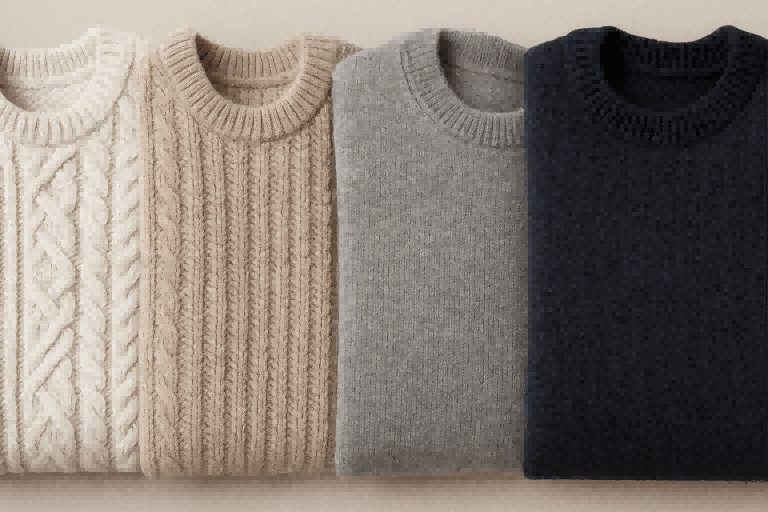
Getting the basics right is just the start. I've seen firsthand that the real success in knitwear development comes from understanding the nuances that separate a good sweater from a great one. These details are what prevent misinterpretation between a brand's vision and the factory's execution. Let's dive deeper into what those differences really are, so your next collection is produced exactly as you imagined it.
Sweater vs. Sweatshirt: What's the Real Manufacturing Difference?
Getting your terms wrong wastes time and money. When a tech pack calls for a "sweater" but means a fleece sweatshirt, the entire sourcing process goes in the wrong direction.
From a manufacturing standpoint, a sweater is a knit-to-shape garment made from yarn (fully-fashioned), while a sweatshirt is made from knitted fabric that is cut and sewn together. This fundamental difference affects machinery, production time, and cost, making the distinction crucial for development.
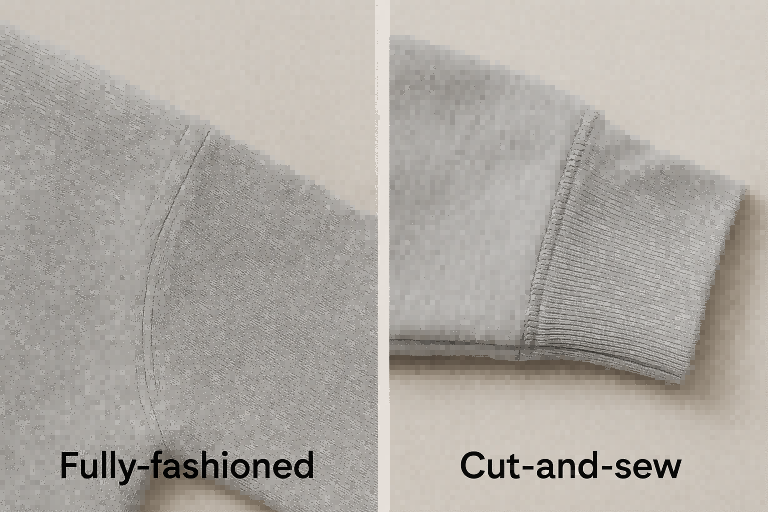
In my 13 years in this industry, the most common point of confusion I see is the mix-up between sweaters, knitwear, jumpers, and sweatshirts. While brands might use these terms interchangeably for marketing, in production, they mean very different things. A sweatshirt typically uses fleece or French terry fabric, which is created on large circular knitting machines, then cut into pattern pieces and sewn together like a T-shirt. A true sweater, which is our specialty at HD Merino, is almost always a "fully-fashioned" product. The individual panels (front, back, sleeves) are knitted into their precise shapes on flatbed knitting machines, then linked together. This process minimizes yarn waste and creates a more refined, high-quality garment. Understanding this distinction is the first step to effective communication with your supply chain partner.
How Do Different Style and Construction Elements Define a Sweater?
Developing a new sweater style feels overwhelming when you can't name the parts. You need a shared vocabulary with your manufacturer to turn a design concept into a physical sample accurately.
A sweater's identity is built from its core structure, neckline, and sleeve type. Clear communication requires breaking down your design into these specific elements, such as identifying a garment as a "V-neck pullover with raglan sleeves," which provides an exact blueprint for production.

To ensure nothing is lost in translation, we need to speak the same language. I always advise our brand partners to classify their development needs across several dimensions. This framework makes tech packs and sampling requests incredibly clear.
Key Classification Dimensions
| Category | Common English Terms | Description |
|---|---|---|
| Style Structure | Pullover, Cardigan, Vest, Hoodie, Poncho | The overall silhouette and function of the garment. |
| Neckline Structure | Crew neck, V-neck, Turtleneck, Mock neck, Polo | Defines the shape and fit around the neck. |
| Sleeve Structure | Set-in sleeve, Raglan sleeve, Dolman sleeve | Determines how the sleeve is attached to the body, affecting fit and style. |
Regional terms also matter. In the UK, "jumper" is common, while "sweater" is standard in the US. Knowing these nuances helps in defining SKUs correctly for your target market.
How Do Different Knit Stitches Define a Sweater's Style and Function?
The same sweater silhouette can feel completely different with a change in stitch. A simple crew neck can be a lightweight basic or a chunky, textured statement piece based entirely on its knit structure.
The knit stitch determines a sweater's texture, drape, thickness, and elasticity. Common stitches like Jersey create smooth surfaces, Ribs offer stretch, Cable adds classic texture, and Jacquard allows for complex patterns. Your choice of stitch is fundamental to achieving your target aesthetic.
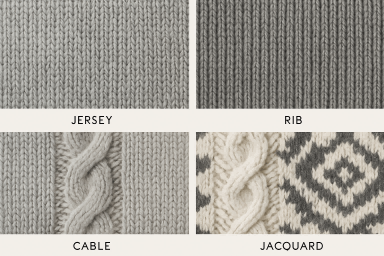
The magic of knitwear is how yarn and stitch work together. A beautiful cable stitch, for example, tells two completely different stories depending on the yarn. In a chunky, rustic yarn, it feels heavy and traditional. But in a fine-gauge Merino wool, that same cable structure becomes a subtle, elegant detail that adds a touch of luxury. This is where we can add immense value. By understanding a brand's target customer and price point, we can recommend the perfect combination of yarn, gauge (GG), and stitch structure. For instance, a 14GG jersey knit is perfect for a sleek, corporate commuting piece, while a 7GG chunky rib is better suited for a cozy, weekend style.
How Can You Streamline the Sweater Development Process?
Slow sample turnarounds and inaccurate prototypes are major frustrations. These delays often happen because key information is missing at the start, forcing a lot of back-and-forth communication to fill in the gaps.
To improve sampling efficiency, provide your manufacturer with a clear development brief upfront. This should include a tech pack or reference image, target yarn, desired gauge (GG), any special finishing requirements, and information about your target market. This clarity minimizes guesswork and accelerates production.
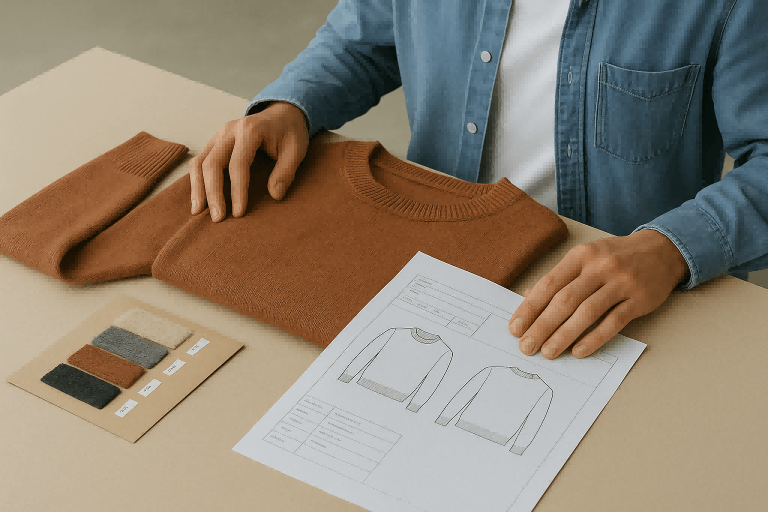
As a manufacturer, my goal is to make your job easier. The more information we have at the beginning of a project, the faster we can deliver a perfect first prototype. At HD Merino, our in-house development team can work from a simple sketch, but for maximum speed and accuracy, an ideal brief includes:
- Design Details: A tech pack, sketch, or even a reference garment.
- Yarn & Gauge: Target yarn composition (e.g., 100% RWS Merino) and gauge (e.g., 12GG). If you're unsure, we can recommend options.
- Special Requirements: Any performance needs like machine-washable, anti-pilling, or certifications.
- Target Audience: Who is this for? Answering this helps us guide you on fit, yarn choice, and durability.
- Color & Dye: Number of colors and preferred method (yarn-dyed for heathers, piece-dyed for solids).
With this information, we can move quickly from concept to a physical sample that meets your vision.
Conclusion
Mastering sweater terminology and providing clear briefs are key. This shared understanding between brand and manufacturer turns vision into high-quality knitwear efficiently and accurately.