As a brand manager, you hear about wool's natural performance, including fire resistance. But you need to know what you can legally and ethically claim. Misrepresenting a material's properties can damage your brand's reputation.
Yes, Merino wool is naturally fire-resistant. Its high nitrogen and water content mean it requires more oxygen than is available in the air to burn. It does not melt or drip like synthetics and is often self-extinguishing when the flame source is removed.
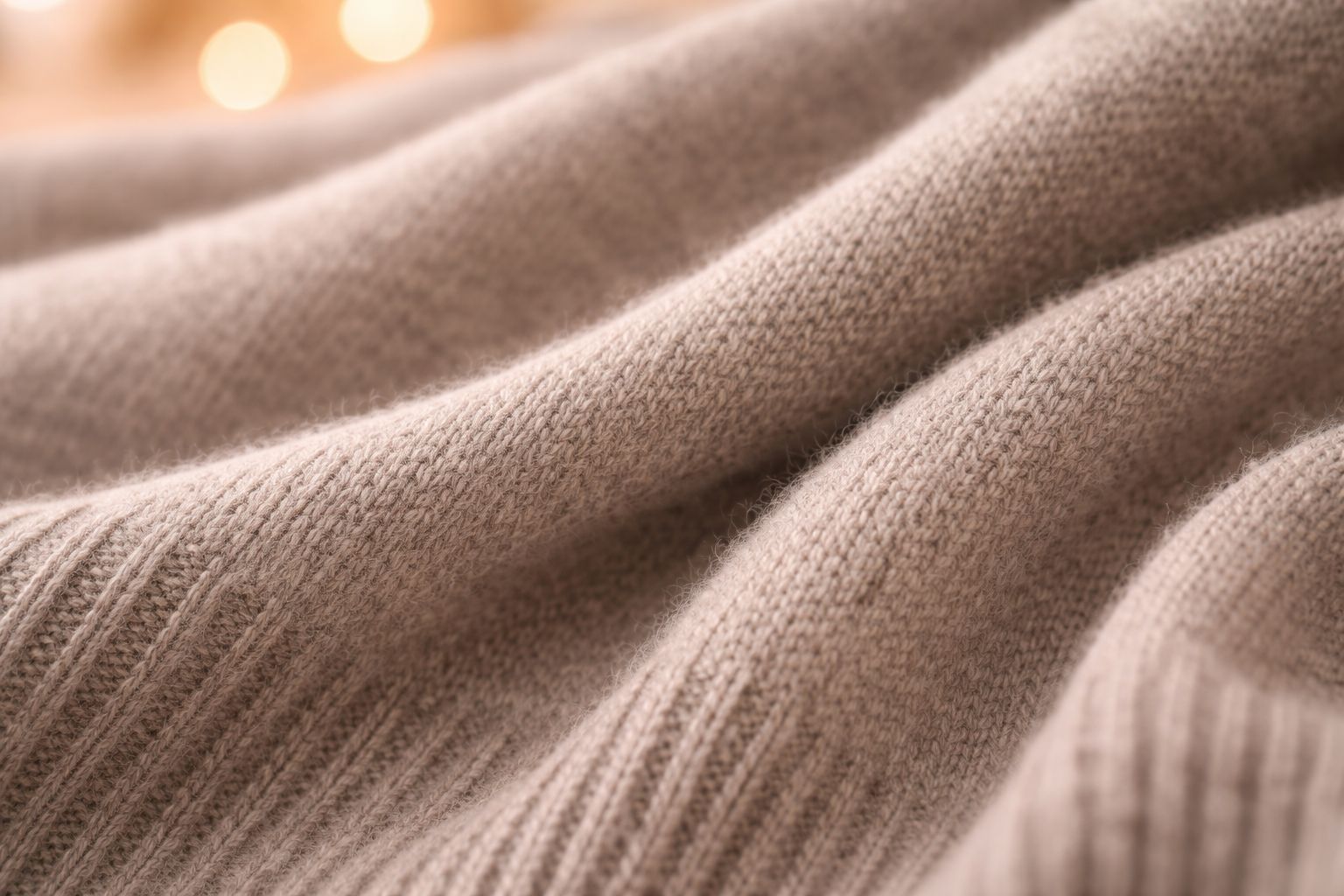
This is a topic I discuss frequently with Product Development Managers like Oliver. He needs to communicate the value of his brand's Merino wool sweaters accurately, both internally to his team and externally to customers. It's not about selling a sweater as safety equipment, but about understanding and appreciating the inherent qualities of a premium natural fiber. The difference between "fire resistant" and "fire retardant" is huge, and getting it right is key to building trust. Let's break down what this really means for your products.
Does wool catch fire easily?
You're comparing different fibers for your collection. You see cotton shirts and polyester jackets, and you wonder how wool stacks up against them in a worst-case scenario, like a stray spark from a campfire.
No, wool does not catch fire easily. Unlike cotton, which ignites quickly, wool's natural protein structure and moisture content make it significantly harder to set alight. It has a much higher ignition temperature, giving you more time to react.
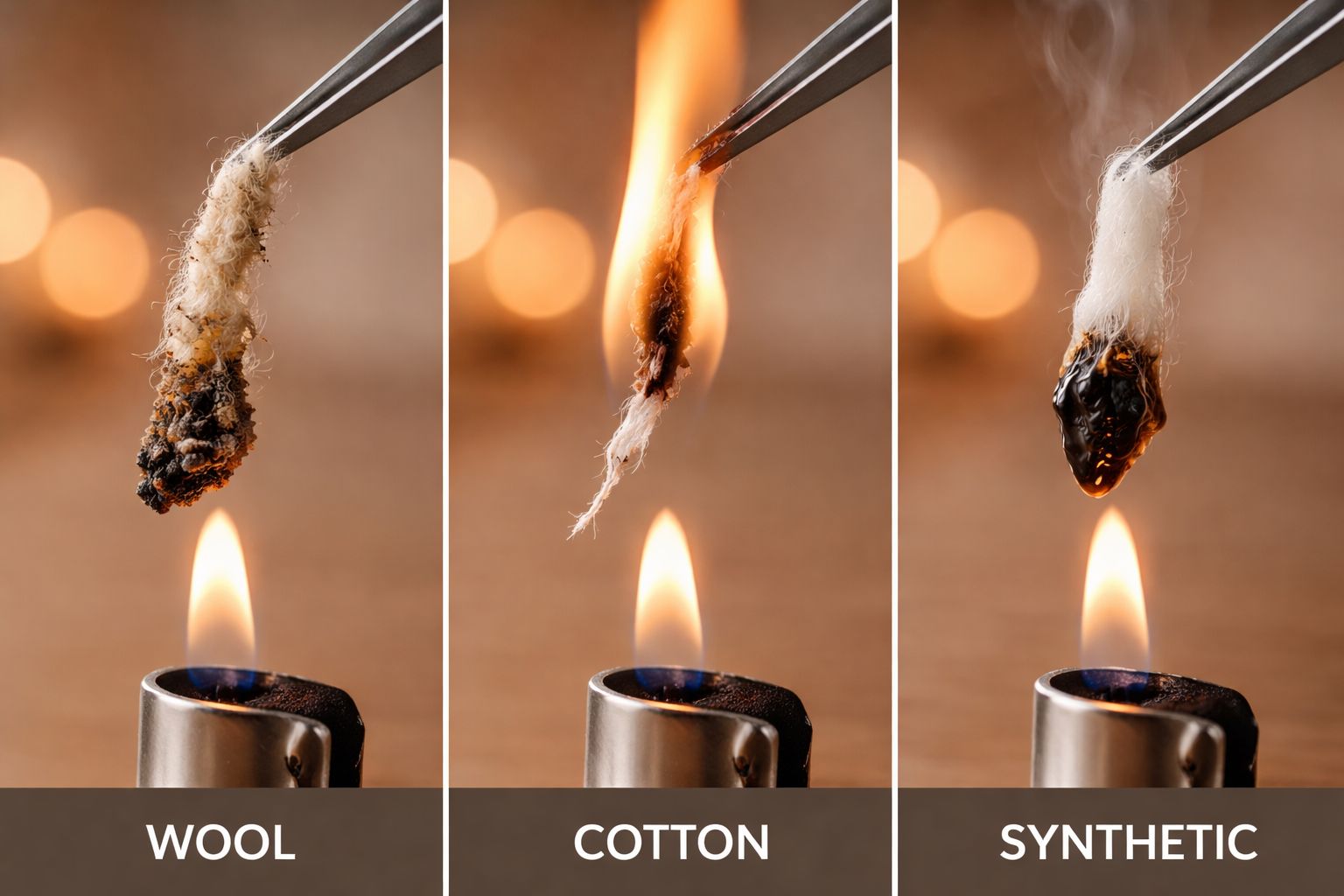
To understand why, we have to look at the fiber itself. Wool is a keratin protein, just like human hair. It has two key features that give it this natural fire resistance. First, it's high in nitrogen. Second, it can hold up to 30% of its own weight in water vapor within its structure. When exposed to a flame, this combination acts as a natural defense system. The heat first has to burn off all the water, which takes a lot of thermal energy. Then, its high nitrogen content and the need for a high percentage of oxygen make it difficult to combust. In the rare case that it does burn, it doesn't melt or drip. Instead, it forms an insulating, brittle char that tends to stop the spread of the flame. This is why it's often described as self-extinguishing.
| Fiber | Ignition Temperature | Burning Behavior |
|---|---|---|
| Merino Wool | ~570-600°C | Chars, self-extinguishes |
| Cotton | ~255°C | Burns quickly, continues to glow |
| Polyester | ~450°C | Melts, drips, can cause severe burns |
Is wool considered fire retardant?
You see safety labels on products and hear the term "fire retardant" used for things like furniture or workwear. It sounds impressive, but you need to know if you can apply that term to your brand's wool sweaters.
No, wool is not considered "fire retardant" unless it has been chemically treated to meet specific industrial standards. The correct term for its natural property is "fire resistant." This distinction is critical for brand communication and compliance.
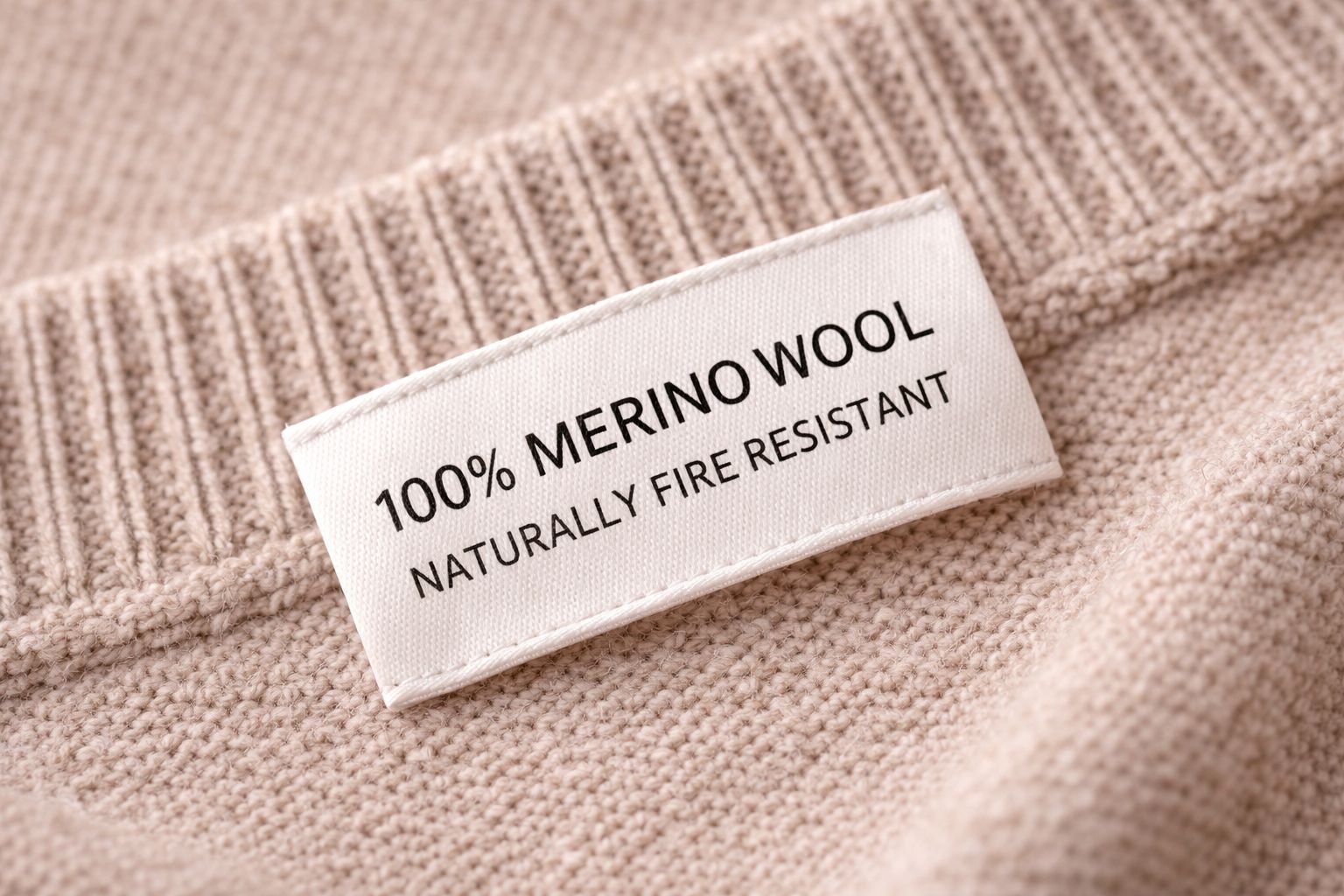
When I work with a product manager like Oliver, this is one of the most important points we clarify. "Fire retardant" implies a manufacturing process where chemicals are added to a material to slow or prevent combustion. This is common in textiles used for upholstery, children's sleepwear, or firefighter uniforms. Merino wool's ability to resist fire is inherent; it's part of its DNA. No chemicals are added. For brands, this is both a benefit and a responsibility. The benefit is that you can talk about its natural safety without the environmental concerns of chemical treatments. The responsibility is to be precise with your language. Promoting a sweater as "fire retardant" would be a false claim. Instead, we advise brands to frame it as an auxiliary benefit of the natural fiber. You can say something like, "Crafted from 100% Merino wool, a fiber naturally resistant to fire," which is honest, accurate, and builds consumer trust by educating them.
How fire-resistant is a Merino wool sweater?
You know the fiber is resistant, but a sweater isn't just a fiber. You're wondering if the way the sweater is made—the thickness, the knit, any blended materials—changes how it will perform when exposed to heat.
A sweater's fire resistance depends heavily on its construction. A tightly knit, 100% Merino wool sweater will perform significantly better than a loose-knit sweater or one blended with flammable synthetic fibers like nylon or polyester, which would weaken its natural properties.
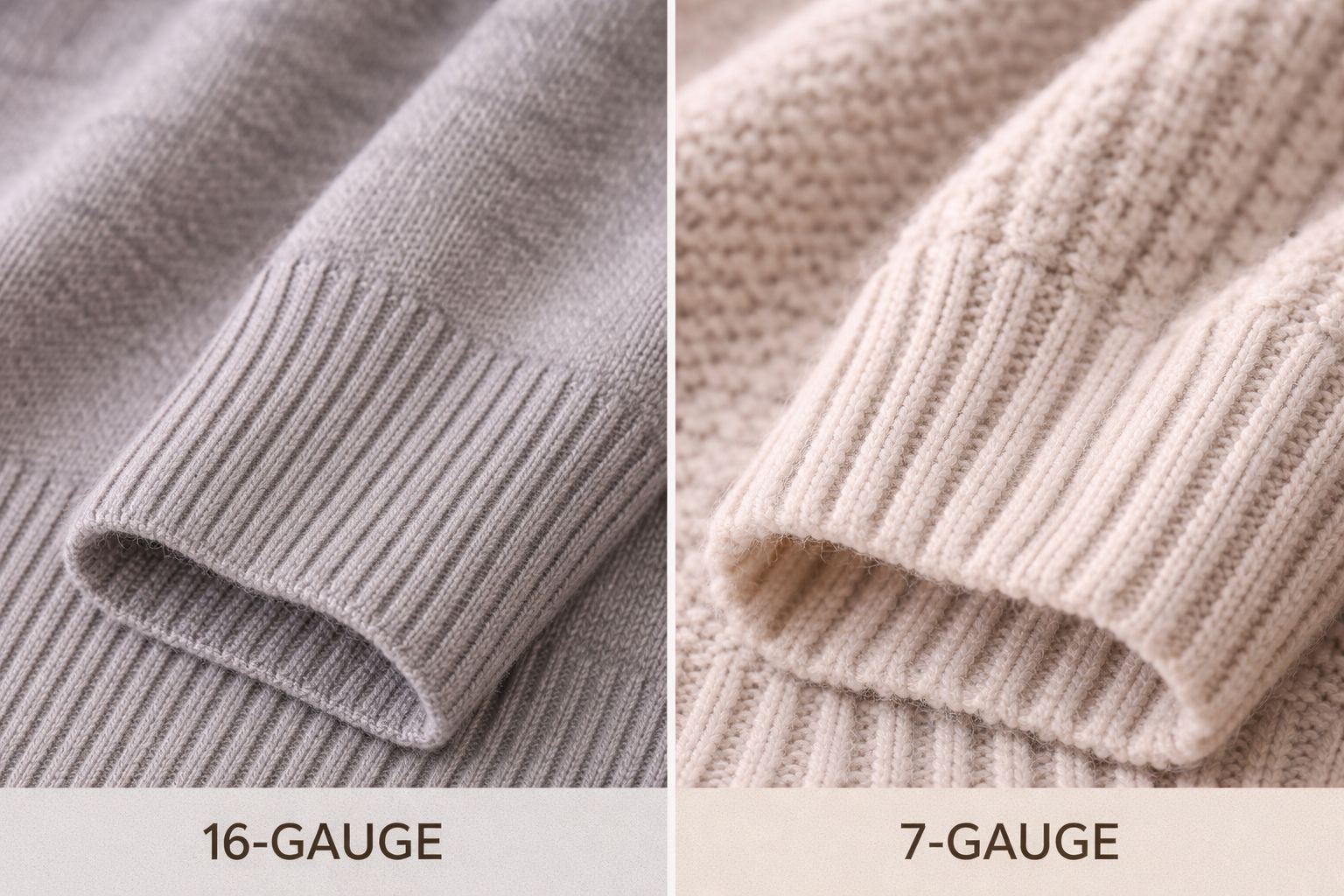
This is where our manufacturing expertise becomes crucial for Oliver's team. When they design a collection, we discuss how yarn and structure impact performance. For example, a dense 16-gauge knit has very little air trapped between the stitches. Less air means less oxygen to fuel a potential flame, making the garment more stable. In contrast, a very open, loose knit has more air pockets, which could slightly reduce its resistance. Blends are another major factor. Adding just 20% polyester to a Merino yarn will introduce a material that melts and drips at high temperatures, compromising the wool's natural safety advantage. This is why we almost always recommend 100% Merino for garments where all-natural performance is a key selling point. Furthermore, our use of fully-fashioned knitting creates each panel of the sweater to shape without cutting. This results in a more stable, continuous structure with no weak seams, ensuring the garment behaves consistently under any stress, including heat.
Conclusion
Merino wool is naturally fire-resistant, not fire-retardant. This makes it a safer choice for daily menswear, as it's harder to ignite and self-extinguishes, but it is not technical safety gear.