Knowing how to dry wool sweater properly is essential if you’ve ever invested in a fine knit – especially one made from soft merino – and want it to last. Washing is important, sure, but what really determines whether your knit keeps its shape is the way you dry it afterwards. Get this wrong, and you might end up with a stretched neckline, sleeves that feel a size longer, or a sweater that’s suddenly two sizes smaller.
Over the years, I’ve seen beautifully made knits lose their charm simply because someone hung them over a radiator or left them sagging on a clothesline. Drying wool isn’t complicated, but it does call for a little patience and the right approach.
Why Wool Needs Special Treatment When Drying
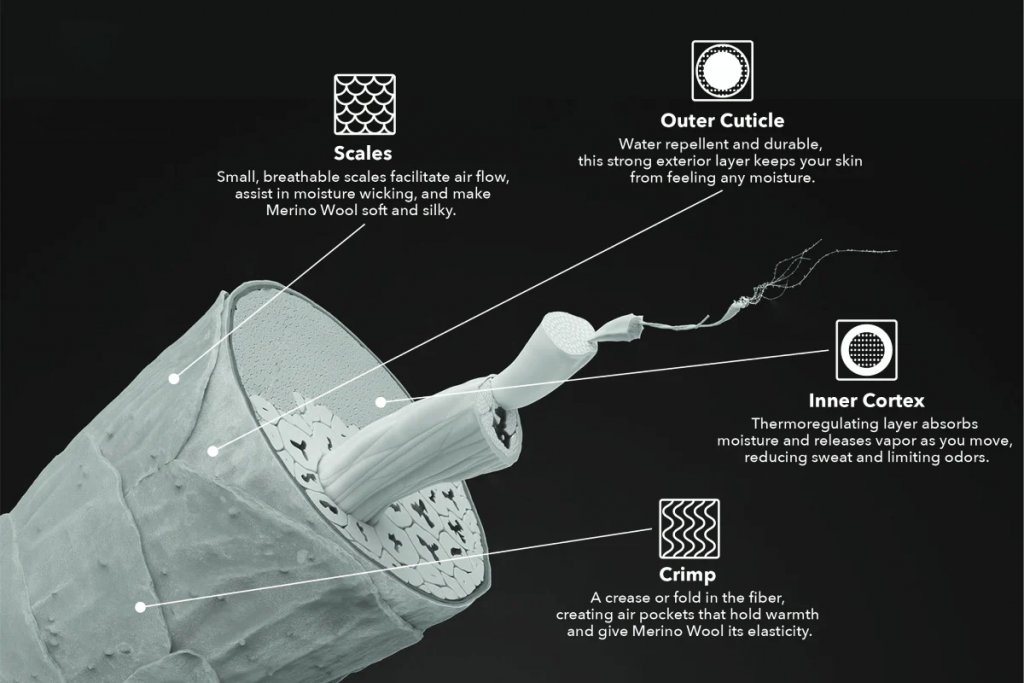
Wool is unlike any synthetic fibre. Each strand has a natural crimp and tiny scales that give it warmth, spring, and breathability. The trade-off? Those same fibres become far more delicate when they’re wet.
Imagine a stretched rubber band – that’s roughly how wool behaves when it’s soaked. Gravity can pull it out of shape, and heat can make the fibres lock together, shrinking the garment for good. That’s why avoiding the “hang and hope” method is essential if you want to keep the sweater you fell in love with.
The One Rule You Should Always Follow
Almost every knitwear expert will tell you the same thing: lay your sweater flat to dry. It sounds simple, and it is – but it’s the single biggest factor in preventing shoulder dips, saggy sleeves, or warped hems.
To do it well:
-
Spread a clean towel on a flat surface (a table or bed works fine).
-
Gently reshape the sweater, making sure seams line up and edges aren’t twisted.
-
Keep it away from direct sunlight or heat sources – both can fade colours and dry the fibres too quickly.
Getting the Water Out First

Drying starts before you even set the sweater down. Wool holds a surprising amount of water after washing, and the less of it left inside, the faster and safer the drying.
-
Press, don’t wring – Place the sweater on a towel, roll it up, and press down gently.
-
The double-towel trick – For chunkier knits, swap the damp towel for a fresh one halfway through.
-
Standing method – Some people like to place the rolled towel on the floor and lightly step along it to push out more water. It’s surprisingly effective.
Picking the Right Surface
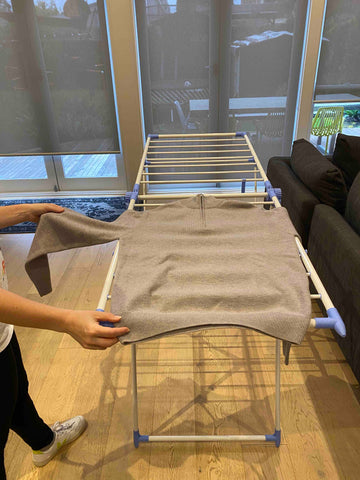
The surface you use matters more than most people think.
-
Mesh drying racks are ideal because air can flow underneath as well as above.
-
Towel on a table is the easiest home option – just flip the sweater after a few hours to help even things out.
-
If you use a towel, choose a light colour to avoid dye transfer, and make sure it’s lint-free.
Drying Faster Without Hurting the Fabric

Sometimes you don’t have a full day to wait. You can speed things up safely:
-
Place a fan nearby to move air over the sweater.
-
Run a dehumidifier in the room, especially during damp weather.
-
If outdoors, choose a shaded, breezy spot. Direct sun is tempting but risky for colour and texture.
-
Resist the urge to tumble dry – unless your care label clearly allows it, which is rare for quality merino.
Reshaping as You Go
Wool is forgiving if you guide it while it’s damp. Use this to your advantage:
-
Smooth out creases with your hands.
-
Shorten stretched cuffs by gently nudging the ribbing back together.
-
Check the neckline and shoulders after an hour or two – they can shift subtly as moisture evaporates.
Mistakes to Avoid
A few habits can undo all your good intentions:
-
Hanging the sweater on a hanger or line while wet – it will stretch.
-
Placing it directly on a heater – fibres can turn brittle.
-
Folding it damp and leaving it in a basket – a sure way to invite mildew.
Going the Extra Mile for Luxury Knits
If your sweater is a premium merino or cashmere blend, you can go beyond the basics:
-
Re-lanolising – Every so often, treat the wool with lanolin-rich conditioner to restore its natural oils.
-
Airing between wears – Instead of frequent washes, let it breathe on a flat surface or a padded hanger for a few hours.
-
Seasonal storage – When completely dry, fold neatly and store with cedar or lavender to deter moths.
Quick Fix for Emergencies
Need it dry before dinner?
-
Roll in a towel twice to pull out excess water.
-
Lay flat in front of a fan or dehumidifier.
-
Rotate every hour until ready.
Not lightning-fast, but safe enough to keep the sweater’s shape intact.
Common Questions

- Can I use the wool cycle on my dryer?
Sometimes, but only if your care label says so. Even then, finish flat. - Why did mine shrink without heat?
Excess agitation during washing can felt the fibres. Gentle wash only. - How long will it take?
Anywhere from 8–24 hours depending on thickness. - Small space tips?
A mesh rack over the bath with a fan works surprisingly well.
Final Thoughts
Drying a wool sweater properly isn’t just about preventing disasters – it’s about protecting an investment in craftsmanship. A good knit should last for years, but only if we treat it with the same respect the maker put into creating it.
For brands, it’s worth remembering that customer education here pays dividends. A sweater that looks and feels right every season becomes a walking advertisement for quality – and for the care instructions you provide.
If you truly value your knits, give them the time and space to dry the right way. They’ll reward you with a perfect fit, a soft hand, and the same quiet luxury they had on day one.