Worried your premium Merino sweaters will stretch out and lose their perfect fit? This fear often leads to poor material choices, but it doesn't have to. Let's clear up the confusion.
Yes, Merino wool has natural stretch for comfort, but it should not permanently stretch out of shape. Its crimped fibers act like a spring, allowing it to move with you and then return to its original form. Proper knit construction is essential to this performance.

When product developers like Oliver come to us, they're often concerned about long-term shape retention. They've seen sweaters from other suppliers lose their structure after just a few wears. In my 13 years of experience, I can tell you that when a Merino garment stretches out, the problem isn't the wool itself—it's almost always a failure in yarn choice, knit structure, or manufacturing quality control. A well-made Merino sweater is an investment in longevity. It's our job as a manufacturing partner to ensure every piece delivers on that promise, through smarter design and rigorous testing from day one.
Does Merino wool stretch as you wear it?
You feel the incredible softness of a Merino sweater, but then a doubt creeps in: will this beautiful garment become a shapeless bag after a few wears? It's a valid concern.
While Merino wool possesses natural elasticity from its crimped fibers, it is designed to return to its shape. Permanent stretching is a sign of poor design or improper care, not a flaw in the wool itself. A quality knit structure prevents this from happening.
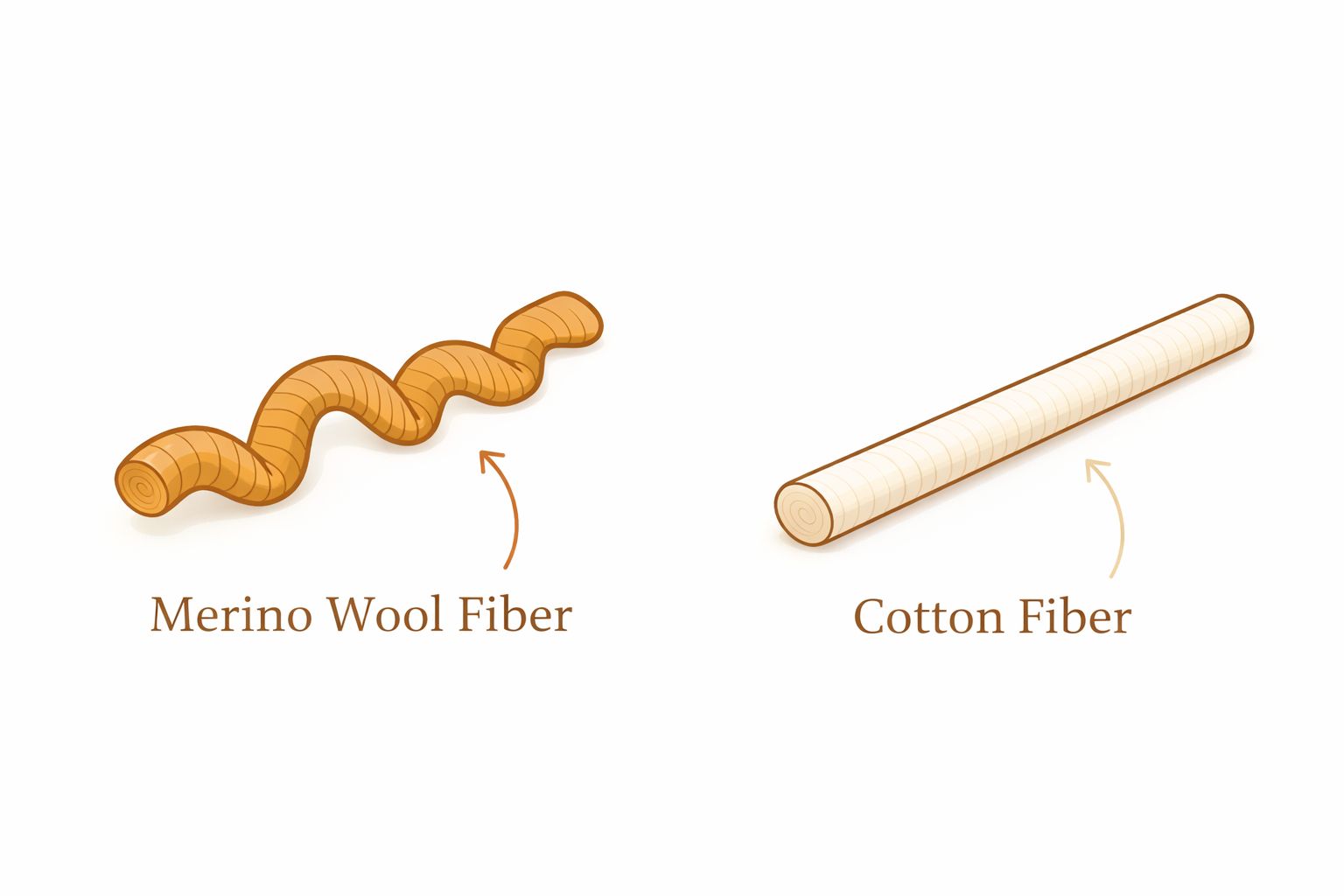
Merino wool’s magic is in its natural engineering. Each fiber has a built-in crimp, or a "spring," that gives it fantastic elasticity. This allows the garment to stretch for comfort as you move, but more importantly, it provides excellent recovery, meaning it bounces back. However, this natural quality can be compromised. If a brand uses a knit structure that is too loose—like a wide-set plain stitch—without reinforcing the cuffs, hem, and neckline, the garment is more likely to sag over time. At HD, we guide our partners toward stable constructions that harness Merino's elasticity without risking deformation.
Yarn, Structure, and Stability
The stability of a Merino sweater depends on a perfect balance between the yarn, the knit structure, and the tension.
| Factor | Low Stability Risk | High Stability Risk |
|---|---|---|
| Knit Structure | 1x1 Rib, Milano Stitch, Tightly knit stitches | Loose plain stitches, oversized gauge for the yarn |
| Yarn Type | High-twist, Ply yarns | Low-twist, single-ply yarns |
| Finishing | Proper tension control, reinforced trims, pre-washing | No reinforcement, high-tension washing |
Think of it like building a house. You need a strong foundation (yarn), a smart blueprint (knit structure), and expert construction (manufacturing). We collaborate with brands to get all three right.
Should merino wool be tight fitting?
You’re developing a new Merino collection and the question of fit comes up. Should it be snug against the skin, or have a relaxed, drapey fit? The answer can make or break the product.
The ideal fit for Merino wool depends entirely on the garment's purpose. Base layers should be snug to maximize moisture-wicking and warmth, while casual sweaters should have more room for comfort and style. There is no single correct answer.

When we work on sample development, defining the "ease"—the amount of room between the body and the garment—is a critical step. For functional pieces like base layers or athletic wear, a close fit is non-negotiable. It allows the Merino fibers to do their job: pulling moisture away from the skin to keep you dry and comfortable. If the fit is too loose, this wicking action is lost. For lifestyle and fashion pieces like crewnecks or cardigans, however, comfort is about drape and movement. Here, we incorporate positive ease to create a more relaxed silhouette that feels effortless, not restrictive.
Matching Fit to Function
Getting the fit right ensures the garment performs as intended and meets customer expectations. We help brands define this for each style in their collection.
| Garment Type | Recommended Fit | Primary Reason | Ease Allowance |
|---|---|---|---|
| Base Layers | Tight / Snug | Maximizes moisture-wicking and thermal regulation. | Negative to Zero |
| Activewear | Fitted | Allows full range of motion without excess fabric. | Zero to Minimal |
| Everyday Sweaters | Relaxed | Prioritizes comfort, drape, and layering ability. | Positive |
| Outerwear | Oversized | Designed to be worn over other layers. | Generous |
Getting this right at the prototype stage ensures the final product is both beautiful and perfectly functional.
Can you unshrink wool without damage?
A customer accidentally shrinks their favorite Merino sweater in the wash. They ask if it can be saved, and you need a reliable answer that protects both the customer and your brand's reputation.
While some shrunken wool can be gently stretched back when wet using hair conditioner, the process is risky and may cause permanent damage to the fibers. The best strategy is prevention through clear care instructions and stable garment construction.
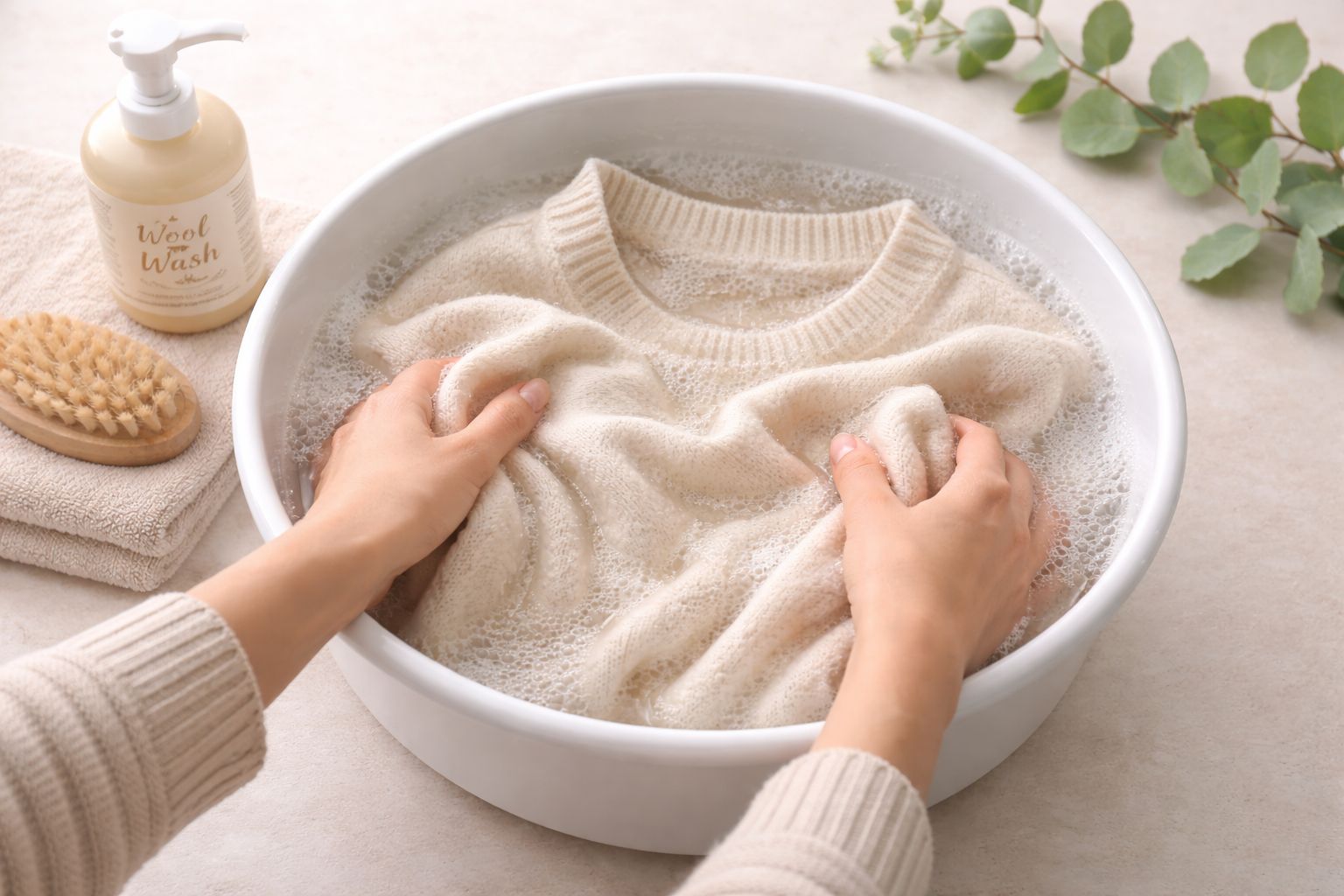
The main reason Merino wool stretches or shrinks is almost always due to improper washing and drying. Heat from hot water and tumble dryers causes the wool fibers' scales to lock together, resulting in shrinkage. Hanging a heavy, wet sweater will cause gravity to stretch it out of shape. The solution is simple but crucial: cold, gentle washing and flat drying. As a manufacturer, we take this a step further. We provide our brand partners with comprehensive lab test results for every batch, confirming the garment's dimensional stability against ISO and AATCC standards.
Prevention Through Quality Control and Education
We build stability into the product from the start and empower you with the data to educate your customers. Our in-house lab provides key metrics to ensure reliability.
| Test Parameter | HD Merino Standard | What It Means for Your Brand |
|---|---|---|
| Dimensional Stability | Shrinkage controlled to ±5% | Your sweater won't significantly shrink or stretch if cared for properly. |
| Pilling Resistance | Grade ≥3 | The surface will resist forming pills, keeping it looking new. |
| Colorfastness to Washing | Grade ≥4 | The color will not bleed or fade during washing. |
By providing these reports, we help you create accurate care labels and confidently stand behind your product's quality, minimizing returns and building customer trust.
Conclusion
Merino wool’s stretch is a feature, not a flaw. With proper design, expert manufacturing, and clear communication, you can create beautiful knitwear that holds its shape and delights customers for years.