I have worked with knitwear for many years, and I have heard one question again and again from brand teams: what is the real difference between wool and cashmere? I understand why this question matters. A sweater is not only a soft product on a hanger. It is also a promise to the customer. It must feel right. It must keep its shape. It must match the price. It must also fit the way the customer will wear it.
I usually start this topic from a simple manufacturing view. I do not choose a yarn only because it sounds expensive. I choose it because it fits the product plan. This is where I use a clear AIDA path in my own work. I first catch attention by placing wool and cashmere samples side by side. I then build interest by explaining fiber source, yarn structure, and fabric density. I create desire by showing how the right material can make the sweater feel better and last longer. I guide action by giving the brand a clear recommendation based on product positioning.
The core difference between wool and cashmere starts with fiber source and fiber structure. Wool comes from sheep. Cashmere comes from the soft undercoat of cashmere goats. Cashmere fibers are usually finer and softer, so cashmere often feels more luxurious. Yet this softness also brings a trade-off. Cashmere can be less wear-resistant and less stable than high-quality wool. Fine merino wool can be soft, elastic, durable, and practical for many premium sweaters.
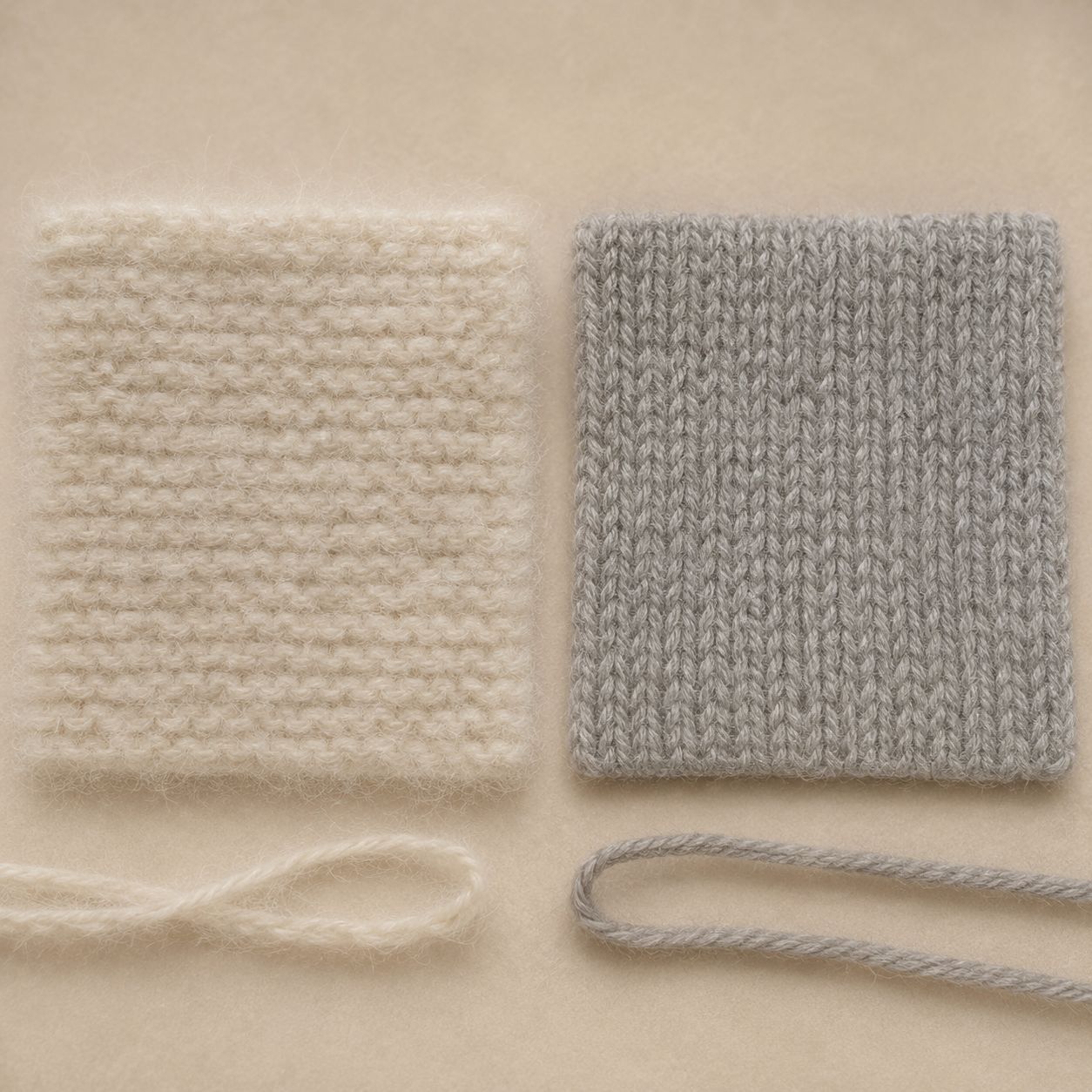
I have seen many buyers treat cashmere as the automatic premium answer. I think this can create problems. The problem is that a brand may choose cashmere only because it sounds more high-end. The pain appears later when the sweater pills too quickly, loses shape, or does not match the customer’s wearing habits. The solution is to select yarn based on the real product use. I always check fiber fineness, yarn twist, ply, gauge, stitch structure, washing, finishing, and AQL inspection before I give my final suggestion.
| Point I Check | Wool, Especially Merino Wool | Cashmere |
|---|---|---|
| Fiber Source | I source it from sheep fleece. | I source it from the soft undercoat of goats. |
| Touch | I can make it soft when I use fine micron merino. | I expect a softer and more luxury hand feel. |
| Warmth | I build warmth through density, gauge, yarn count, and fabric weight. | I use it when I need strong warmth with low weight. |
| Durability | I usually trust it more for frequent wear and stable production. | I manage it more carefully because it can pill and wear faster. |
| Best Use | I use it for daily sweaters, outdoor layers, and functional knitwear. | I use it for luxury layers, light sweaters, and refined indoor styles. |
Which Is Warmer, Cashmere or Wool?
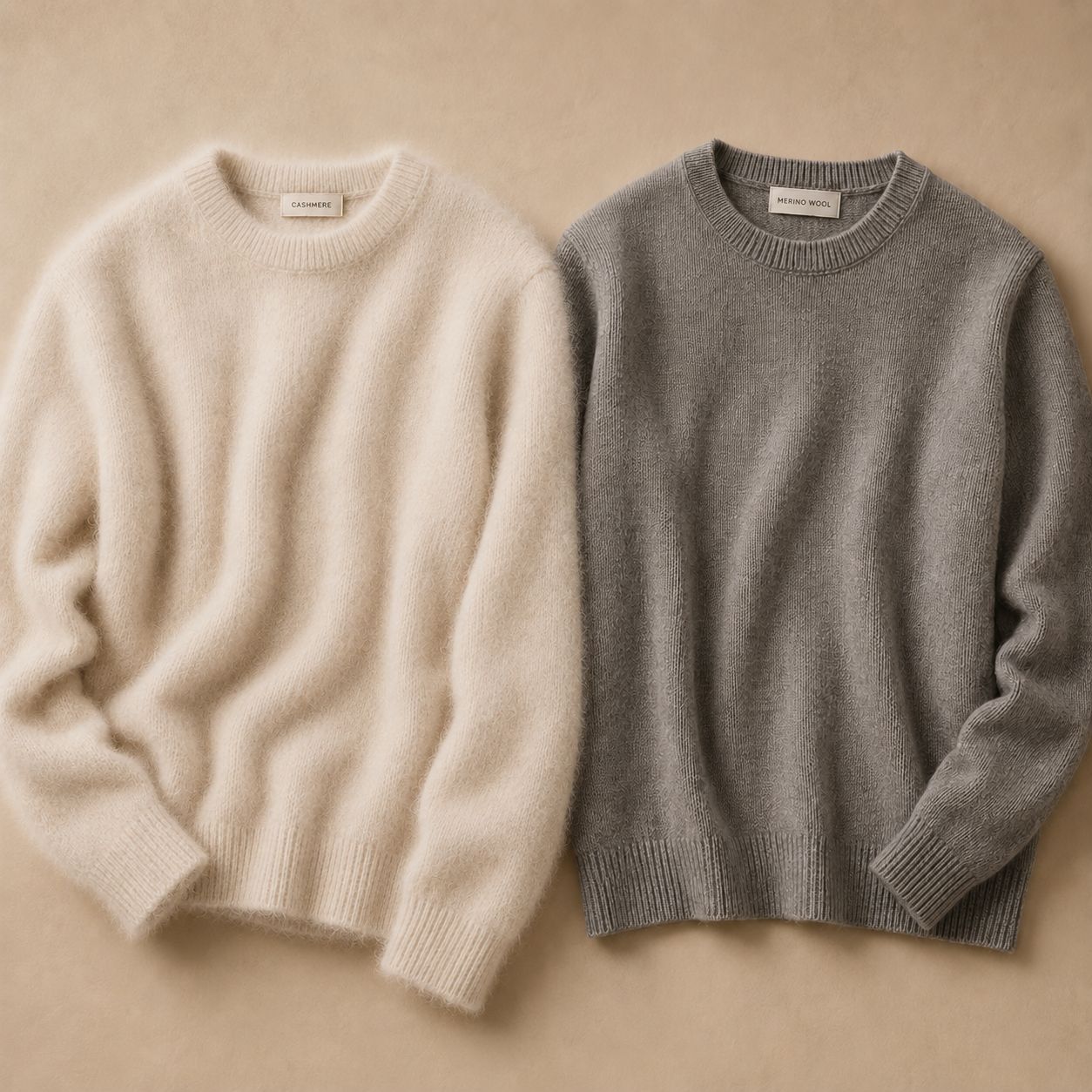
I often hear people say that cashmere is always warmer than wool. I understand this idea, but I do not use it as a fixed rule in production. Warmth is not only about how expensive the fiber is. Warmth comes from how well the fiber, yarn, and fabric hold still air. It also comes from yarn structure, stitch density, garment weight, and fabric thickness. Cashmere has a strong weight-to-warmth ratio. It can feel warm while staying light. A dense merino wool sweater can also feel warmer in real use than a thin cashmere sweater.
I like cashmere when I develop premium pieces for office wear, travel, and light winter layering. It gives warmth without too much bulk. It also gives a refined look that fits many mid-to-high-end menswear collections. Still, I know that a loose and thin cashmere sweater may not block cold air well. If the knit structure is too open, the wearer may feel cold faster. This is why I never judge warmth from the fiber name alone.
Dive Deeper: I always explain warmth with a simple idea. Still air helps a sweater feel warm. Fibers, yarns, and knitted loops can trap that air. Cashmere can trap air well because it is fine and soft. This gives it a strong light warmth. Yet the final sweater still depends on how the yarn is made and how the fabric is knitted. A single-ply cashmere yarn in a loose gauge may feel soft, but it may not feel warm enough in windy weather. A two-ply or three-ply merino wool yarn in a tighter structure can create a warmer and more stable fabric. I also look at stitch type. A compact rib or a full Milano stitch can feel firmer and warmer than a very open jersey structure. Washing and finishing also change the result. A brushed finish may add a warmer touch, but it may also raise pilling risk if I do not control it. So my answer is practical. Cashmere can be warmer by weight, but wool can be warmer in actual use when I build the fabric with enough density, weight, and structure.
For a brand, this detail matters. If I develop a lightweight luxury sweater, I may choose cashmere. If I develop a core winter program that customers will wear often, I may choose dense merino wool. If I want both softness and better stability, I may suggest a wool-cashmere blend. The best answer depends on the real product, not on a simple material ranking.
What Is More Itchy, Wool or Cashmere?
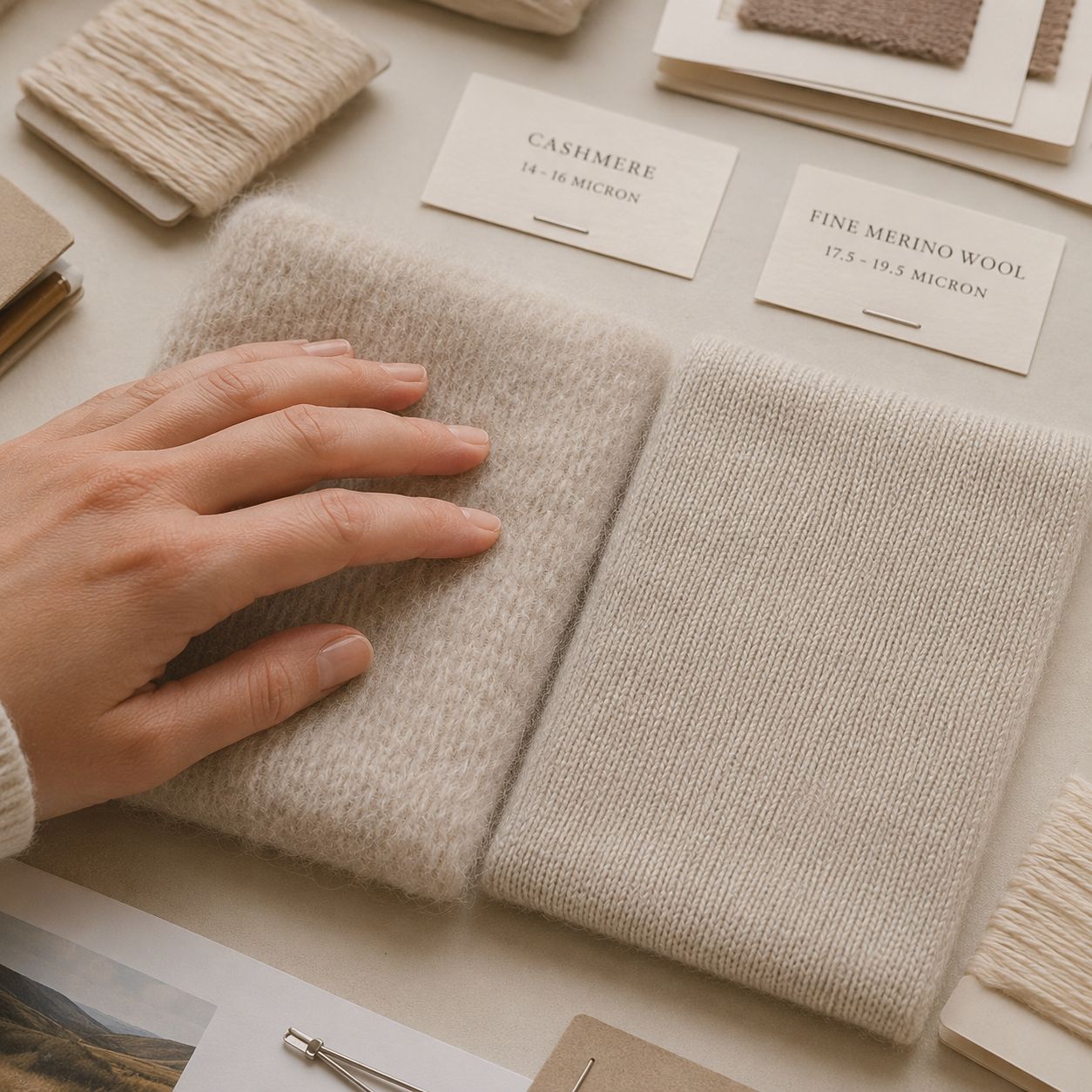
I know that many consumers think all wool is itchy. I hear this often from buyers, designers, and even friends. I think this is one of the most common misunderstandings in knitwear. The itchy feeling does not come from the word “wool” itself. It mainly comes from fiber thickness and fiber stiffness. A coarse and rigid fiber can press against the skin and create a prickly feeling. A fine and flexible fiber can feel much softer.
Cashmere is often less itchy because it is usually fine and soft. This is one reason people connect cashmere with luxury. A good cashmere sweater can feel gentle at first touch. It can also give the customer a strong sense of value in the fitting room. Yet fine merino wool can also be very comfortable. When I use low micron fine merino, I can create sweaters that many people can wear close to the skin. So I do not accept the idea that wool always feels rough.
Dive Deeper: I often use swatches to explain this point during development meetings. I place a coarse wool sample, a fine merino sample, and a cashmere sample on the same table. Then I ask the buyer to touch them without looking at the labels. This small test often changes the conversation. Many people are surprised because fine merino does not feel like the rough wool they remember from the past. I also explain that finishing plays a major role. Washing, softening, and controlled relaxation can change the surface feel of the fabric. Yet I do not want to over-soften a sweater just to make the sample feel impressive. Too much softening can reduce body, recovery, and long-term stability. I prefer a balanced hand feel. I want the garment to feel good during fitting, but I also want it to keep its look after real wear. This is very important for brands because a soft sample can win approval, but a weak bulk garment can create complaints later. My answer is clear. Cashmere is usually softer and less itchy, but fine merino wool can also give a very soft skin feel when I control micron, yarn quality, washing, and finishing.
This is a classic PAS issue in the market. The problem is that many consumers believe wool means itch. The pain is that brands may avoid merino wool and lose a strong material for daily knitwear. The solution is simple. I show fine merino swatches. I explain micron in easy words. I support the choice with fitting, wash testing, and clear care guidance.
Is Wool or Cashmere Better for Cold?
I always ask one question before I answer this. What kind of cold are we talking about? Cold in a heated office is not the same as cold on a wet street. Cold during travel is not the same as cold during outdoor walking. Cashmere works very well for light and dry cold. It feels warm, soft, and refined. Wool, especially merino wool, often works better when the sweater needs to handle frequent wear, outdoor use, and changing humidity.
Merino wool has strong recovery and good practical performance. I like it for sweaters that customers wear again and again in one season. It can hold shape well when the structure is right. It can also feel comfortable when the wearer moves between indoor and outdoor spaces. Cashmere can also work in cold weather, but I treat it as a more delicate luxury fiber. If a customer wears a cashmere sweater under a rough coat every day, carries a heavy bag over it, and washes it without care, the surface may pill and wear faster.
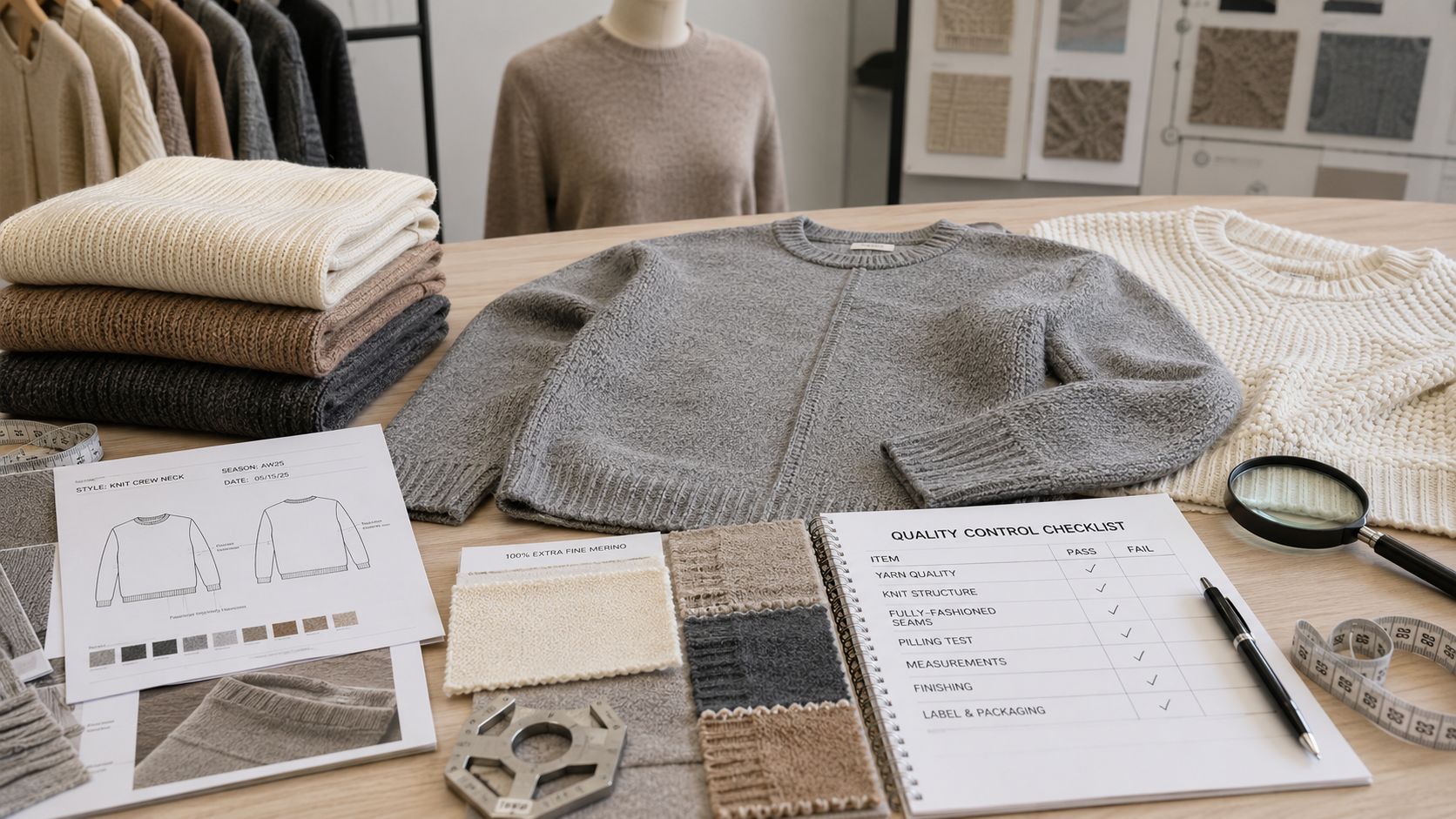
Dive Deeper: I see cold-weather performance as a full system. I do not only check the fiber name. I check yarn twist, yarn count, ply number, gauge, stitch tension, linking quality, washing process, and final measurements. Cashmere fibers are finer, softer, and often shorter. This can make cashmere more likely to pill, especially in high-friction areas such as underarms, sides, elbows, and bag contact points. Wool usually has better resilience, so it can recover from pressure and movement more easily. Still, I do not treat all wool as equal. A poor wool yarn can also pill, shrink, or feel rough. A strong merino yarn with the right twist can give a much better result. Fully-fashioned construction also matters. When I shape the panels directly during knitting, I can reduce waste and improve garment shape. When I control linking and finishing, I can make the sweater cleaner and more stable. This is why I always tell brands that premium knitwear is not only about choosing cashmere. It is about building the garment from fiber to final inspection.
I also think about customer expectations. Many customers believe that a more expensive sweater should never pill. I understand this feeling, but I do not think it is realistic. Fine and soft fibers can pill because surface fibers move and rub during wear. This does not always mean the sweater is poor. It means the product needs the right yarn structure, correct care, and honest communication. If a product page only says “luxury cashmere,” the customer may expect too much. If the brand explains softness, care, and natural pilling in simple words, the customer may trust the product more.
For a product development manager, I would make the yarn decision from product positioning. If I am developing a luxury capsule with soft colors, fine gauges, and indoor styling, I may choose cashmere. If I am developing a core winter program with repeat orders, stable margins, and daily use, I may choose merino wool. If I need both luxury and stability, I may propose a blend. A wool-cashmere blend can give softness with better structure. A merino-rich blend can give performance with a more premium touch. The blend must not be random. It must support the hand feel, cost, durability, and brand story.
I also bring quality control into the decision early. I do not wait until bulk production to discuss pilling, shrinkage, and colorfastness. I prefer to test during development because problems are easier to solve before the order becomes large. I check lab dips because color can shift between yarn lots and dye lots. I review sample measurements after washing because shrinkage can change fit. I ask for clear AQL inspection points because bulk quality must match the approved sample. This is how I help a brand reduce risk.
In my view, the best manufacturer is not the one who simply agrees to every expensive fiber. The best manufacturer explains the trade-off. I should tell the buyer when cashmere gives the right luxury feeling. I should also tell the buyer when merino wool gives better performance. I should show options, costs, lead times, and risks in a clear way. This is how I build trust with menswear brands that care about design, quality, sustainability, and delivery.
Conclusion
I see the difference between wool and cashmere as a practical product decision, not a simple ranking. Cashmere is usually softer, lighter, warmer by weight, and more luxurious. Wool, especially fine merino wool, is often stronger, more elastic, more stable, and better for frequent wear. Cashmere is a strong choice for refined indoor pieces, luxury capsules, and light winter layers. Merino wool is a strong choice for daily sweaters, outdoor layers, and cold-weather products that need more durability.
If I had to give one simple answer, I would say this. I choose cashmere when the brand needs soft luxury. I choose merino wool when the brand needs reliable performance. I choose a blend when the product needs both. Then I support the choice with yarn testing, stitch development, fully-fashioned shaping, washing control, and AQL inspection. This is the real manufacturer’s perspective. A good sweater does not come from a famous fiber name alone. It comes from the right fiber, the right structure, and the right production discipline.