You're developing a new knitwear line and face a fundamental choice: cotton or Merino wool? Choosing the wrong one can lead to poor performance, unhappy customers, and a product that fails to meet expectations.
Neither cotton nor Merino wool is universally "better"; their performance depends entirely on the intended use. Merino wool excels in warmth, moisture management, and temperature regulation. Cotton offers durability, is easy to care for, and is generally more affordable, making it ideal for casual, everyday basics.
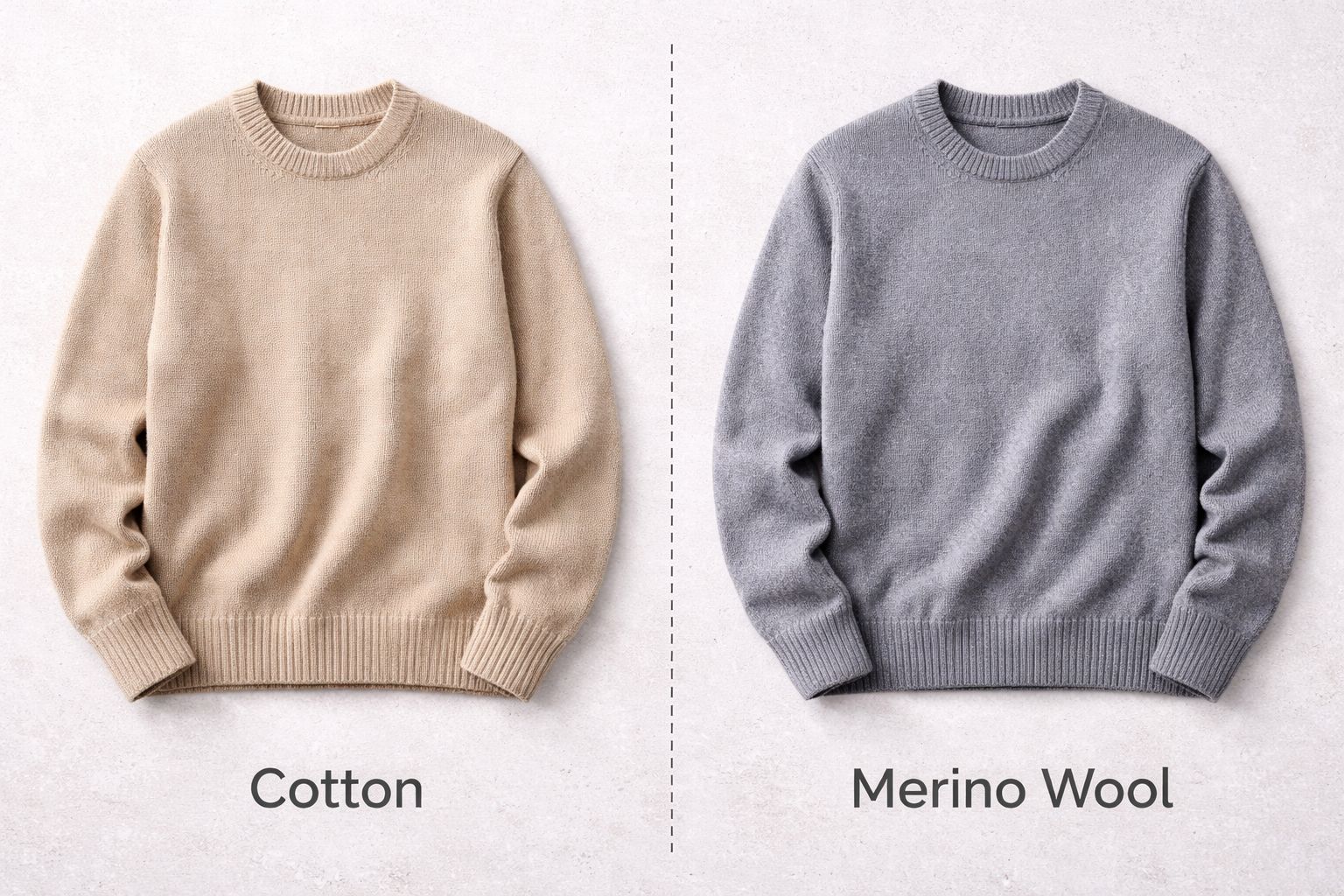
This is a conversation I have almost every season with product managers like Oliver. They need to decide which fiber best fits the story and function of their collection. The answer isn't about which fiber is "good" or "bad." It’s about understanding their inherent properties. One is a plant fiber, the other is a protein fiber, and that single difference changes everything about how the final sweater performs. Let's break down this critical choice.
Which Is Better, Merino Wool or Cotton?
Your design team wants a versatile sweater, but "versatile" means different things to different customers. Choosing the wrong fiber can lead to a product that feels clammy, too hot, or not warm enough.
Neither fiber is better, they are just different. Merino wool is a high-performance fiber ideal for products where temperature control is key. Cotton is a reliable workhorse fiber perfect for casual, stable, and cost-effective garments. The "better" choice is the one that aligns with your product's purpose.
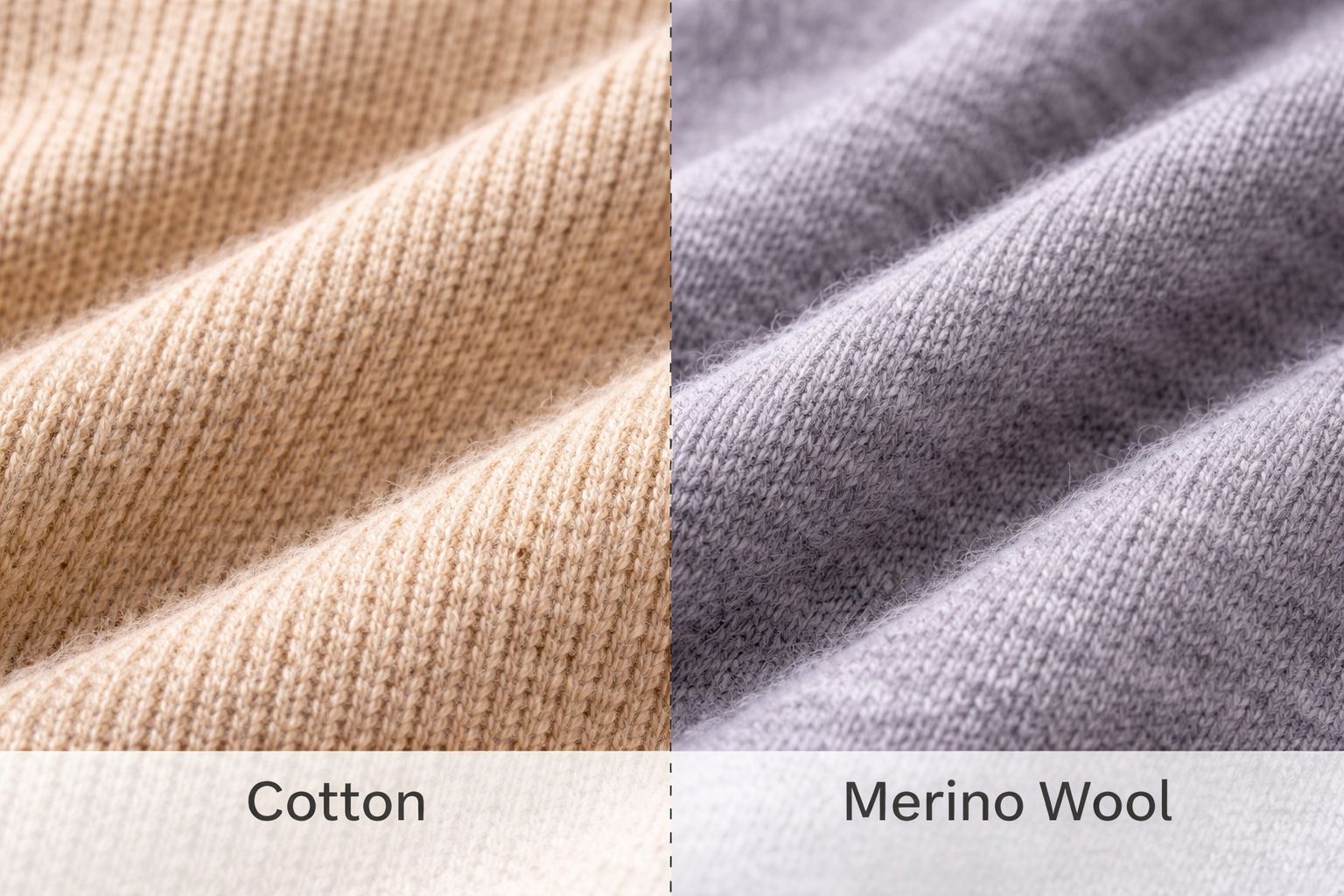
The most important distinction comes from their origins. Cotton is a plant-based (cellulosic) fiber, while Merino wool is an animal-based (protein) fiber. This fundamental difference dictates how they interact with moisture and air, which in turn defines comfort. I always advise my clients to think about the primary use case first. Is the sweater for layering on a winter hike, or is it a simple crewneck for a mild spring day? Answering that question almost always points to the right fiber. Here’s how their core attributes stack up.
| Attribute | Cotton | Merino Wool |
|---|---|---|
| Fiber Type | Plant (Cellulose) | Protein (Animal) |
| Moisture Handling | Absorbs and holds liquid sweat | Wicks moisture vapor away from skin |
| Feel When Wet | Clammy, cold, heavy | Can still feel warm and relatively dry |
| Best For | Everyday basics, transitional weather | Layering, active use, all-season comfort |
For a brand focused on technical performance or premium all-season wear, Merino wool’s unique properties are a clear winner. For a brand creating accessible, everyday fashion, cotton’s stability and value are often the better fit.
Is Merino Warmer Than Cotton?
A customer buys a thick-looking cotton sweater for winter but complains about feeling cold and damp when they're active. The problem isn't the sweater's thickness; it's the fiber's inability to manage temperature and moisture.
Yes, Merino wool is substantially warmer than cotton, especially for its weight. The natural crimp in wool fibers creates thousands of tiny air pockets that trap body heat, providing excellent insulation. Cotton fibers are flat, trap very little air, and lose all insulating ability when they get wet.
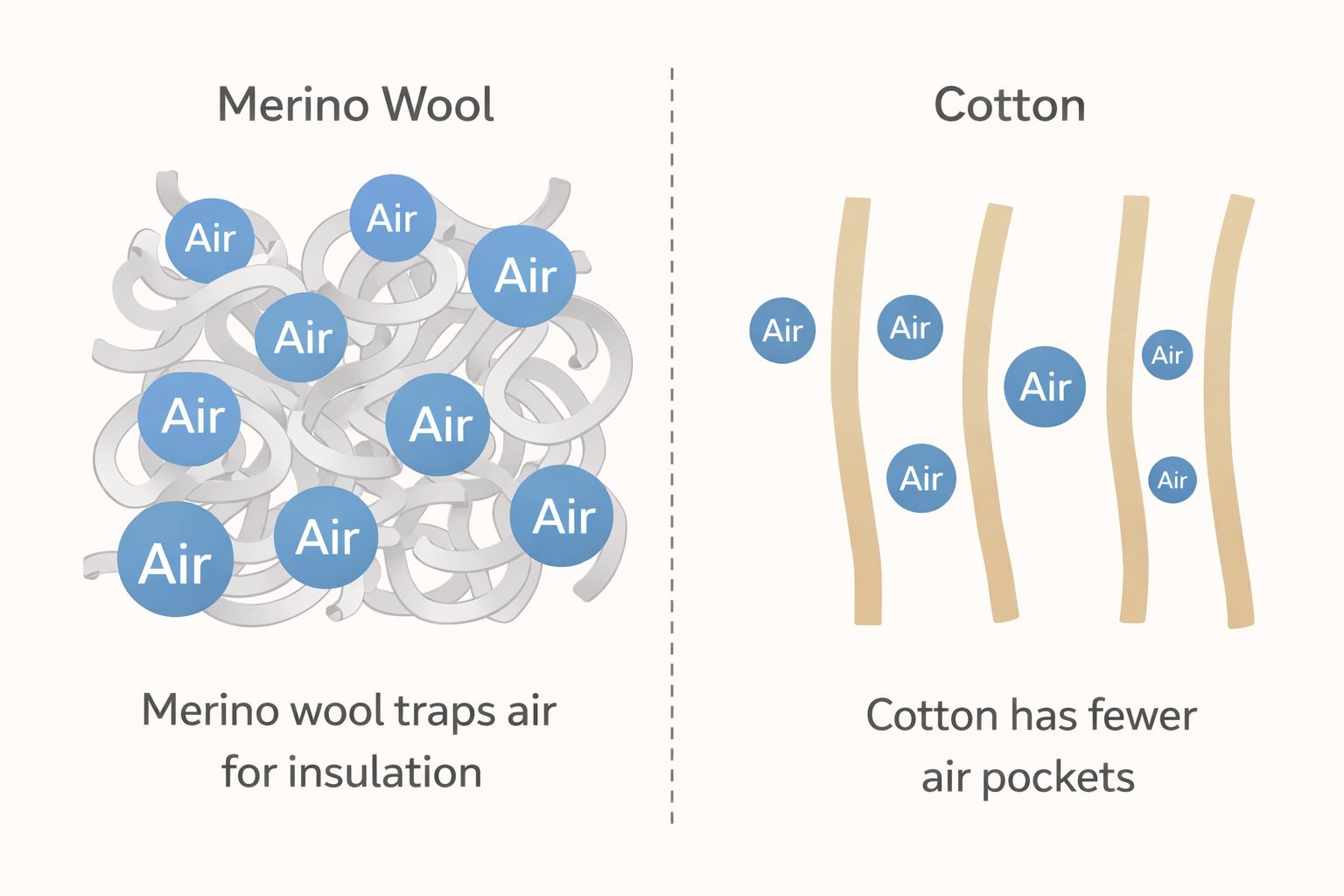
The secret to wool's warmth lies in its three-dimensional structure. Each Merino fiber has a natural wave, or "crimp." When we spin these fibers into yarn and knit them into a sweater, these crimps create a lofty fabric that is full of insulating air pockets. This is why a lightweight Merino sweater can feel much warmer than a heavier cotton one. It's not about the weight of the material; it's about its efficiency at trapping air.
Cotton, on the other hand, has a smooth, straight fiber structure. It lies flat against the skin and doesn't have the loft needed to trap a significant insulating layer of air. Worse, cotton is hydrophilic, meaning it loves to absorb water. Once it absorbs sweat or moisture from the environment, it becomes saturated. Water is a great conductor of heat, so a wet cotton sweater will actively pull heat away from your body, making you feel colder faster. This is why wool is the standard for performance base layers and outdoor apparel, while cotton is often warned against in cold, damp conditions.
Is Merino Warmer Than Cotton?
You're designing a sweater for a commuter who moves between cold streets and warm offices. They need a garment that adapts, not one that makes them overheat indoors and freeze outdoors.
Yes, Merino is "warmer" in a smarter way. It’s not just an insulator; it’s a thermoregulator. It keeps you warm in the cold but also breathes exceptionally well to prevent you from overheating. Cotton simply doesn't have this ability to adapt to changing environments and activity levels.

This is where Merino wool’s other superpower comes into play: moisture vapor management. Before your body even starts to sweat, it releases moisture as vapor. Merino wool fibers can absorb this vapor—up to 30% of their own weight—and move it away from your skin to the outside of the fabric to evaporate. This process keeps the microclimate next to your skin drier and more stable. By managing humidity, Merino helps your body maintain a comfortable temperature.
Cotton doesn’t manage vapor. It waits until the vapor condenses into liquid sweat, which it then absorbs and holds onto. This creates that sticky, clammy feeling and disrupts your body's ability to cool down or stay warm efficiently. When I work with brands like Oliver's, we also consider fiber fineness. An extra-fine Merino (under 17.5 microns) combined with a fine-gauge knit creates a sweater that is not only soft against the skin but also incredibly breathable. This is something cotton can't replicate. While cotton is more resistant to pilling, Merino's superior comfort and performance across different conditions are what justify its premium positioning.
Conclusion
Choosing between cotton and Merino wool isn't a matter of good vs. bad. It’s a strategic decision based on the desired performance, use case, and brand positioning for each specific sweater.