Your favorite wool sweater is full of wrinkles from being folded, but the thought of using a hot iron is terrifying. You fear scorching the delicate fabric or permanently flattening the beautiful knit texture.
Yes, you can and should steam a wool sweater. Steaming is a gentle method that uses moist heat to relax wool fibers and release wrinkles without the damaging direct pressure of an iron, helping to preserve the sweater's natural texture and shape.
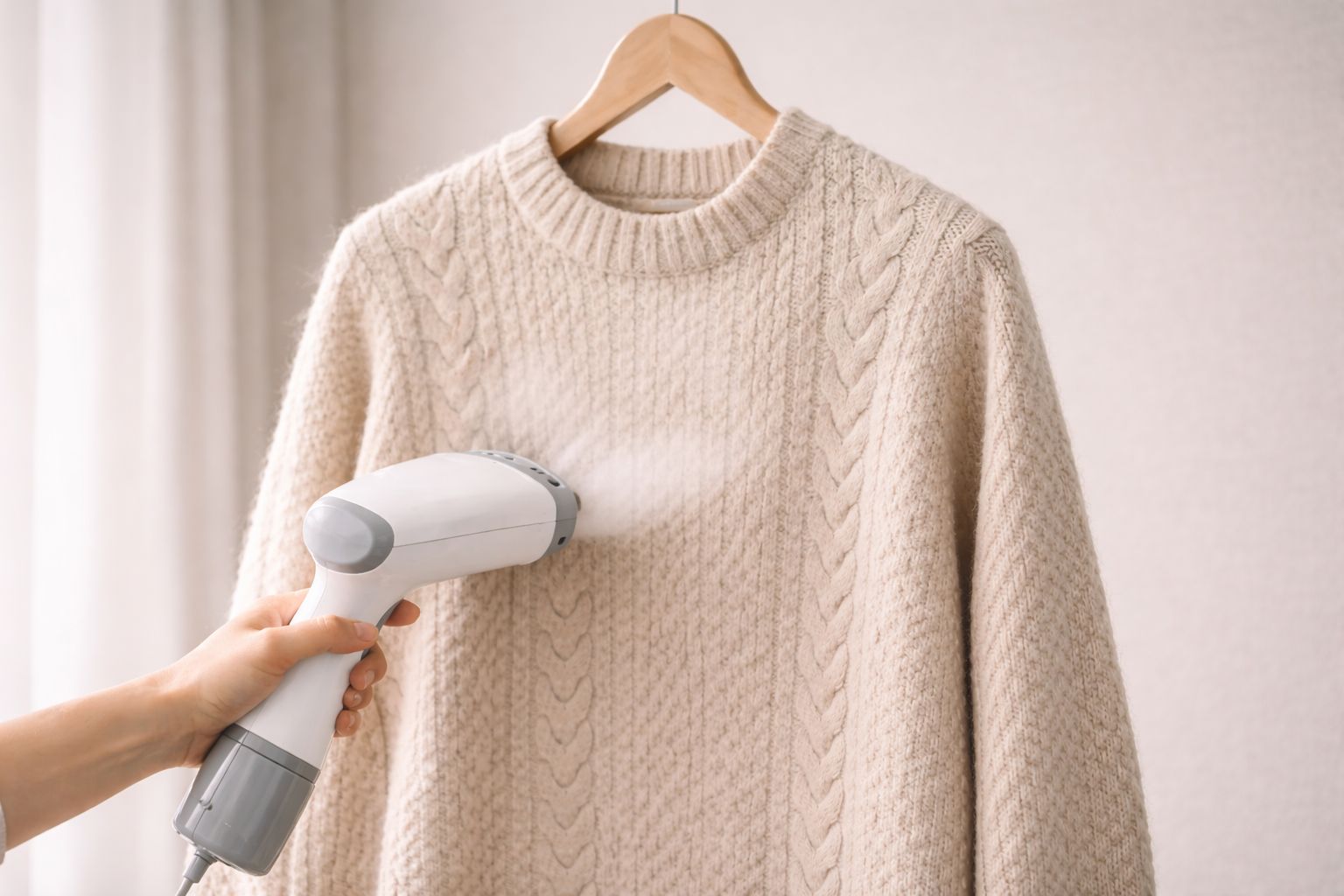
As a manufacturer with over 13 years of experience, I’ve seen beautiful knitwear ruined by improper care more times than I can count. An iron can crush the delicate loops of a knit, leaving a permanent shiny patch that cheapens the look of a premium garment. For a product manager like Oliver, a customer complaint about a "flattened" sweater is a serious concern that can harm brand perception. It's why we always advocate for steaming. It’s a professional-level care technique that anyone can do at home to keep their knitwear looking new. But to do it safely and effectively, you need to understand why it works and, more importantly, the right way to do it.
Can You Use a Steamer on a Wool Sweater?
You have a clothing steamer at home, but you're hesitant to use it on something as natural and delicate as wool. You worry that applying direct heat and moisture might do more harm than good, potentially causing damage.
Absolutely. Using a steamer is the preferred method for de-wrinkling wool sweaters. The steam penetrates the fibers, allowing them to gently relax and return to their original, intended shape without the damaging direct heat and pressure of an iron.
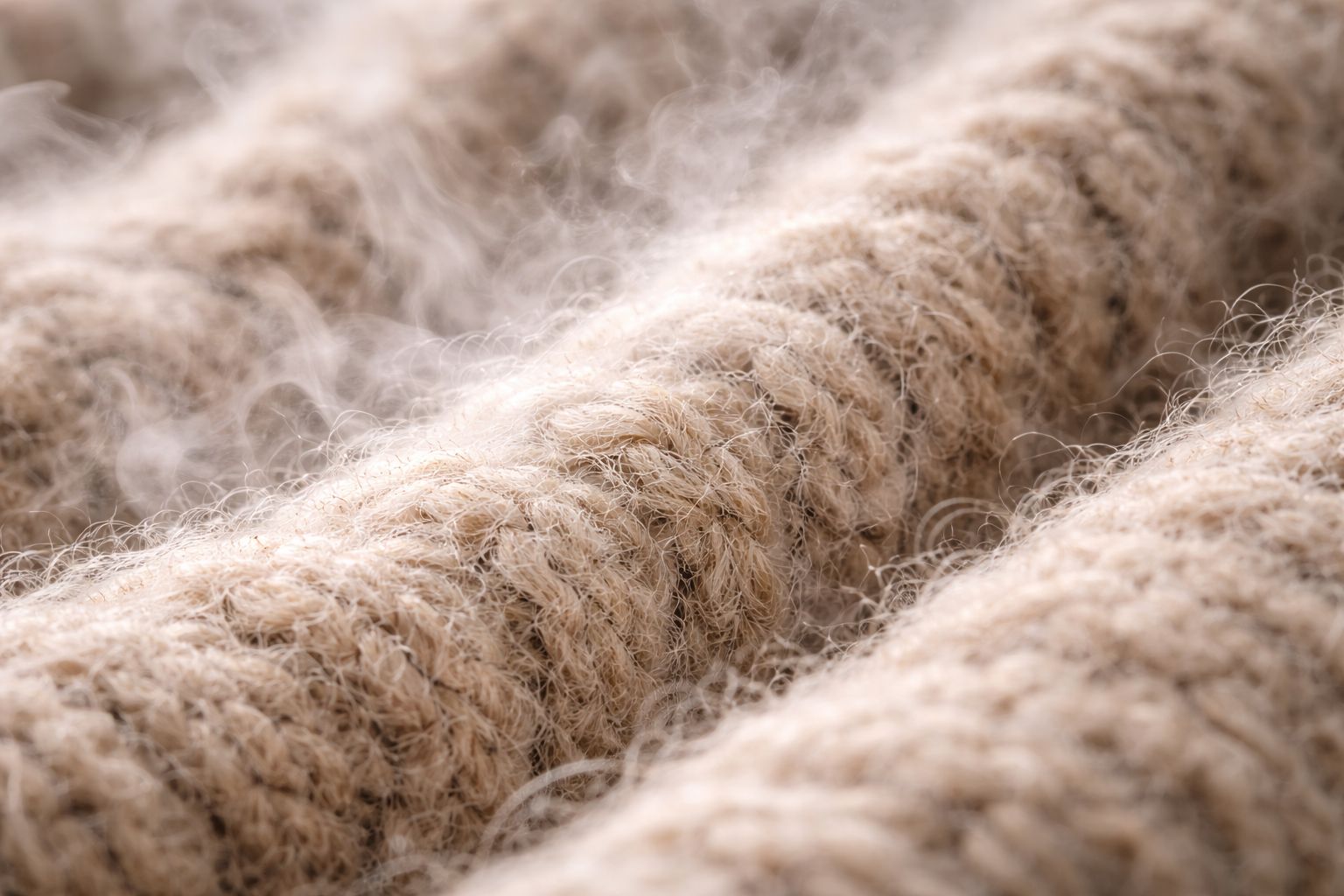
The magic of steaming comes from the natural properties of wool itself. Wool is a protein fiber with a unique structure covered in microscopic scales. When you apply gentle, moist heat from a steamer, these fibers temporarily soften and become pliable. This allows wrinkles, which are just bent or creased fibers, to straighten out and return to their default state. Unlike an iron that presses down and flattens the yarn, a steamer never makes direct contact. This is crucial for preserving the "loft"—the three-dimensional airiness—that gives a sweater its cozy feel and insulating power. When we develop a sweater with a specific texture, like a complex cable knit or a chunky rib stitch, the last thing we want is for a customer to flatten it into a two-dimensional pattern. Steaming preserves that intended design integrity. This is especially true for fully-fashioned sweaters, where panels are knit to shape. The continuous tension in the knit structure means the garment has a better "memory" and responds beautifully to steaming, snapping back into its perfectly crafted form.
Does Steaming Shrink Wool?
You’ve likely had a wool sweater shrink in the wash before. You associate heat and water with that disaster and naturally fear that a steamer will cause the same irreversible damage to your expensive knitwear.
No, proper steaming will not shrink a wool sweater. True shrinkage, which is technically called felting, is caused by a specific combination of heat, moisture, and mechanical agitation. Steaming only uses the first two elements, without the crucial friction needed to lock the fibers.
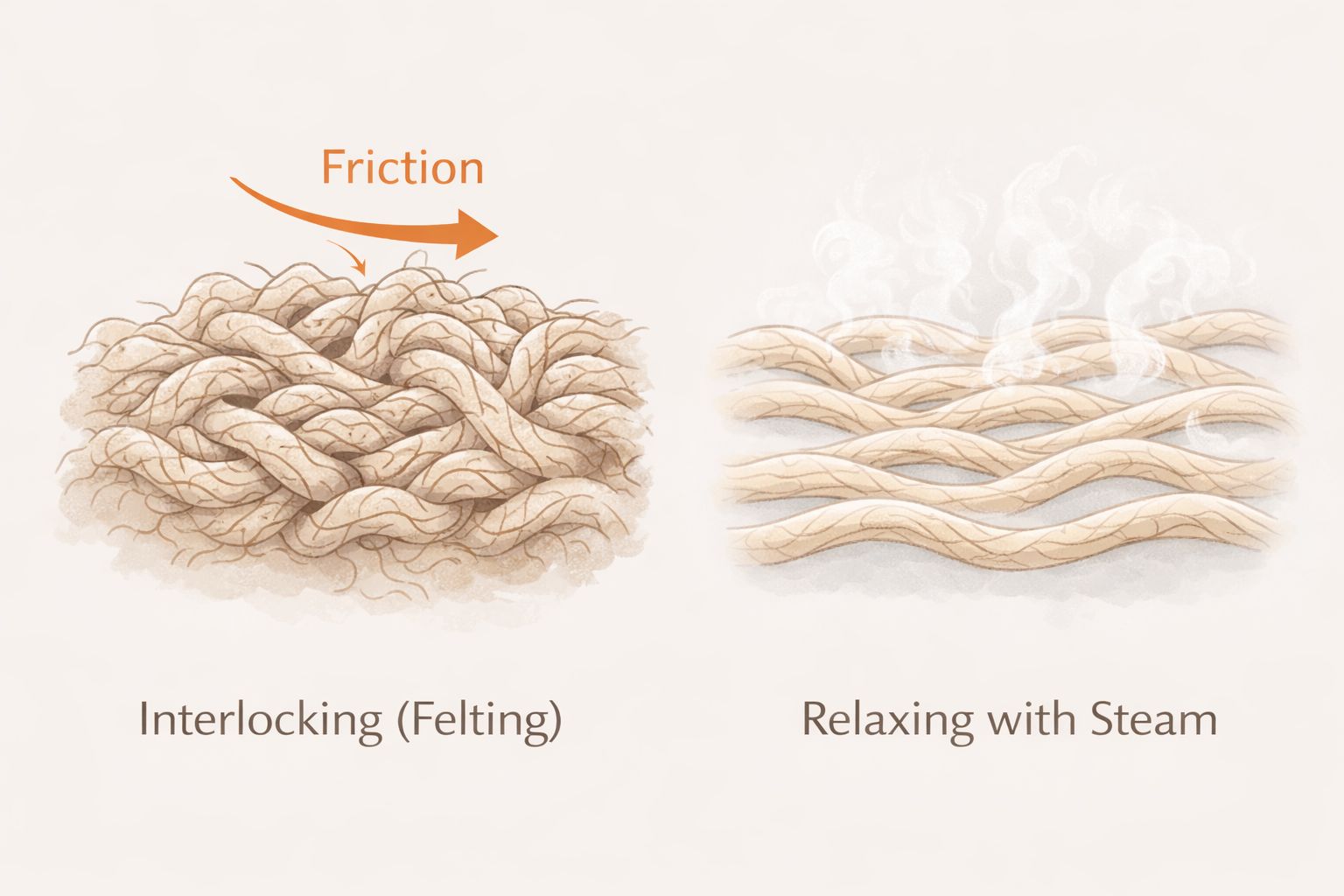
This is the most important distinction in all of wool care. In a washing machine, the sweater is tumbled and rubbed, causing the microscopic scales on the wool fibers to open up and interlock with each other like tiny pieces of Velcro. This process is irreversible and results in a garment that is dense, matted, and significantly smaller. Steaming is a passive activity. The garment hangs still while a cloud of steam gently passes through it. Without that tumbling, rubbing, or wringing action, the fibers have no chance to felt together. However, steaming is not completely without risk. If you hold the steamer too close or soak a very heavy sweater, the combination of moisture and gravity can cause it to stretch slightly while it hangs. Technique matters more than the tool itself. The sweater's construction also plays a role. A fine-gauge (like 16G) sweater is lightweight and will recover almost instantly. A chunky, low-gauge (like 7G or 5G) knit is much heavier and more sensitive to moisture and gravity, requiring more careful handling to prevent distortion.
How to Steam a Wool Sweater?
You're convinced that steaming is the way to go, but you want to do it right the first time. You need a clear, step-by-step method to ensure you get professional results without any risk of mistakes.
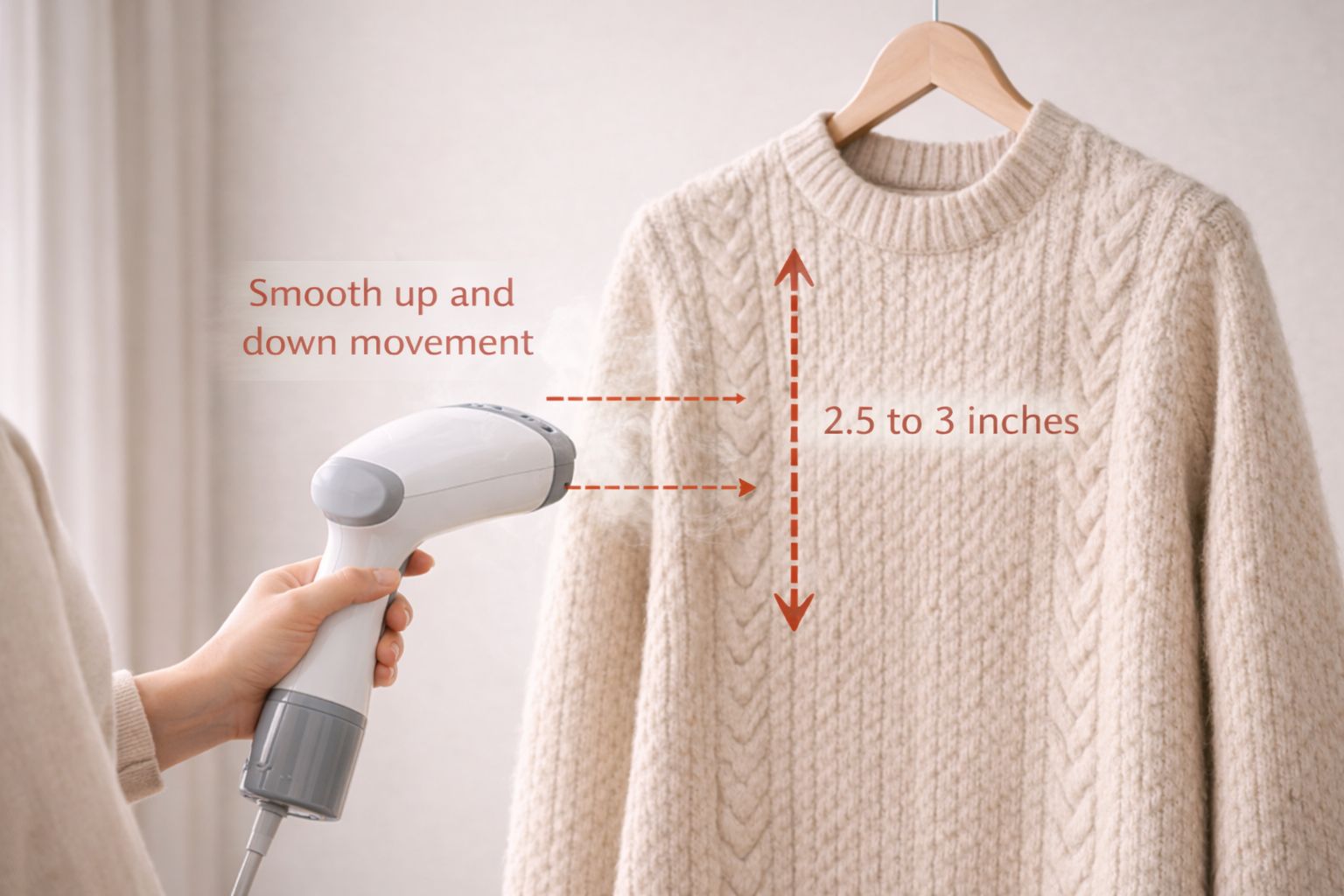
Hang the sweater on a proper hanger, hold the steamer a few inches away, and pass it over the fabric in a smooth, continuous motion. Never press the steamer head against the wool. Allow it to dry completely before wearing or folding.
Providing clear care instructions is a big part of how we support our brand partners. A customer who knows how to care for their garment is a happy, repeat customer. For perfect results every time, follow this simple process that we recommend to brands for their care labels and online guides. It's about being "steam-friendly" from production to post-purchase.
Step-by-Step Steaming Guide
- Preparation and Setup: Start by filling your steamer with distilled water. Tap water contains minerals that can build up inside the steamer, causing it to spit or leave deposits on your clothing. Hang your sweater on a wide, padded, or flocked hanger. This supports the shoulders properly and prevents the sharp bumps that thin wire hangers can create.
- The Steaming Technique: Turn on your steamer and let it heat up completely. Once it's producing a steady flow of steam, hold it upright and about 3-5 inches (8-12 cm) away from the fabric. It’s crucial to never let the hot plate of the steamer touch the wool directly. Move the steamer in a smooth, vertical motion, working from the top of the garment down. You'll see the wrinkles release almost instantly. For stubborn creases, you can steam from the inside of the sweater as well.
- Drying and Finishing: After steaming, the sweater will be slightly damp. This is the most critical stage for preventing stretching. Leave it hanging in a well-ventilated area for at least 30 minutes, or until it is completely cool and dry to the touch. For very heavy or chunky sweaters, it is safest to lay them flat on a clean towel or a mesh drying rack to finish drying. This removes the pull of gravity and ensures the sweater maintains its perfect shape.
Conclusion
Steaming is the safest and most effective way to remove wrinkles from wool. By using the right technique and allowing it to dry properly, you can easily refresh your sweaters and maintain their quality.