The 2025 sweater trends are ushering in a new era of texture-driven design in high-end menswear. Beyond colour palettes and silhouettes, it’s the knit structures and stitch techniques that are shaping the visual and tactile language of the Autumn/Winter 2025 season. For designers and brand founders focused on business-casual refinement, understanding these stitch innovations is key to creating collections that stand out—quietly but confidently.
From dimensional ribs to engineered jacquards, this season’s 2025 sweater trends reflect a shift toward elevated surface construction and subtle detail—making stitch design one of the most defining tools in premium men’s knitwear.
Structured Geometric Stitch: Subtle Precision for Elevated Knitwear
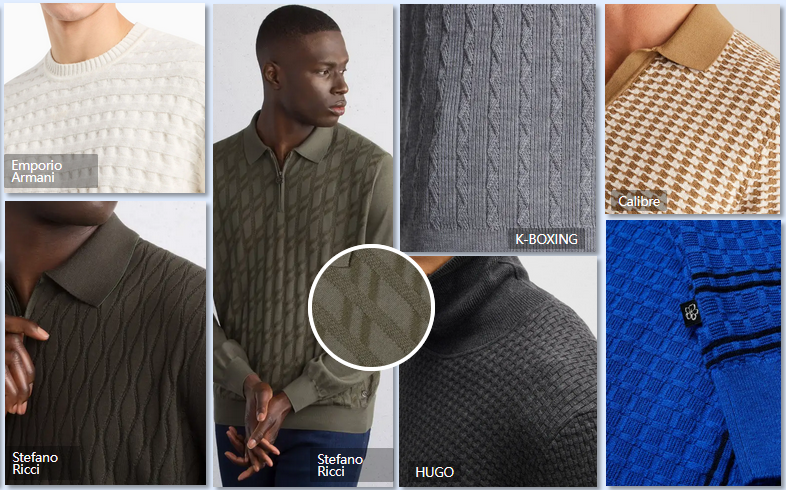
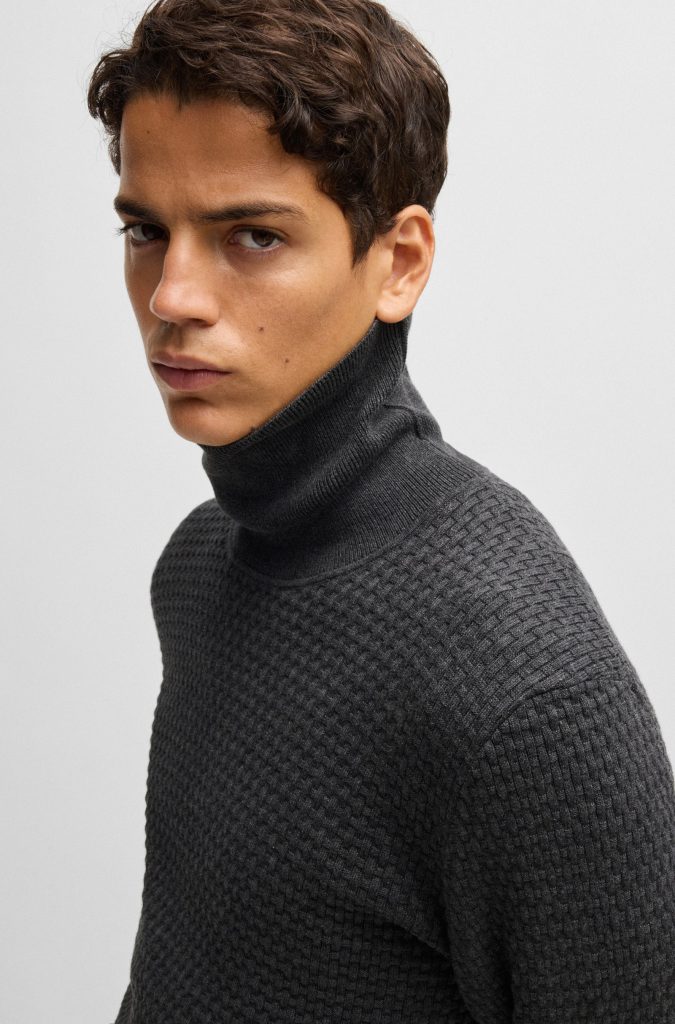
Among the most commercially viable trends for 2025 menswear sweaters is the return of structured geometric stitchwork—a category rooted in sharp visual order and professional appeal. Built using Reverse Jersey, Float Jacquard, and Walk Stitch combinations, this technique creates symmetrical, grid-like surfaces ideal for elevated everyday pieces.
What makes this stitch direction stand out is its ability to enhance the formality of a garment without relying on prints or high-contrast yarns. When used in full-body formats, it conveys a clean, graphic edge—perfect for business-layering pullovers or refined smart-casual cardigans. Brands seeking a minimal-yet-complex texture can achieve excellent results with these stitches, especially when combined with high-twist merino or compact cotton yarns.
Pairing with structured trims and tonal palettes, this category is one of the most versatile and scalable directions for Autumn/Winter 2025.
Ripple and Racked Stitch Lines: Refined Texture Movement


Linear textures built with Ottoman (Ripple) Stitch, Racked Full Cardigan, or Walk Stitch variations introduce movement and architectural depth. These low-relief surfaces can flow horizontally, vertically or diagonally, creating optical rhythm.
Used full-body or in panels, ripple stitches elevate otherwise basic silhouettes into structured, contemporary knitwear with clean, dynamic lines. Variations with tonal yarns or blended fibres can also enhance the surface complexity while keeping the piece wearable and polished.
Reverse Jersey Relief: Texture You Can Feel—Not Just See

Texture is king in 2025—but not every brand wants bulky cables or overt 3D designs. Enter the refined world of Reverse Jersey relief structures: created through subtle play between Knit and Purl fields, often combined with Links Stitch, Half Cardigan Rib, or Ottoman bases.
What makes this approach different is its ability to suggest volume without bulk. The raised areas are formed through micro-reliefs, often used to outline pattern fields or create tactile rhythms across the garment. These can be implemented in tonal yarns, offering depth up-close while remaining quietly neutral from a distance.
Designers may also integrate plaited yarns for dual-tone effects, or contrast-spun ribs to emphasize the surface play. The result? A sophisticated knit that feels luxurious, yet wearable every day.
Float & Double Jacquards: Tactile Patternwork Returns

The 2025/26 season sees the return of jacquards—refined, not loud. Common forms include:
-
Float Jacquard with subtle geometric repeats
-
Double Jacquard with structured contrast
-
Tub Jacquard for depth without weight
-
Bird’s Eye (sesame dot) structures
Applied in monochrome or two-tone setups, these textures lean toward retro references without becoming kitsch, offering a modern take on traditional knits. Combined with compact silhouettes or oversized layering pieces, they offer strong visual identity across diverse collections.
Argyle & Fair Isle Diamonds: Grid Structures with Attitude
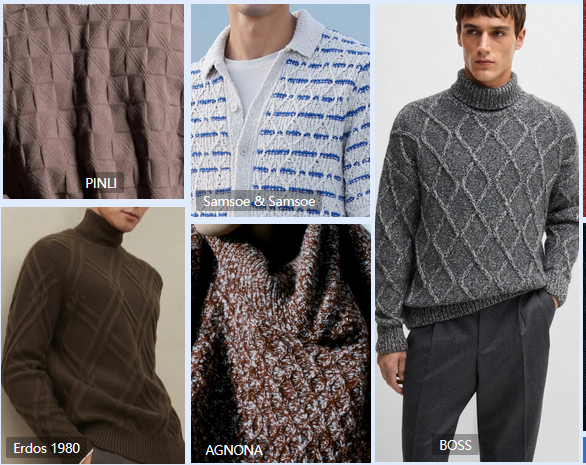
Grids and diamonds take centre stage again, this time built through Float Jacquard, Plating, or Cable overlay. Some highlight subtle Argyle Patterns, while others use structured layouts with rhythm and control.
In both cases, the look remains clean and tactile—perfect for building cross-season sweater vests, sleeveless pullovers, or refined layering pieces. With small-scale variation or deliberate offset placement, these grid designs can communicate both structure and movement.
Letterform Structures: Text as Texture
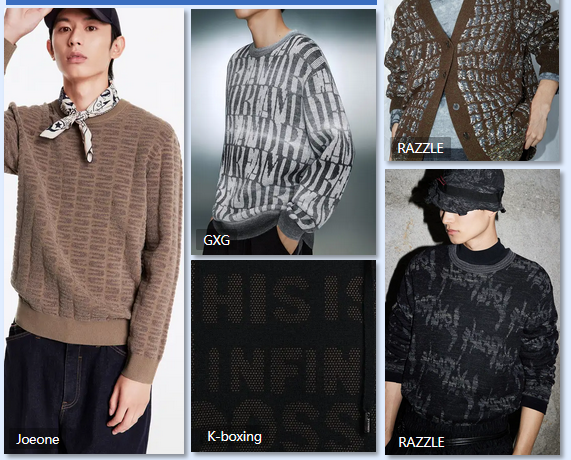
Typography is evolving from graphic print to texture-based storytelling. Through techniques like Purl Jacquard, Plaiting, or Tuck Stitch with tone-on-tone yarn, letters become woven into the garment.
Depending on yarn contrast, some are legible, others abstract—creating visual depth that feels considered, not commercial. Especially powerful when applied subtly to cuffs, hems, or shoulder zones for branding elements without overt logos.
Mixed Cable Structures: A New Language of Layered Texture

Traditionally a heritage staple, cables are being radically reimagined in the AW25/26 season. Instead of repeating identical ropes, designers are exploring multi-scale, multi-layered cable combinations, producing what we call Composite Cable Structures.
These may include:
-
Zigzag Cables crossing through Argyle Patterns
-
Full Milano Cable overlays forming large-scale diamonds
-
Layered Racked Cables with drop-needle or purl detailing beneath
-
Or Offset Multi-Shape Cables forming non-linear rhythms
Importantly, these cables no longer aim for symmetry—they're intended to surprise. Used as chest panels, sleeve details or full-body motifs, this direction works well for brands seeking editorial weight, or those building a luxury sport aesthetic.
For extra dimension, some designers are integrating Double Jacquard bases under the cable layers, creating hybrid structure-and-pattern zones.
Textured Stripes: Structure Over Print
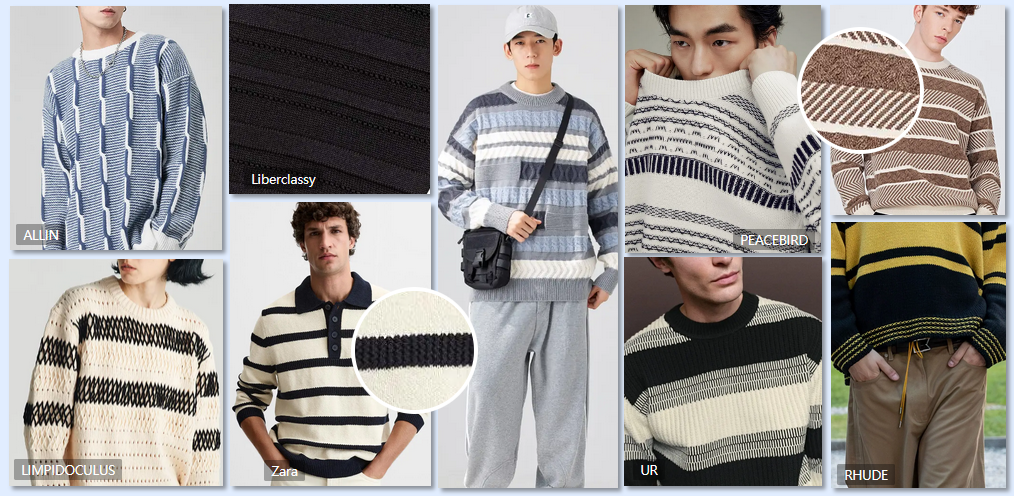
Stripes remain essential, but the emphasis is now on texture over contrast. Using 1x1 Rib, Pointelle, Rack Stitch, or Tuck techniques, designers can build tonal stripes with structure and shadow.
Applications include engineered chest panels, sleeve striping, or subtle waistband accents, all geared toward versatility and polish.
Advanced Rib Applications: Shaping & Highlighting
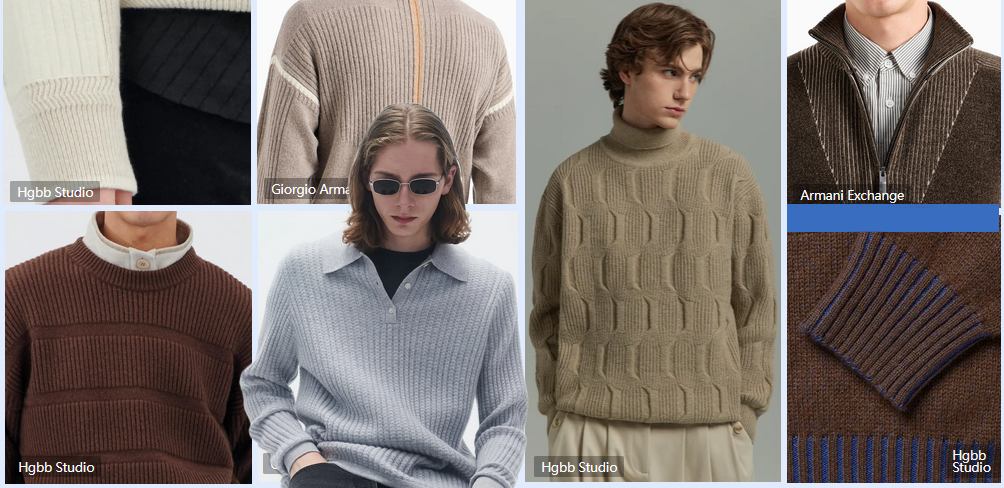
Half Milano Rib, Full Milano (Double Knit), and Rib with Needle Transfers are no longer background features. These ribs define structure, shape the torso, and draw the eye to designed focal points.
We’re also seeing Chest Corset Ribs, where directional ribs are used to simulate sculpted underlayers—particularly in slim fits or sport-inspired styles. Combined with tonal or contrast yarns, these ribs can both shape the garment and support a premium look.
Float Yarn Surfaces & Controlled Fringe
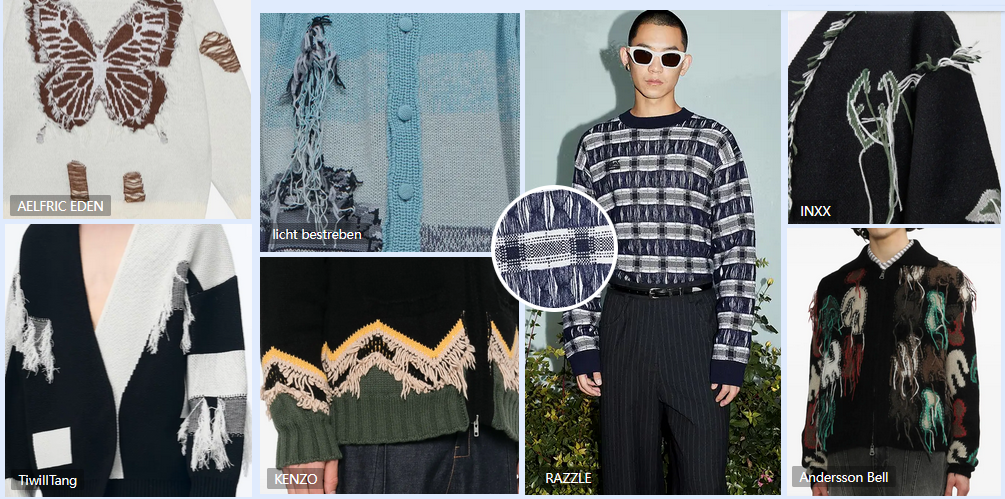
Adding visual flair, Float Stitch surfaces and short controlled fringes are emerging as niche but impactful elements. By floating contrasting yarns on surface rows or forming loop-based accents, designers create depth without bulk.
Used sparingly in collars, hems or back panels, this technique brings in movement and tactility, while maintaining commercial practicality. Full-body use is possible, but fringe length and placement must be carefully controlled for wearability and washing performance.
Key Takeaways for 2025
✔ Commercially Scalable Directions
-
Structured Geometric Stitch (Reverse Jersey + Float Jacquard)
-
Micro Relief using Purl & Ottoman Bases
-
Clean Ripple Stitch with vertical or diagonal flow
✔ Editorial / Showroom Statements
-
Asymmetric Mixed Cable Compositions
-
Chest Rib Sculpting & Offset Grid Cables
-
Text as Structure: Purl-Based Letterform Textures
✔ Ideal Yarns
-
Extra fine merino
-
Merino-cotton blends
-
Compact long-staple cotton
-
Plaited multi-counts for depth
Final Thoughts
The 2025 sweater landscape is defined not by print, but by precision and tactile engineering. With knitwear playing an increasingly central role in luxury and lifestyle wardrobes, stitch design becomes a key lever for differentiation.
Whether you are designing a minimalist capsule, business-lounge staples, or standout showroom pieces—structured stitch language is how modern brands will speak confidence this season.
Explore the New Season with HD Merino
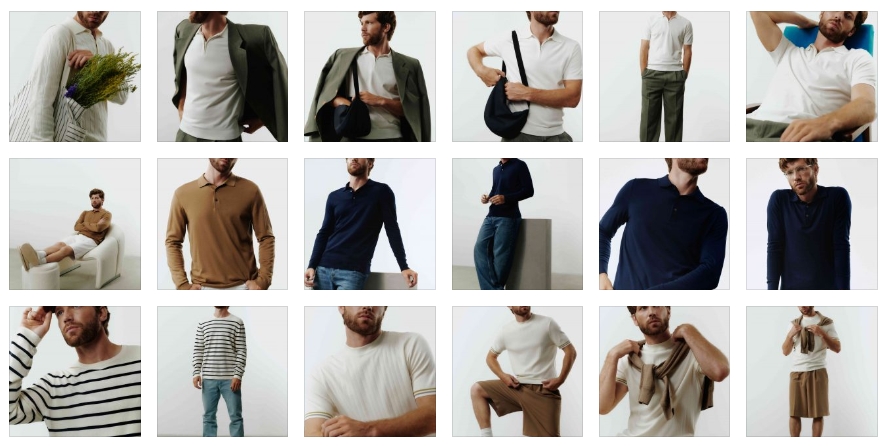
At HD Merino, we help premium brands turn technical ideas into commercially-ready garments—offering swatch development, stitch translation, and curated yarn solutions tailored to your market and positioning.
📩 Request our exclusive AW25/26 Stitch & Yarn Catalog
and speak to our product development team to preview these stitch directions in real swatches.