I have worked with merino wool sweaters for many years, and I often hear one question from buyers and customers: does merino wool stretch over time? I understand why this question matters. A sweater may look perfect in the fitting room, but the customer also wants to know how it will look after many wears. A premium merino sweater should feel soft. It should also keep its shape.
I usually answer this question with a simple idea. Merino wool can relax during wear, but this is not always permanent stretching. In most cases, the sweater goes through natural relaxation. The fibers and knitted loops settle with body movement. A good merino sweater can often recover after resting, washing, or light steam care. This is one reason I value merino wool for high-end knitwear.
I also use a simple AIDA path when I explain this to brands. I first get attention by showing a sweater before and after wearing. I build interest by explaining the natural crimp of merino wool. I create desire by showing how good structure helps the sweater recover. I guide action by giving clear development and care rules. The goal is simple. I want the sweater to stay beautiful in real life, not only in the sample room.
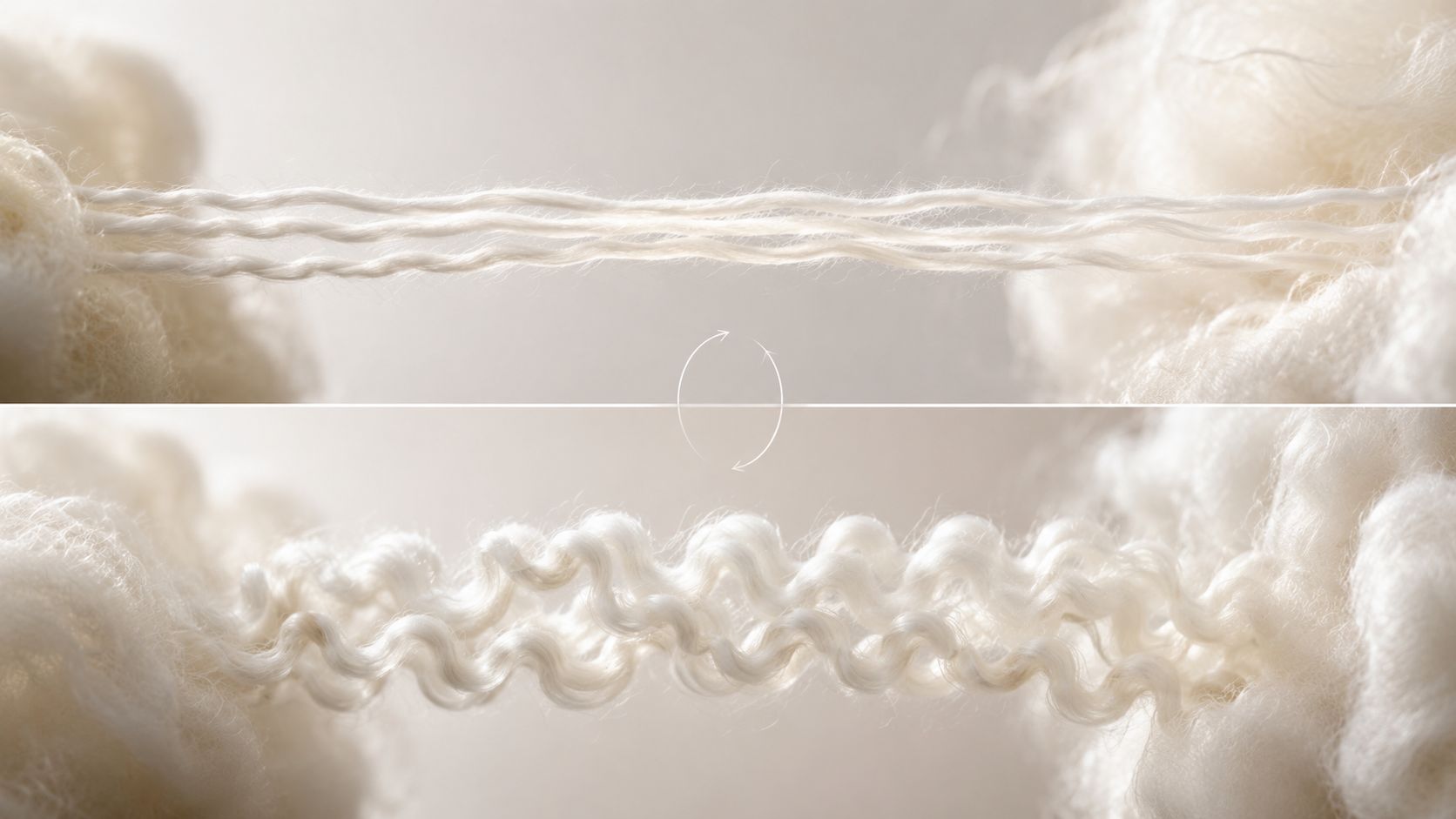
Merino wool has a natural crimp structure. I often describe it as a small spring inside the fiber. This crimp helps the fiber bend, move, and return. It gives merino wool better recovery than cotton and some other natural fibers. Yet fiber alone is not enough. The yarn twist, ply structure, knitting gauge, stitch type, finishing, and care method all affect shape retention.
This is where the PAS problem often appears. The problem is that customers think any change in fit means the sweater has stretched out forever. The pain is that the brand may receive complaints, even when the garment only needs rest or proper care. The solution is to explain the difference between relaxation and permanent stretching. I also believe the factory must control yarn, structure, and testing before bulk production.
| Factor I Check | How It Affects Shape | Why It Matters |
|---|---|---|
| Fiber Crimp | It helps merino wool recover after movement. | It supports natural elasticity. |
| Yarn Twist | It controls softness and structural support. | Too loose may feel soft but lose stability. |
| Ply Structure | It affects strength and recovery. | Balanced ply can improve shape retention. |
| Knit Structure | Rib, jersey, and cable behave differently. | Each style stretches and recovers in a different way. |
| Gauge | Fine gauge is usually more stable than chunky gauge. | 16G often moves less than 7G. |
| Care Method | Wet hanging and heat can distort shape. | Correct care protects the sweater. |
Does Merino wool stretch after wearing?
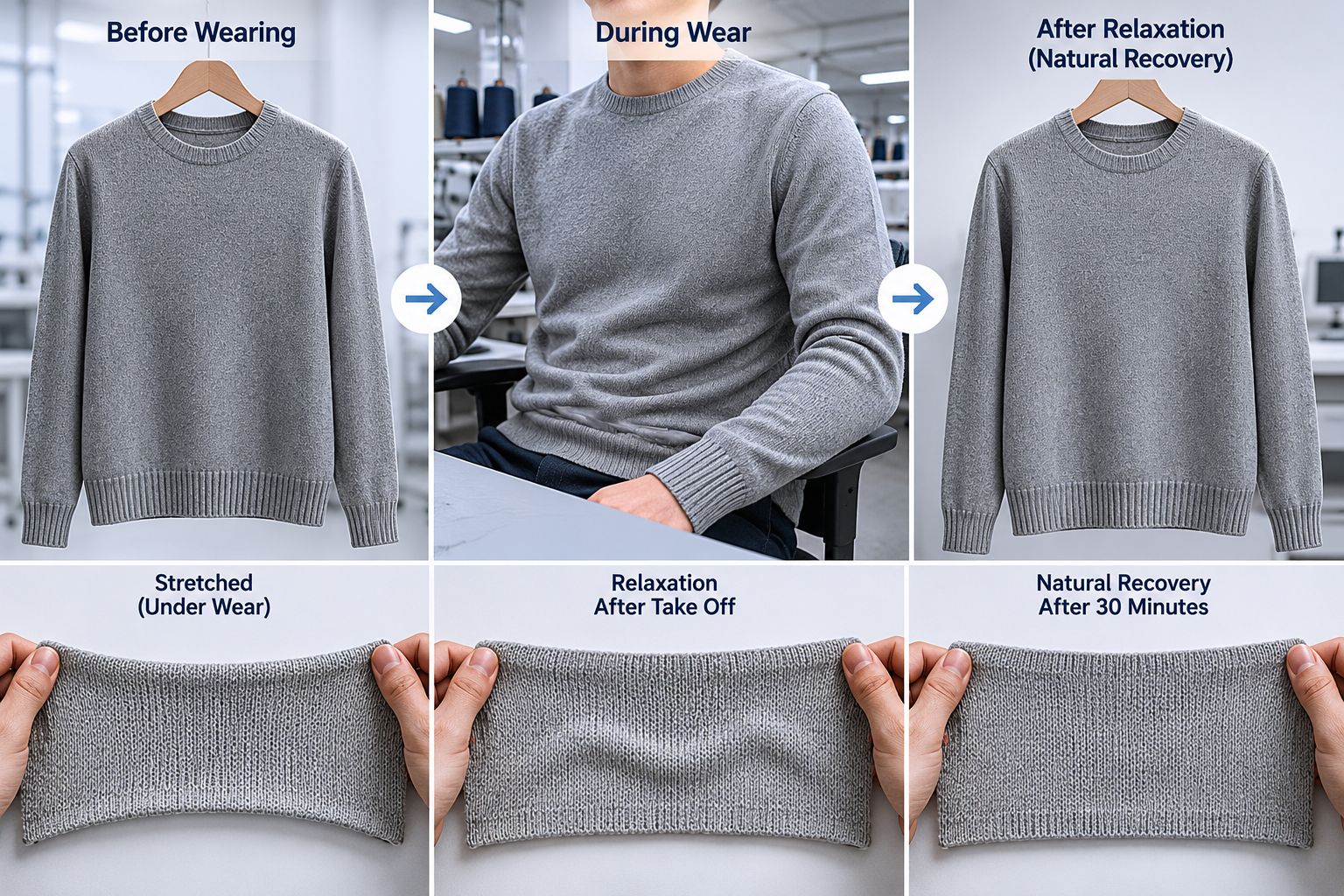
Merino wool can stretch a little after wearing, but I prefer to call it relaxation. The body moves. The elbows bend. The shoulder area carries weight. The fabric follows the body for a while. This is normal for knitwear. A good merino sweater should not become permanently loose after normal wear.
I look at the whole garment before I judge the risk. Rib structures have the most stretch and often strong recovery. Jersey is usually more stable, but it has less natural stretch. Cable knit can look rich and warm, but it can be heavier. A heavy cable sweater may pull down because of gravity. Gauge also matters. A fine 16G merino sweater is usually more compact. A chunky 7G sweater has larger loops and may show more visible relaxation over time.
Dive Deeper: I always explain the difference between relaxation and permanent stretching because this difference prevents many misunderstandings. Relaxation means the knitted loops have settled after movement. The sweater may feel slightly looser after a full day of wear. If the yarn and structure are good, the garment can recover after resting flat overnight, after a correct wash, or after light steam care. Permanent stretching is different. It means the structure has been pulled beyond its normal recovery range. This can happen when a wet sweater is hung on a hanger, when the garment is pulled strongly while damp, or when a heavy sweater is stored hanging for a long time. Knit structures respond in different ways. Rib can expand a lot and return well if the yarn has good recovery. Jersey may look cleaner and more stable, but it may not stretch as much. Cable knit can be beautiful, but the added weight can increase downward pull. This is why I never judge shape retention by fiber alone. I check stitch, gauge, garment weight, shoulder construction, and washing results together.
For brands, this question is not only about consumer care. It is also a development question. If I choose a very soft yarn with too little twist, the sample may feel wonderful, but the garment may relax too much after wear. If I use a balanced yarn and the right stitch density, I can create better recovery without losing the premium hand feel.
Is there a way to stretch out merino wool?

There is a way to adjust merino wool slightly, but I do not recommend strong stretching. If a merino sweater feels a little tight after washing, I may use gentle moisture, light steam, and careful hand shaping. I lay the garment flat. I ease the fabric slowly. I do not pull hard. I also do not hang the sweater when it is wet.
Merino wool can respond to gentle shaping because the fibers and loops can relax. Yet the structure has limits. If I force the sweater, I may damage the loops. I may also distort the shoulder, neckline, sleeve opening, or hem. Once these areas lose balance, the sweater may not look clean again.
Dive Deeper: Fully-fashioned knitwear has a real advantage in shape retention because the panels are shaped during knitting. I value this method for premium merino sweaters. It can reduce uneven stress around the shoulder, neckline, and armhole. In a cut-and-sew structure, the panels are cut from knitted fabric and then sewn. This can work well for some products, but it may create different tension around seams. In fully-fashioned knitwear, I can control shaping more directly. I can also place decreases, increases, and linking points in a cleaner way. This helps the garment sit better on the body. It also helps the sweater recover after wear when the yarn and stitch density are well planned. If a customer wants to stretch a merino sweater slightly, a fully-fashioned structure can often respond more evenly because the stress is better distributed. Still, I do not treat this as permission to pull hard. I prefer gentle blocking. I use light moisture or steam, reshape the sweater flat, and let it dry in the correct position. This method respects the structure instead of fighting it.
This is another PAS issue. The problem is that customers sometimes try to fix a tight sweater by pulling it hard. The pain is that they may stretch one part more than another. The shoulder may grow. The hem may wave. The sleeve may become uneven. The solution is to reshape gently and slowly. If the sweater is expensive or badly distorted, I suggest professional blocking or repair instead of home pulling.
Does Merino get softer over time?
Merino wool often gets softer over time. I see this as a normal part of fiber relaxation and surface smoothing. When the sweater is worn, the fibers move slightly. The surface becomes less stiff. The hand feel can become more comfortable. Fine merino, especially lower micron merino, can become very pleasant against the skin after repeated wear.
Yet softness is not the only target in manufacturing. A sweater that is too soft may lose support. I need to balance softness with recovery performance. If the yarn is very loose, it may feel soft in the showroom. It may also pill faster or relax more after wear. This is why I do not chase softness alone. I look for controlled softness.
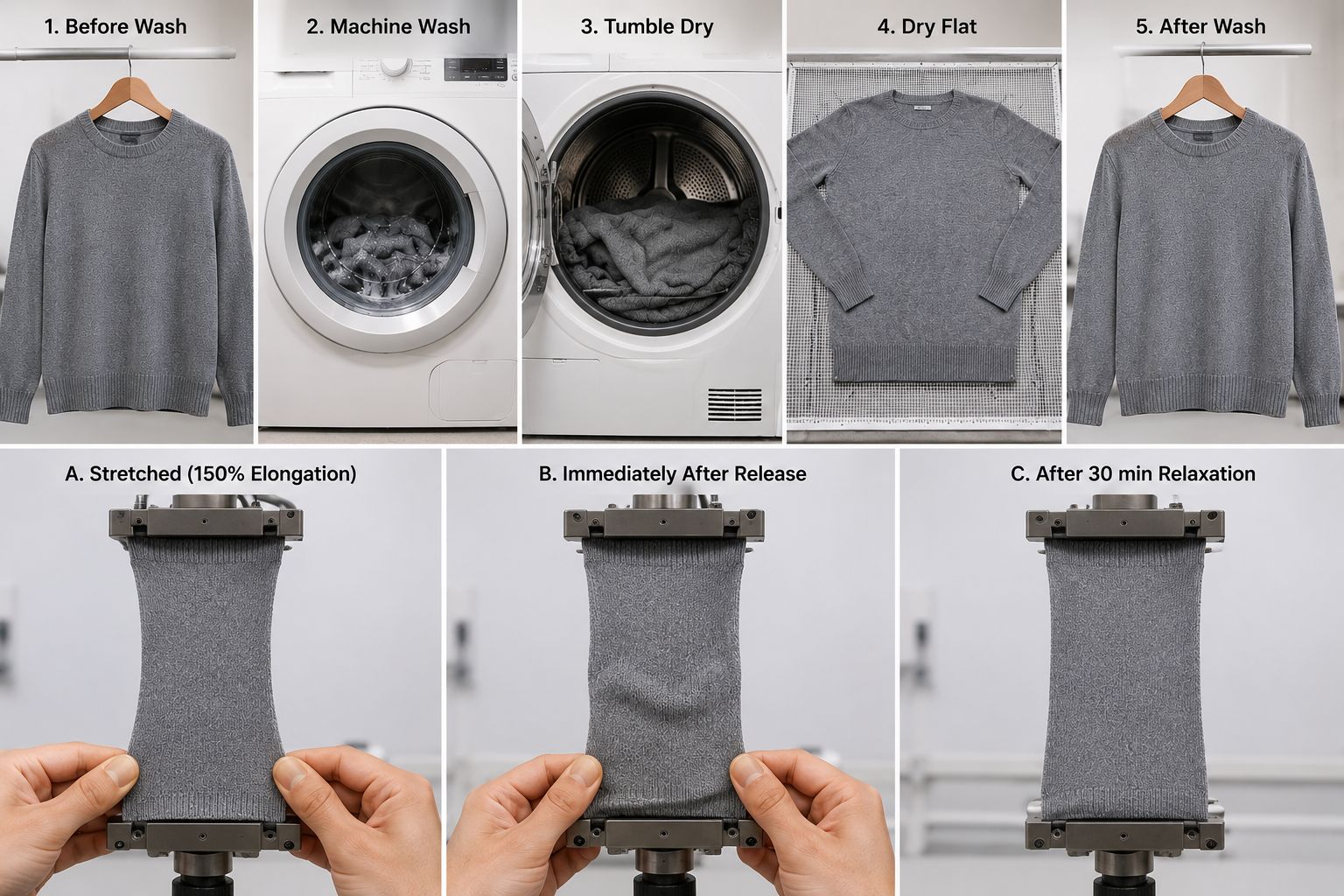
Dive Deeper: I often tell brands that softness and recovery must be developed together. A lower micron merino yarn can feel more gentle on the skin, but the yarn structure still matters. If the twist is too low, the fiber ends may move more on the surface. This can make the sweater feel soft at first, but it may also reduce stability. If the twist is too high, the sweater may recover well, but it may feel firmer than the brand wants. Ply structure also changes the result. A balanced two-ply yarn can give better strength and surface control than a very loose single yarn. Stitch density matters too. A compact structure can hold shape better, while a looser structure may feel relaxed but less stable. During development, I check wash and recovery testing. I measure the garment before and after washing. I check body length, chest width, sleeve length, shoulder width, neckline, and hem. I also review pilling and surface change. This testing helps me decide if the sweater is only becoming softer or if it is losing structure. For high-end merino products, I believe this balance is one of the most important quality points.
Care also changes softness and shape. The most common problem I see is not normal wearing. It is wrong care. A wet wool sweater becomes heavier because it holds water. If the customer hangs it to dry, gravity can pull the body and shoulders downward. If the sweater is stored on a hanger for months, the shoulder can develop bumps or stretch. If the customer uses high heat drying, the fiber and structure can change. If the customer pulls the sweater while wet, the loops may distort.
For this reason, I always suggest flat drying and folded storage. I press out extra water with a towel. I reshape the sweater on a flat surface. I let it dry naturally. I fold it for storage instead of hanging it. These steps sound simple, but they protect the sweater more than many people realize.
For brands, shape stability should be planned early. I would set clear standards before bulk production. I would review yarn twist, ply, gauge, stitch density, panel balance, and finishing. I would also run wash and recovery testing. If the sweater relaxes too much in the sample stage, I would adjust before production. This is cheaper and better than solving complaints after shipment.
I also think product pages should explain care in plain words. Customers should know that merino wool can relax and soften with wear. They should also know how to help it recover. A brand can say that the sweater should be rested between wears, dried flat, and stored folded. This kind of guidance reduces the idea that “wearing made it loose.” It also helps customers protect the garment.
Conclusion
I see merino wool stretch as a normal but controllable topic. Merino wool can relax after wearing, but high-quality merino knitwear should not easily become permanently loose. The natural crimp of the fiber helps recovery. The right yarn twist, ply, stitch structure, gauge, and fully-fashioned construction can improve shape retention.
If someone asks me does merino wool stretch over time, I would answer in a practical way. It can relax with wear. It can get softer over time. It can also recover well when the garment is well made and well cared for. The biggest risks usually come from wet hanging, long-term hanging storage, high heat drying, and pulling the sweater while damp.
As a manufacturer, I believe shape retention starts before the sweater reaches the customer. It starts with fiber choice, yarn engineering, gauge planning, fully-fashioned development, pre-shrink finishing, and wash and recovery testing. It continues with clear care instructions. When these parts work together, a merino wool sweater can stay soft, comfortable, and stable for a long time.