You've designed a beautiful knitwear collection, but your job isn't done. The first time a customer washes that sweater, your brand's reputation is on the line. One mistake can ruin the garment.
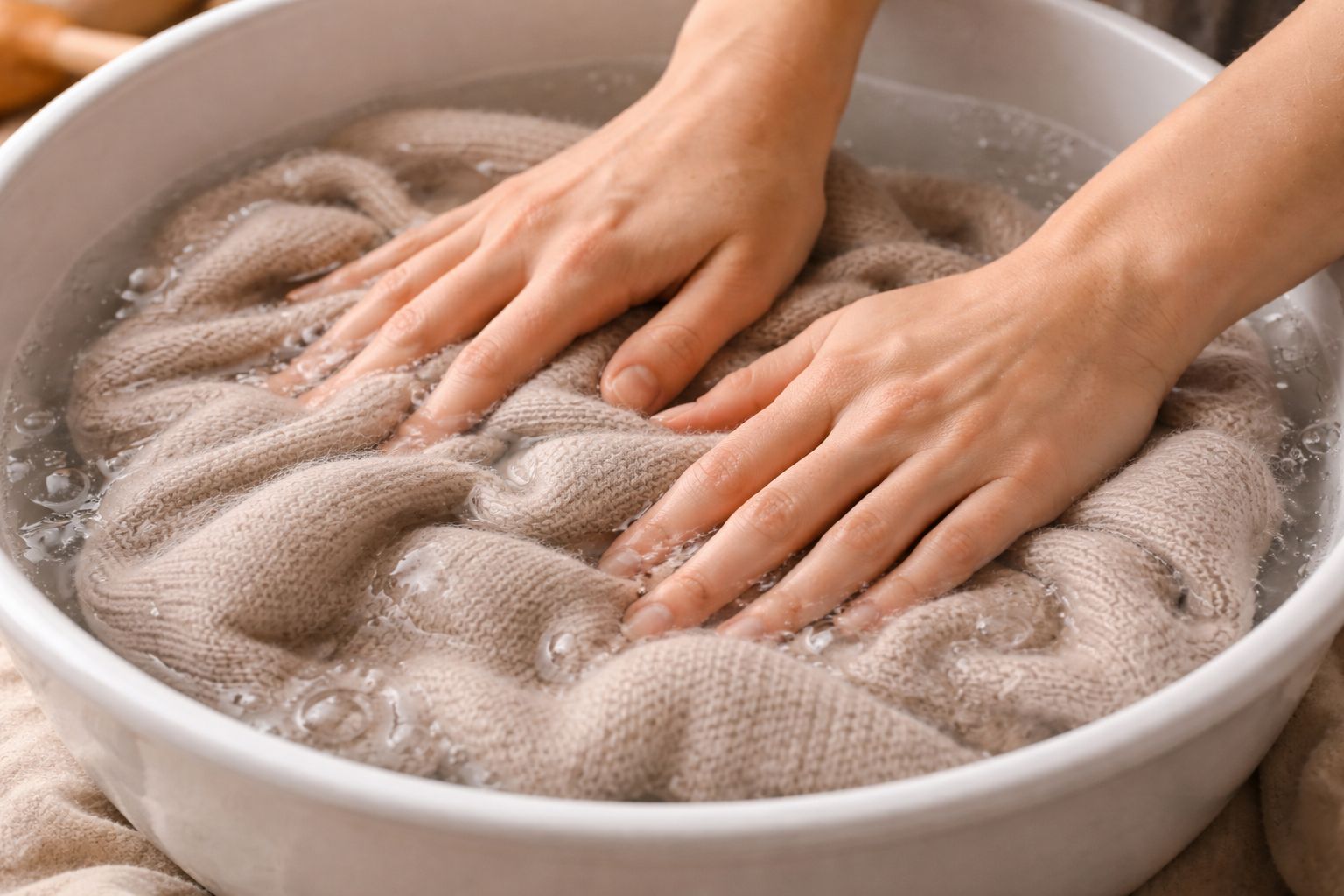
The best way to wash knitwear is by hand in cool water (under 30°C) with a pH-neutral detergent. Gently squeeze, never wring, and lay it flat on a towel to air dry away from direct heat or sunlight. This preserves the fiber's integrity and the sweater's shape.
This is a constant conversation I have with brand partners and their product managers, like Oliver. He knows that a customer's long-term satisfaction hinges on the garment's durability, not just its look on the shelf. The care label is more than a legal requirement; it's our promise that the sweater will last. But those tiny symbols don't tell the whole story. Understanding why we recommend certain methods is the key to helping your customers love their knitwear for years. Let's break down the science behind the perfect wash.
How should I wash my knitwear?
You're trying to give your customers the best advice. Should they use a special soap? How do they handle a wet, heavy sweater without stretching it into a completely new shape?
The key is to think about managing the sweater's structure, not just cleaning it. Use cool water and a wool-specific, pH-neutral detergent. Gently submerge and squeeze the sweater, avoiding any harsh rubbing or twisting, then lay it flat to dry.
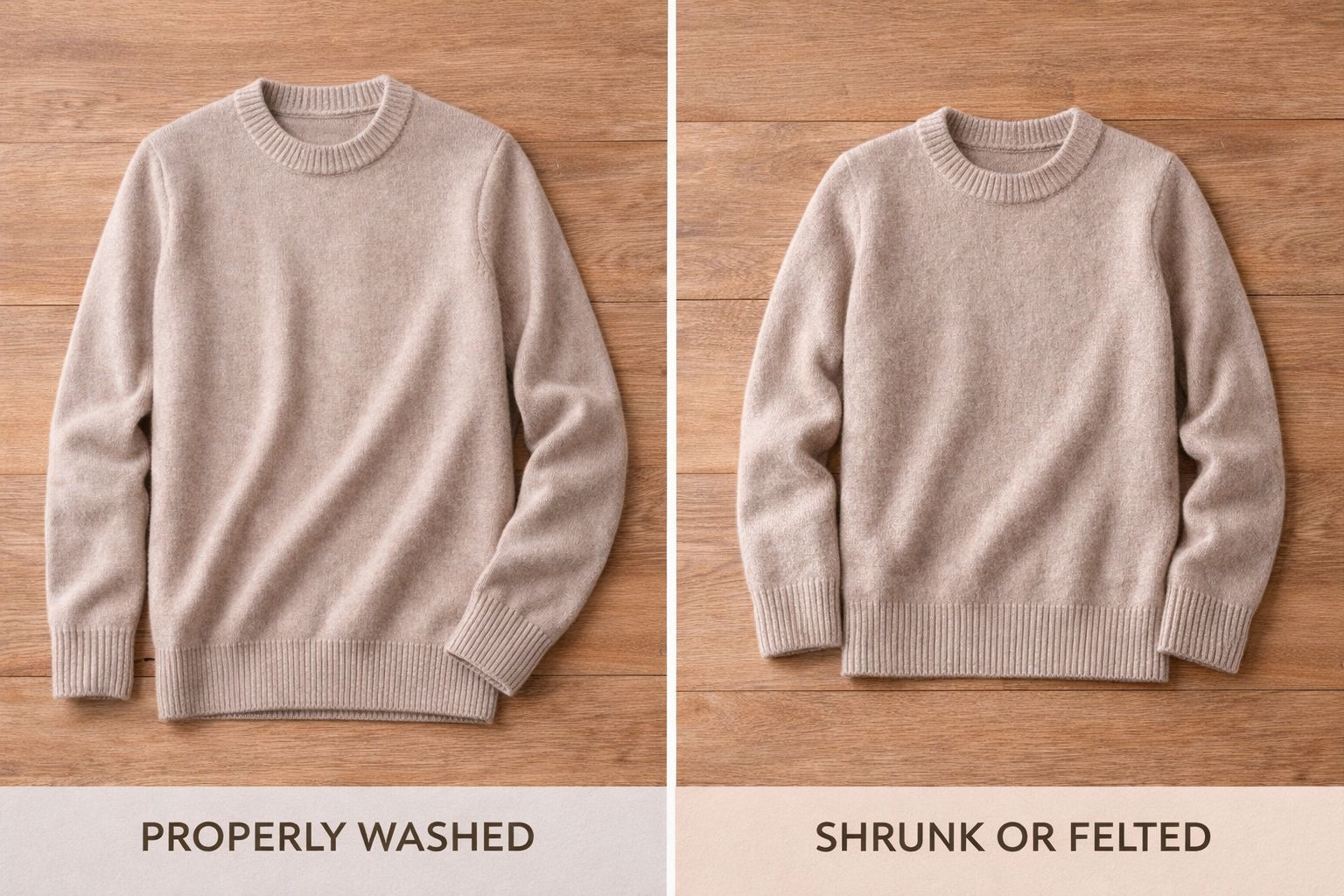
The real goal of washing knitwear is to maintain "structural stability." A sweater is a delicate matrix of loops. Water, heat, and friction are the enemies of this structure. Different yarns react differently. Merino wool's scales can lock together when agitated in warm water, causing irreversible shrinking—a process called felting. Cotton, while more stable, can become stiff if washed with harsh detergents. Blends are even trickier, as a mix of wool and polyester might shrink and stretch in unpredictable ways. This is why we are so specific about the process. Cool water keeps wool scales closed. A neutral detergent cleans without stripping natural oils or damaging protein fibers. Squeezing instead of wringing prevents the loops from distorting. This gentle approach protects both the fiber and the knit structure.
| Yarn Type | Water/Heat Reaction | Risk of Friction | Best Practice |
|---|---|---|---|
| Merino Wool | High risk of felting/shrinking in heat | Pilling and felting | Cool water, neutral soap, minimal handling |
| Cotton | Stable, but can stretch when wet | Can become stiff or lose softness | Cool to warm water, gentle cycle |
| Blends | Unpredictable, depends on fibers | Can cause pilling and deformation | Follow the most delicate fiber's rules |
Can I machine wash knitwear?
Your customers live busy lives. They see "hand wash only" and might see it as a barrier to purchase. You wonder if there's a safe way to offer them the convenience of a machine wash.
Yes, you can machine wash some knitwear, but only if the machine has a certified "Wool" or "Hand Wash" cycle. Always use a mesh laundry bag, select the coldest temperature, and use the lowest spin speed possible.
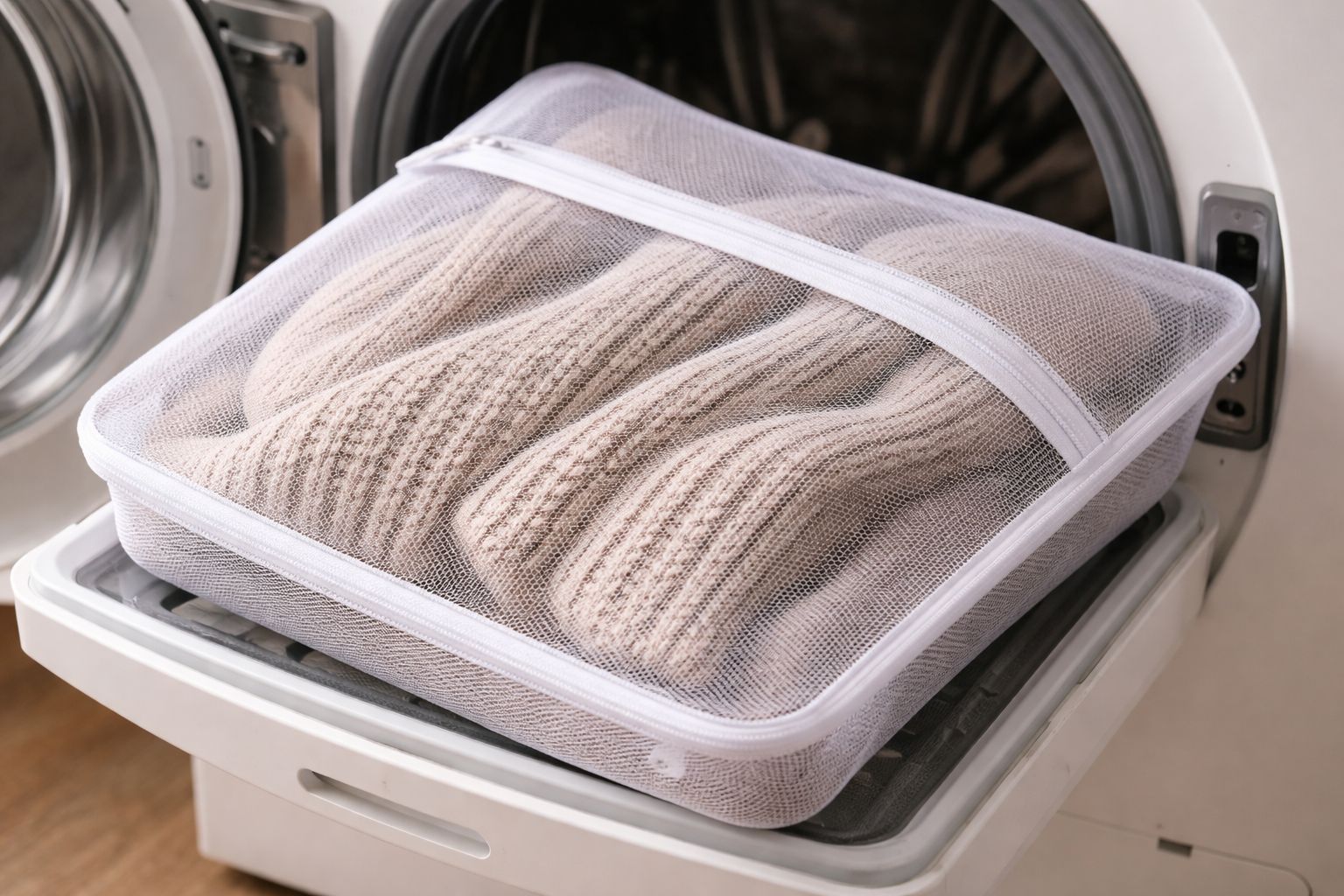
Even when a garment is "machine washable," we are putting a lot of trust in the technology. A standard wash cycle is a disaster for knitwear. The combination of tumbling, high-speed spinning, and often incorrect water temperatures creates the perfect storm for damage. The tumbling action causes friction, leading to pilling. The centrifugal force of a fast spin cycle can stretch and deform the sweater's structure, especially when it's heavy with water. Using a regular laundry detergent is also a major problem; the enzymes in many popular detergents are designed to break down protein stains, and since wool is a protein fiber, the detergent will literally eat away at the sweater over time. This is why, as manufacturers, we are so cautious. When we develop a machine-washable program for a brand, it involves rigorous testing—ensuring shrinkage is within a strict +/- 5% tolerance—and specifying only the gentlest cycles. For the customer, a mesh bag is non-negotiable; it reduces friction and prevents snagging.
Can knitwear go in the dryer?
The sweater is washed, but it's wet and heavy. The dryer seems like a quick and easy solution to get it dry and wearable again. You need to know if you can tell your customers this is okay.
Absolutely not. A tumble dryer is the single fastest way to destroy a knit garment. The combination of high heat and tumbling motion will cause dramatic shrinking, felting, and deformation. It is the one step that is completely non-negotiable.
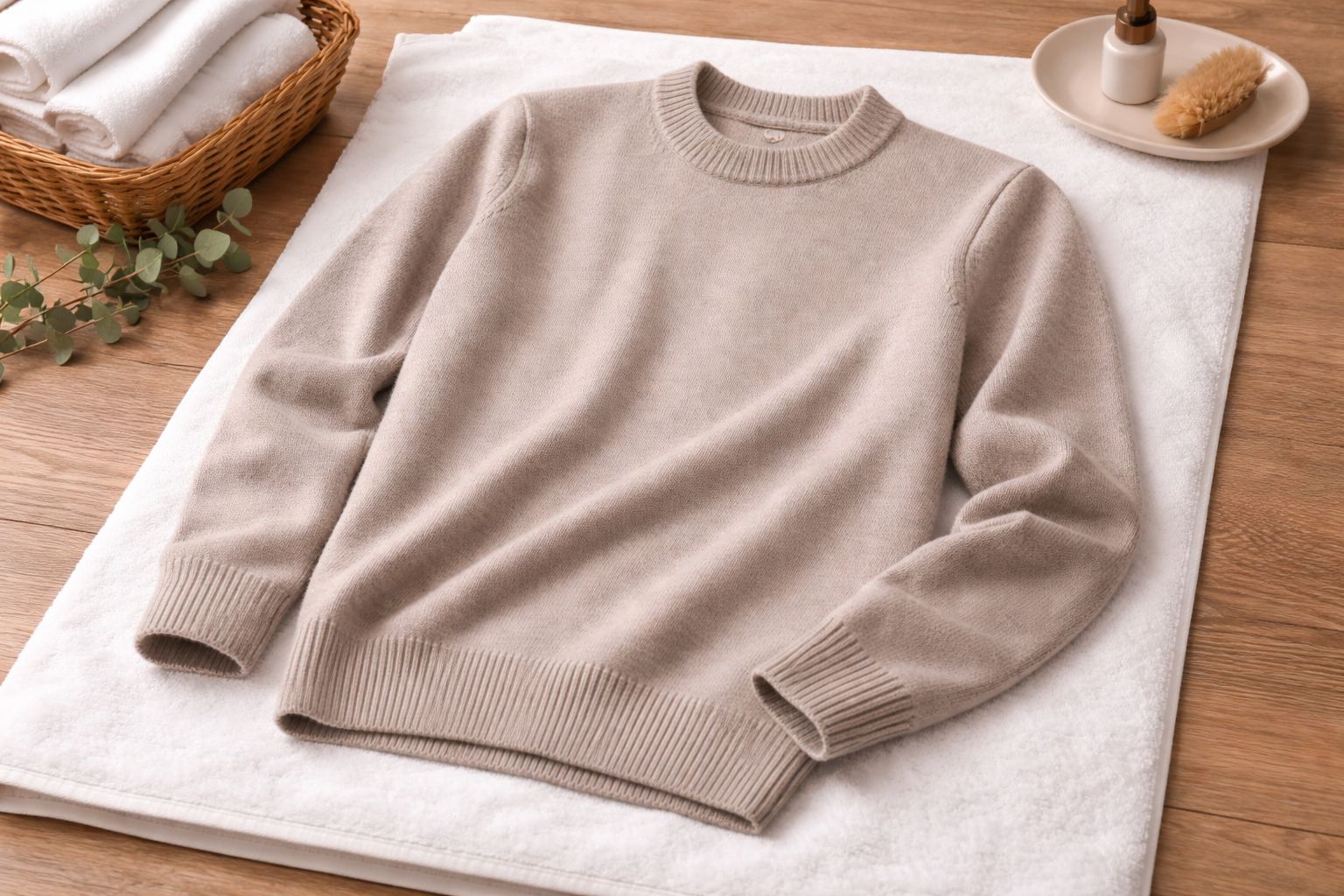
Let's look at what happens inside a dryer. It's a combination of all the worst things for knitwear, happening at once. First, the high heat provides the energy to cause rapid, irreversible felting in wool, making it shrink dramatically. Second, the constant tumbling creates immense friction, which not only causes pilling but also helps those wool fibers lock together even more tightly. Finally, as the sweater tumbles, its own weight when wet pulls on the knit structure, causing stretching and distortion. The result is a garment that is simultaneously smaller, misshapen, and fuzzy. This is why the care label universally shows a square with a circle inside, crossed out. When we design sweaters, even robust ones with a tight 16-gauge knit and fully-fashioned construction for stability, they are not designed to withstand this. The only safe way to dry knitwear is to gently roll it in a towel to remove excess water and then lay it flat on a fresh towel or drying rack, away from direct sun or heat.
Conclusion
The best way to care for knitwear is with a gentle touch. Use cool water, a mild soap, and always lay flat to dry. This protects the sweater’s structure and ensures it lasts.