You pull your favorite wool sweater from the closet, only to find it's stretched out, with weird bumps on the shoulders. You invested in quality knitwear, but storing it wrong is ruining it.
The best way to protect your wool sweaters is to fold them, never hang them. Folding prevents gravity from stretching the delicate fibers over time, preserving the sweater's original shape, fit, and lifespan. A proper fold is the single most important storage technique.
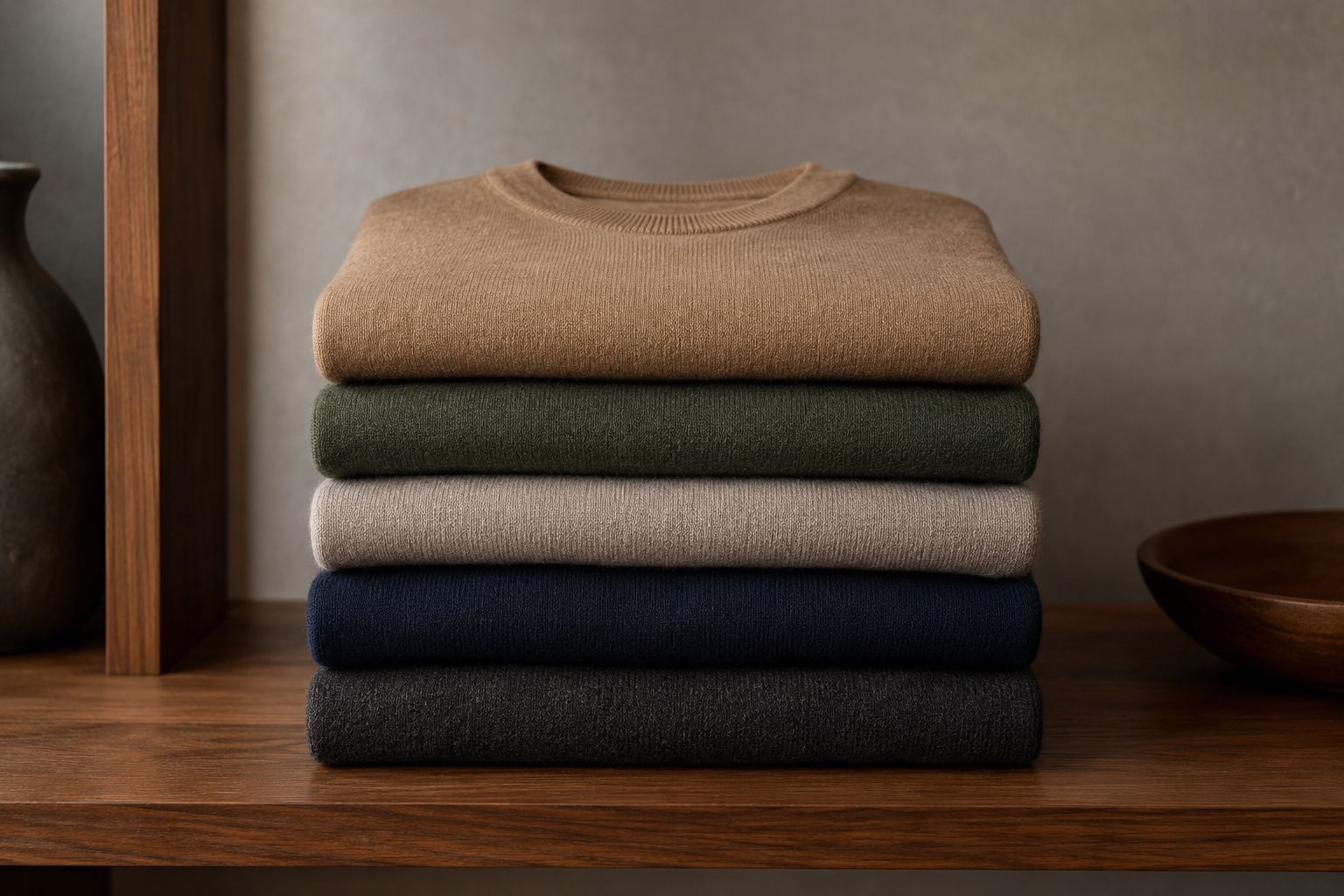
As a knitwear manufacturer, we spend months perfecting a sweater's fit and structure. We design them to last, but how you store them at home makes all the difference. We know that fully-fashioned sweaters, which are knitted into shape rather than cut and sewn, have better structural integrity. But even the best-made sweater can't fight gravity forever. Let’s go over the storage methods that we use and recommend to keep your knitwear looking new.
Should You Fold or Hang a Wool Sweater?
You see sweaters hanging in stores, so it seems like the right way to organize them. But after a few weeks on a hanger, your sweater's sleeves look longer and the shoulders are misshapen.
You should always fold your wool sweaters. Hanging puts the entire weight of the sweater on a small area, causing the wool fibers to stretch permanently. Folding distributes the weight evenly, preventing distortion, shoulder bumps, and a stretched-out body.
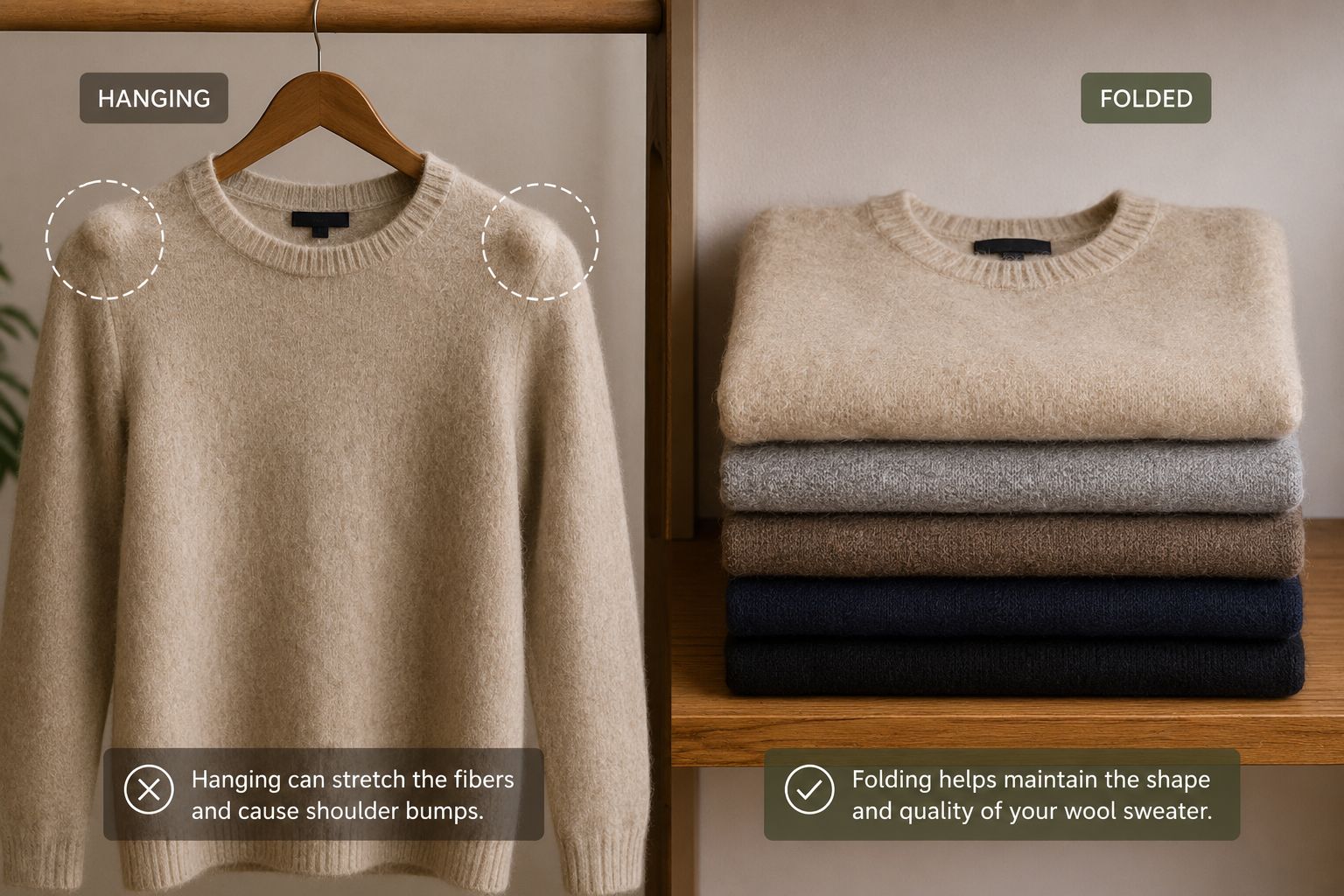
Wool fibers have a natural crimp, which gives them elasticity and helps them return to their shape. However, this elasticity has its limits. When a sweater hangs for months, gravity constantly pulls on it. This continuous stress slowly straightens out the fiber's crimp, leading to permanent stretching. We see this in our lab when we perform shape retention tests.
Here’s a simple breakdown of what happens:
| Storage Method | Effect on Knit Structure | Long-Term Result |
|---|---|---|
| Hanging | All the garment's weight pulls down from the shoulder points. The knit structure slowly elongates. | Permanent stretching, distorted neckline, and bumps on the shoulders from the hanger. The sweater's length can increase by inches. |
| Folding | The garment lies flat, so there are no specific stress points. The weight is evenly distributed and supported. | The sweater maintains its original shape and dimensions. The natural elasticity of the wool is preserved. |
This is why, from a manufacturing standpoint, we always ship our sweaters folded. It's the best way to protect the garment's intended fit from our factory to your closet.
How to Fold Wool Sweaters Without Stretching Them?
You know you need to fold your sweaters, but you're just balling them up and stuffing them in a drawer. This creates deep wrinkles and can still put stress on the knit if done poorly.
A simple, professional fold protects the sweater's structure and minimizes creasing. Lay the sweater face down, fold the sleeves in, then fold the body in half. For thicker sweaters, a file fold or a roll is even better to prevent compression.
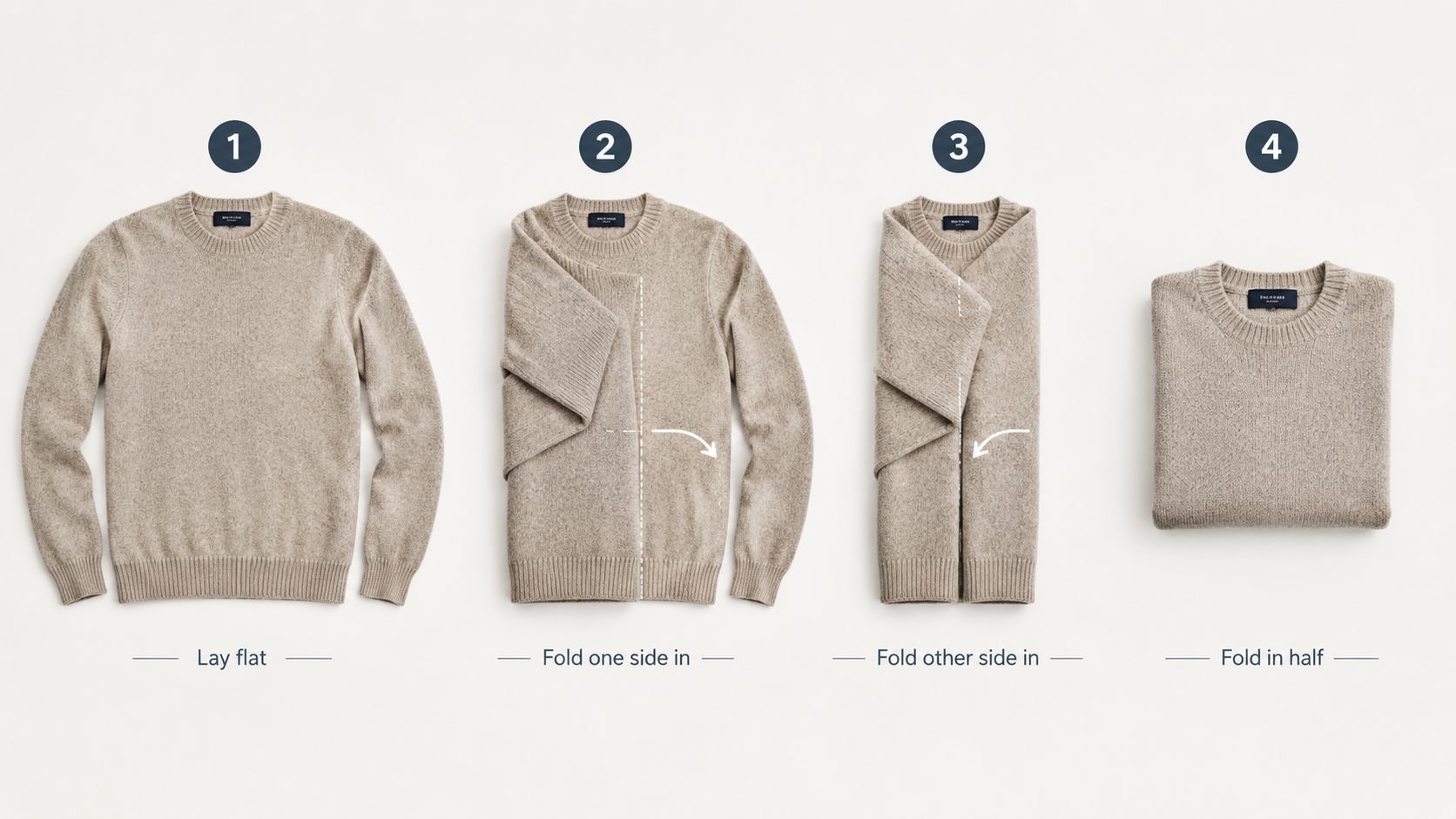
The right folding technique depends on the sweater's thickness and knit type. A fine-gauge Merino jersey shouldn't be folded the same way as a chunky cable-knit. The goal is to avoid hard creases and give the fibers room to breathe.
Common Folding Methods
Here are the techniques we recommend based on sweater type:
-
The Classic Flat Fold: Best for fine-to-medium gauge sweaters (like Jersey or Rib knits).
- Lay the sweater face down on a flat surface.
- Smooth out any wrinkles.
- Fold one arm straight across the back.
- Fold the other arm over the first.
- Fold the bottom half of the sweater up to the shoulders.
-
The File Fold: Ideal for storing sweaters vertically in a deep drawer.
- Start with the classic fold steps 1-4.
- Instead of folding it in half, fold the body into thirds. This creates a compact rectangle that can stand on its own.
-
The Roll: Perfect for chunky knits (like Cable or Aran sweaters) to maintain their loft and prevent compression.
- Lay the sweater face down and fold the arms in.
- Gently roll the sweater from the bottom hem up to the neckline. Don't roll too tightly.
This simple attention to detail ensures the structure we engineer into each garment is preserved.
What Is the Best Way to Store a Wool Sweater?
You’ve perfectly cleaned and folded your sweater, but now you have to put it away for the season. You're worried about moths, moisture, and musty smells ruining your investment while it’s stored.
The best way to store a wool sweater long-term is clean, folded, and protected. Store it in a breathable container, like a cotton garment bag or a canvas box, with a natural moth repellent like cedar or lavender. Never use plastic or vacuum-seal bags.
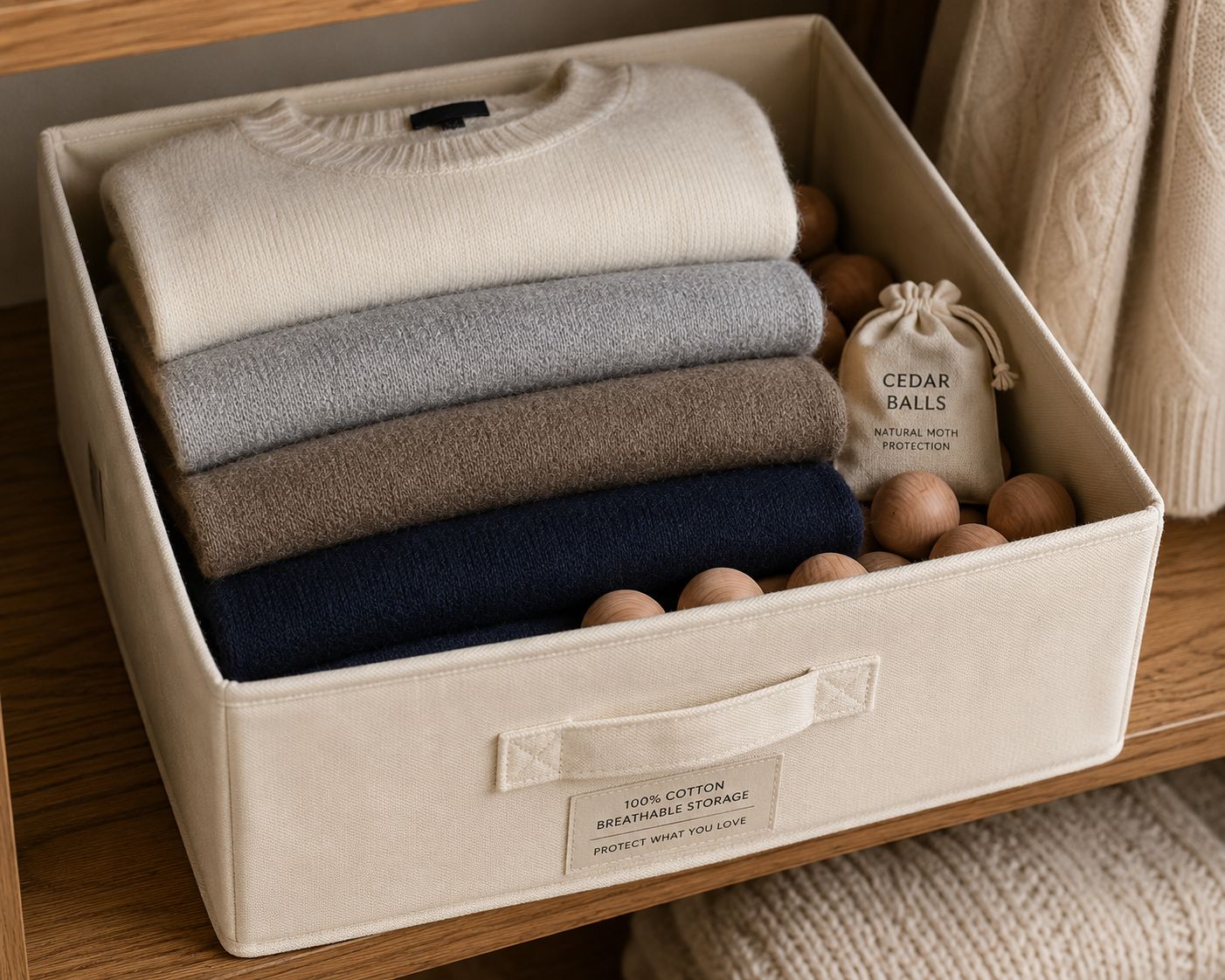
Long-term storage requires creating the right environment. Wool is a natural fiber, and it needs to breathe. Airtight plastic containers or vacuum bags are a terrible idea. They trap any residual moisture, which can lead to mildew and break down the wool fibers. The extreme compression from vacuum bags also crushes the wool's natural loft and crimp, permanently damaging its softness and insulating ability.
For a product developer, knowing how a garment behaves in storage is critical for customer satisfaction. Here are our best practices for seasonal storage:
| Storage Factor | Best Practice | Why It Matters |
|---|---|---|
| Cleanliness | Always wash sweaters before storing them. | Moths and other pests are attracted to body oils, perfumes, and food stains, not the wool itself. |
| Container | Use breathable bags (cotton, linen) or canvas storage boxes. | Allows air to circulate, preventing moisture buildup and musty odors while keeping dust off. |
| Pest Control | Add natural repellents like cedar blocks, lavender sachets, or dried rosemary. | These effectively deter clothes moths without the toxic chemicals found in traditional mothballs. |
| Environment | Store in a cool, dark, and dry place. Avoid attics, basements, or direct sunlight. | Heat and humidity promote mildew growth, while sunlight can cause colors to fade. |
By following these steps, you create a safe environment that preserves the sweater exactly as we designed it.
Conclusion
Folding is the best way to store your wool sweaters. It protects their shape and extends their life, ensuring your investment in quality knitwear pays off season after season.