You've heard the myth: wool is only for the coldest days because it's hot and makes you sweat. This common misconception can limit your brand's collection, keeping you from offering versatile, year-round knitwear.
The truth is, wool doesn't make you sweat more; it manages sweat better than any other fiber. Wool is a natural temperature regulator that absorbs moisture vapor before it becomes liquid sweat, keeping you far drier and more comfortable than cotton or synthetics.
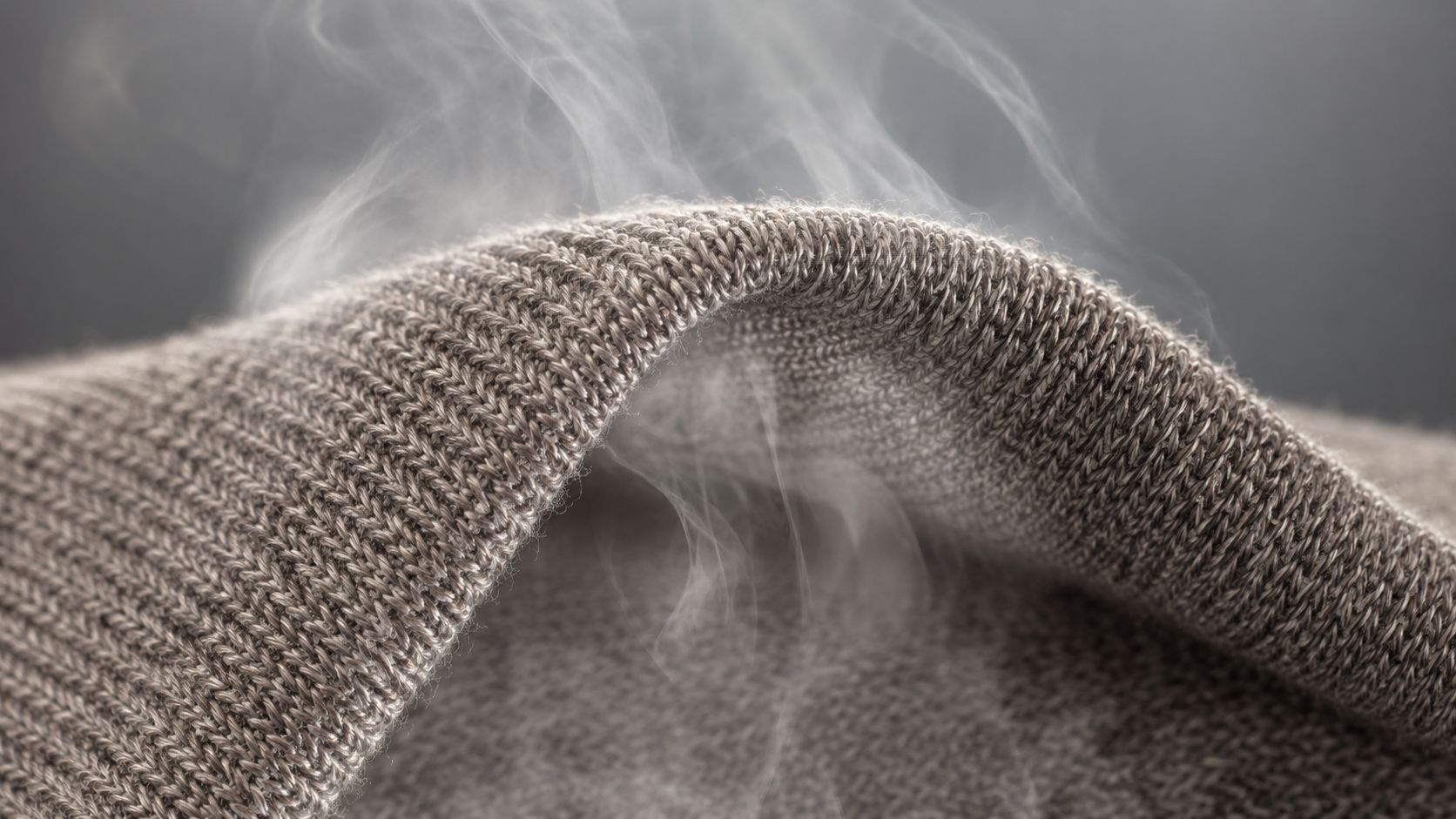
As a manufacturer, I've seen firsthand how wool's unique properties can transform a garment from a simple sweater into a piece of high-performance apparel. Let's break down the science behind why wool is the smartest choice for managing temperature and moisture.
Does Wool Make You Hot?
You're hesitant to add a wool sweater to your spring collection, worried customers will find it too warm. This limits your designs to heavy winter pieces, missing a huge market for transitional and all-season knitwear.
No, wool doesn't just make you hot; it's a dynamic thermal regulator. The natural crimp in wool fibers creates millions of tiny air pockets. These pockets trap body heat to keep you warm in the cold, but they also allow excess heat and moisture to escape when you're active.
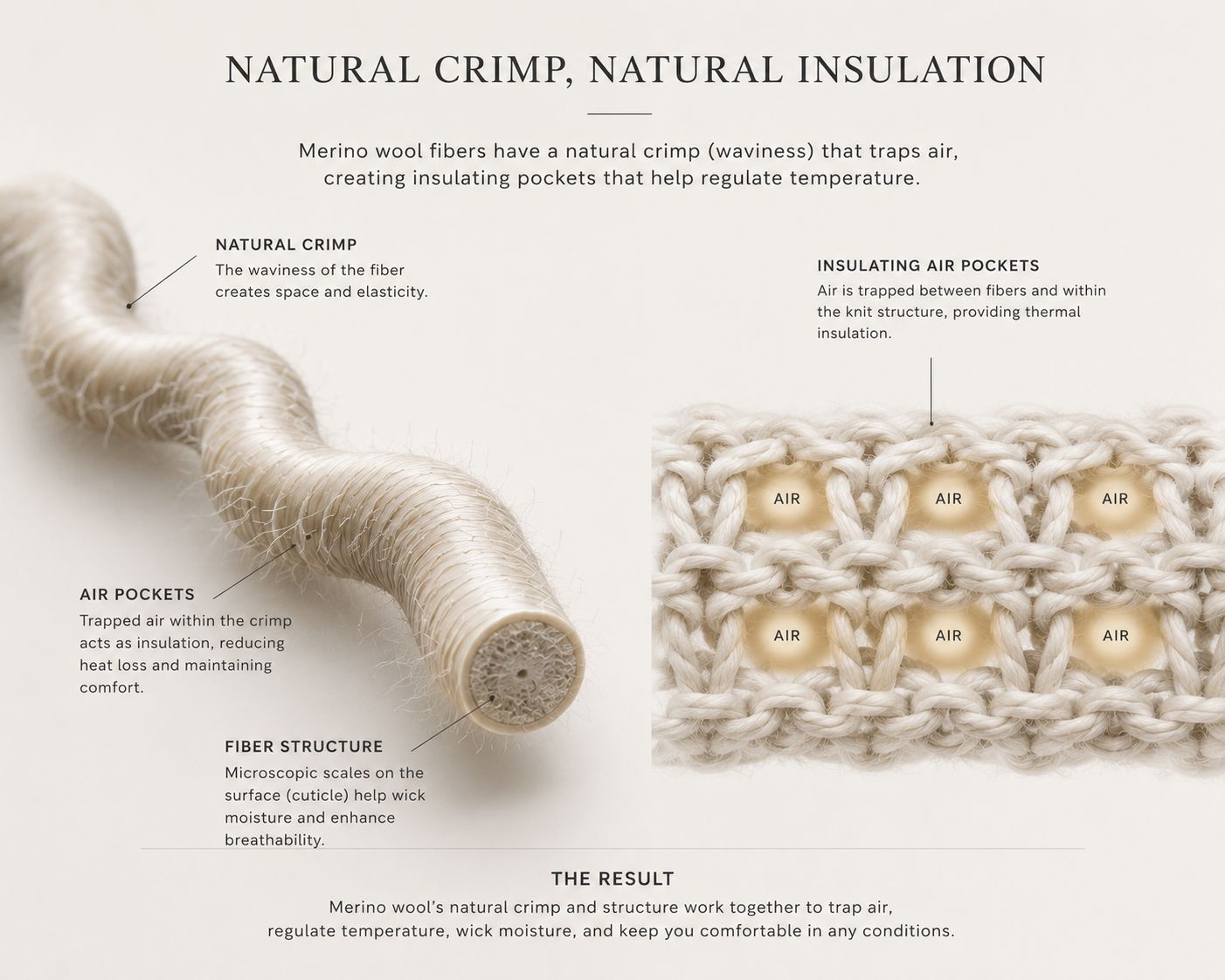
Think of wool not as a simple insulator, but as a personal climate control system. It works with your body to maintain a stable, comfortable temperature. This is a key insight I share with product developers like you. Instead of just thinking "warmth," we need to start thinking "regulation."
From Simple Warmth to Dynamic Regulation
Many materials offer warmth, but few offer true regulation. Understanding the difference is crucial for developing products that genuinely perform. Wool doesn't just trap heat; it manages it.
| Feature | Static Insulation (e.g., Down) | Dynamic Regulation (Wool) |
|---|---|---|
| Mechanism | Traps a thick layer of still air. | Creates a microclimate, trapping or releasing air as needed. |
| Best For | Extreme cold, low activity. | Variable conditions, moving between indoors and outdoors. |
| Moisture Handling | Can become ineffective when damp. | Breathes and manages moisture to maintain insulation. |
| Result | You feel warm, but can quickly overheat. | You feel consistently comfortable across a wider range of temperatures. |
As your manufacturing partner, we can engineer the level of regulation. For a winter coat liner, we might use a heavier gauge regular wool to maximize insulation. For a three-season cardigan, a fine-gauge Merino wool offers the perfect balance of lightweight warmth and breathability. It's about matching the fiber's properties to the garment's intended use.
Is Wool Very Breathable?
You need a material that feels comfortable against the skin all day, not one that feels clammy and suffocating. The word "wool" can sometimes bring up images of dense, heavy fabrics, making you question its breathability.
Yes, wool is one of the most breathable fibers available. A single wool fiber can absorb up to 30% of its own weight in moisture vapor without feeling damp to the touch. It actively pulls perspiration away from your skin before it even feels like sweat.
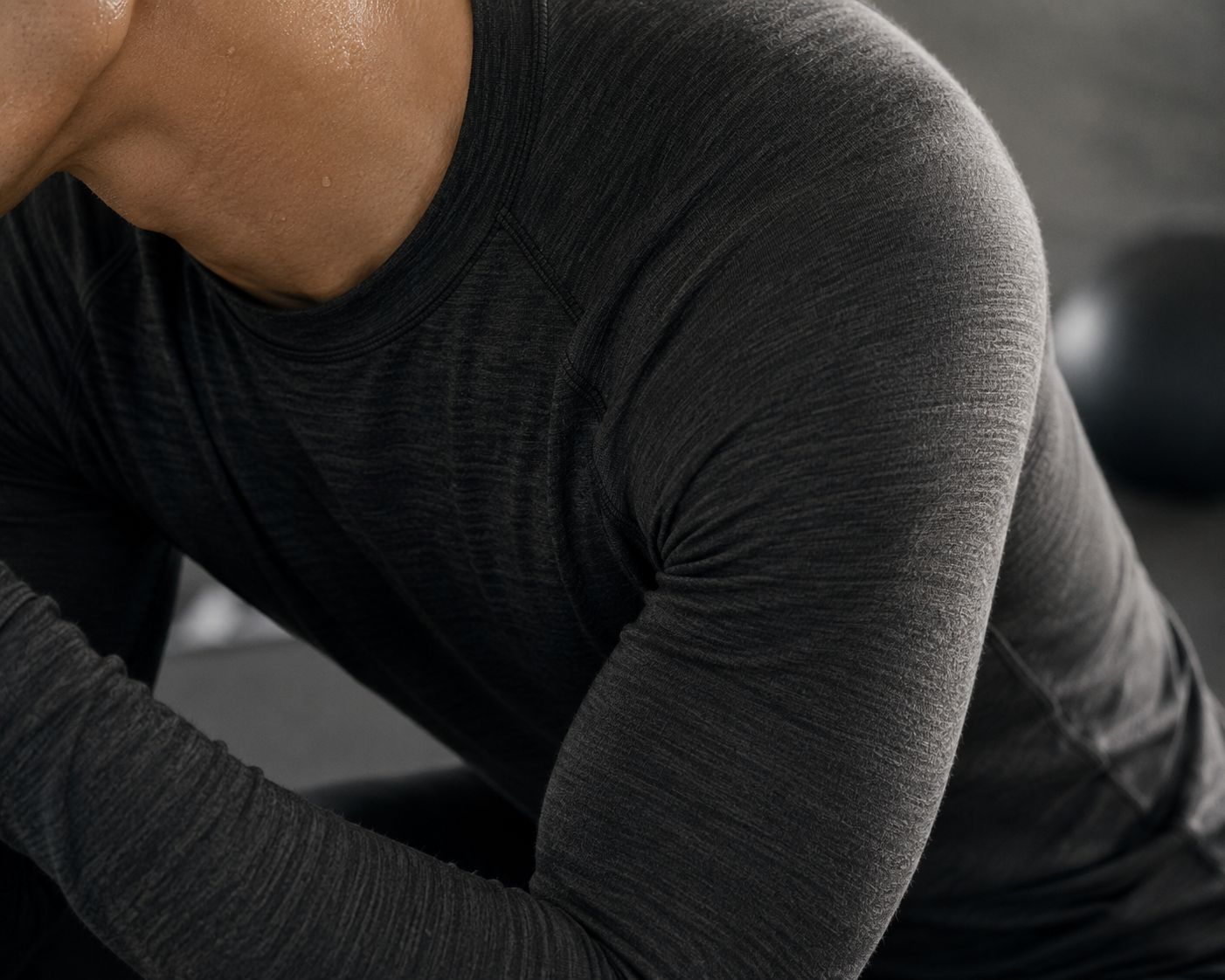
This process of absorbing moisture is key to its comfort. While synthetic fabrics might wick sweat away once it's already liquid, wool deals with it at the vapor stage. This prevents that sticky, clammy feeling you get from other materials.
Engineering Breathability: Beyond the Fiber
While wool is naturally breathable, the final garment's performance depends on how we construct it. Breathability isn't just about the yarn; it's about the entire knitting process.
- Fiber Choice: Fine Merino wool has a much softer feel and better moisture management than coarser wools, making it ideal for next-to-skin and activewear pieces.
- Gauge and Density: A finer gauge (like 16G) creates a lighter, more open fabric perfect for spring or active layers. A coarser gauge (like 7G) creates a denser fabric with larger air pockets, prioritizing warmth.
- Knit Structure: We can use different stitches—from a dense jersey to a more open pointelle or mesh—to control airflow and breathability for specific end-uses.
- Fully-Fashioned Knitting: By knitting each panel to shape, we avoid bulky seams that can trap heat and moisture. This creates a more comfortable, better-fitting, and more breathable garment.
As your partner, we use these levers to translate your design vision into a product that truly performs.
Is Wool Better for Sweat Than Cotton or Polyester?
Your team is debating materials for a new collection, and the familiar cotton vs. polyester vs. wool question comes up. Choosing the wrong one for moisture management can destroy a product's reputation and lead to negative customer reviews.
For managing sweat, comfort, and odor, wool is undeniably superior. Wool absorbs moisture vapor internally, cotton absorbs liquid sweat and stays wet, and polyester wicks liquid but fosters odor-causing bacteria. Wool is the only one that keeps you dry, warm, and fresh.
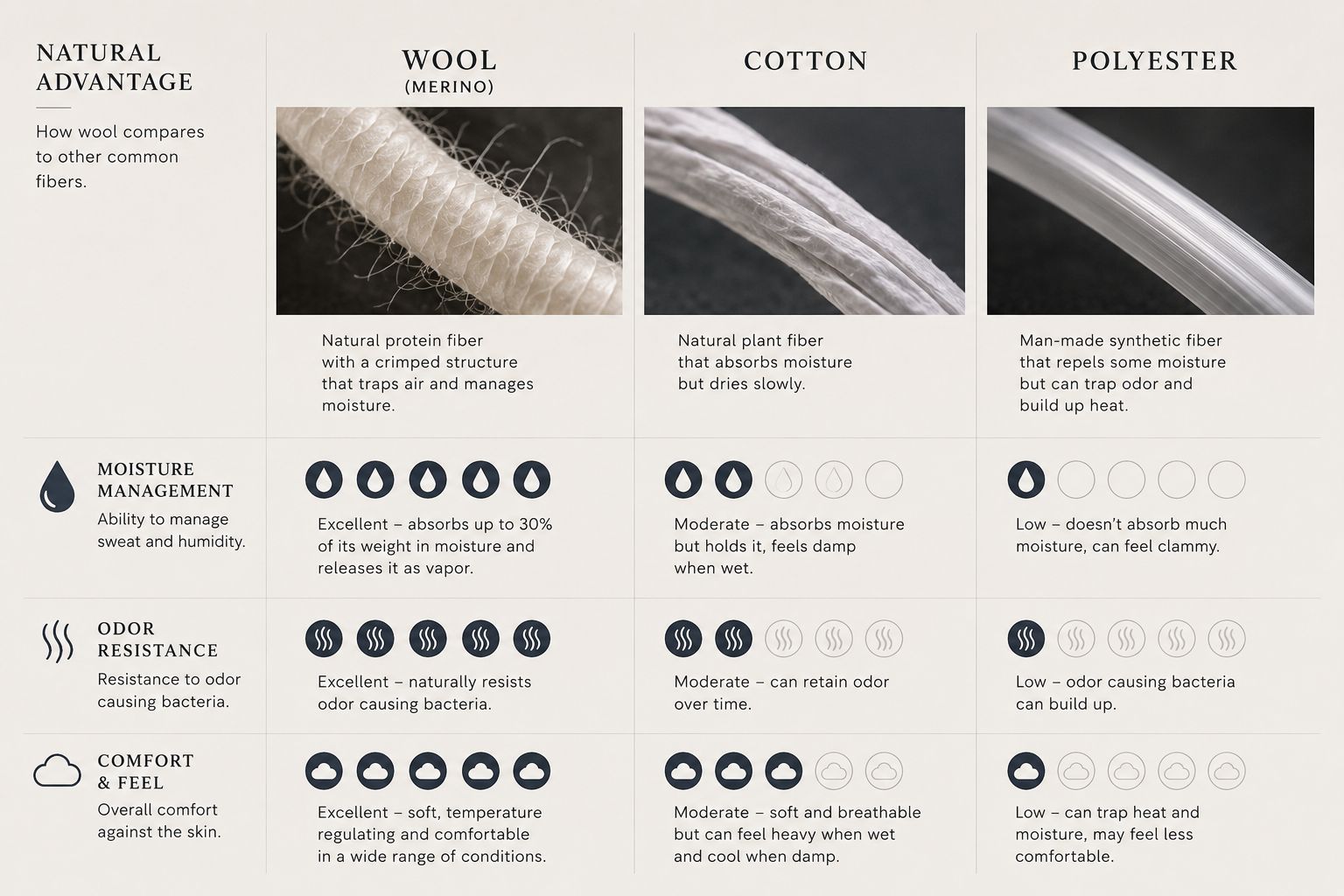
I’ve run countless tests in our facility, and the results are always the same. After a simulated workout, the wool garment feels the most comfortable, while the cotton is cold and heavy, and the polyester smells.
A Technical Comparison of Moisture Management
Let's look at the data. The way each fiber interacts with moisture dictates its comfort and performance.
| Fiber | Moisture Mechanism | Feel When Wet | Odor Resistance |
|---|---|---|---|
| Wool | Absorbs vapor into the fiber core. | Stays dry to the touch; feels warm. | Excellent. Naturally antimicrobial. |
| Cotton | Absorbs liquid like a sponge. | Cold, clammy, and heavy. | Poor. Becomes a breeding ground for bacteria. |
| Polyester | Wicks liquid across the surface. | Can feel slick and clammy. | Very Poor. Traps oils and bacteria, causing odor. |
When you choose wool, you're not just choosing a fiber; you're choosing a high-performance system. For any garment where the wearer might perspire—from a business commuter's sweater to an athlete's base layer—wool provides a level of comfort that cotton and polyester simply cannot match. This is a powerful story to tell your customers.
Conclusion
Wool doesn't make you sweat; it expertly manages moisture and temperature. It's breathable, odor-resistant, and keeps you comfortable in a way other fibers can't. It's the intelligent choice for performance knitwear.