You're at a critical point in product development, facing the classic question: Cashmere or Merino wool? This choice impacts everything from price point to performance, and making the wrong call can hurt your brand's reputation and bottom line.
The decision isn't about which fiber is "better," but which is right for your specific garment and customer. Cashmere offers unparalleled luxury and softness, while Merino wool provides versatile performance and durability. Understanding their unique strengths is key to making a strategic selection.
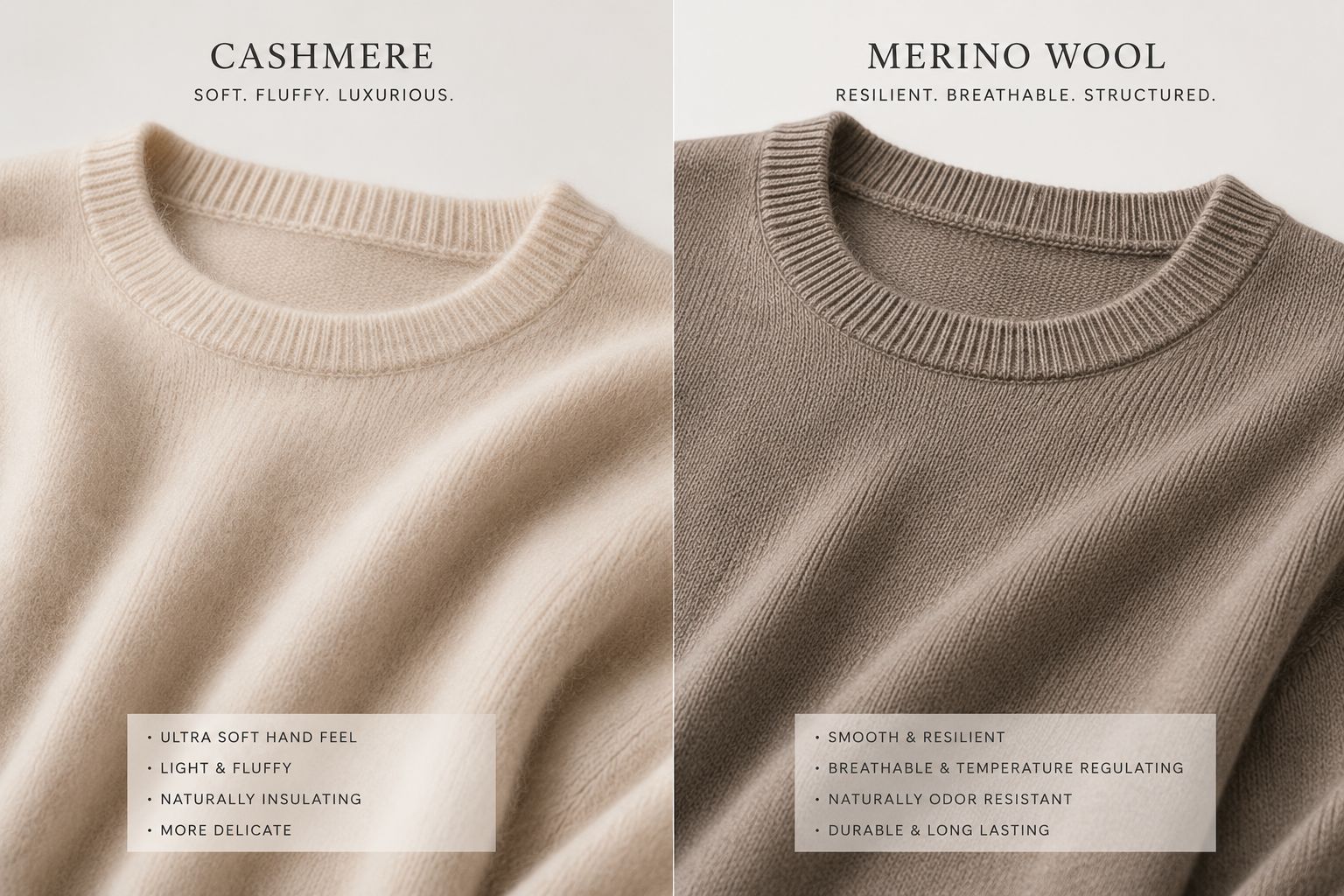
As your manufacturing partner, I'm here to guide you through this decision. We won't just look at the fibers; we'll look at how they perform in the real world. Let's break down the key differences to help you build a smarter, more successful knitwear collection.
Which Is Warmer, Merino or Cashmere?
You need to define a sweater's warmth for your marketing story, but "warm" is a tricky claim. Get it wrong, and you risk disappointing customers who were expecting a cozy winter staple.
While both are excellent insulators, cashmere is generally warmer for its weight. Its exceptionally fine fibers have a unique crimp that traps more air, creating a lofty, lightweight insulation. Merino wool provides a different kind of warmth, focused on active temperature regulation.
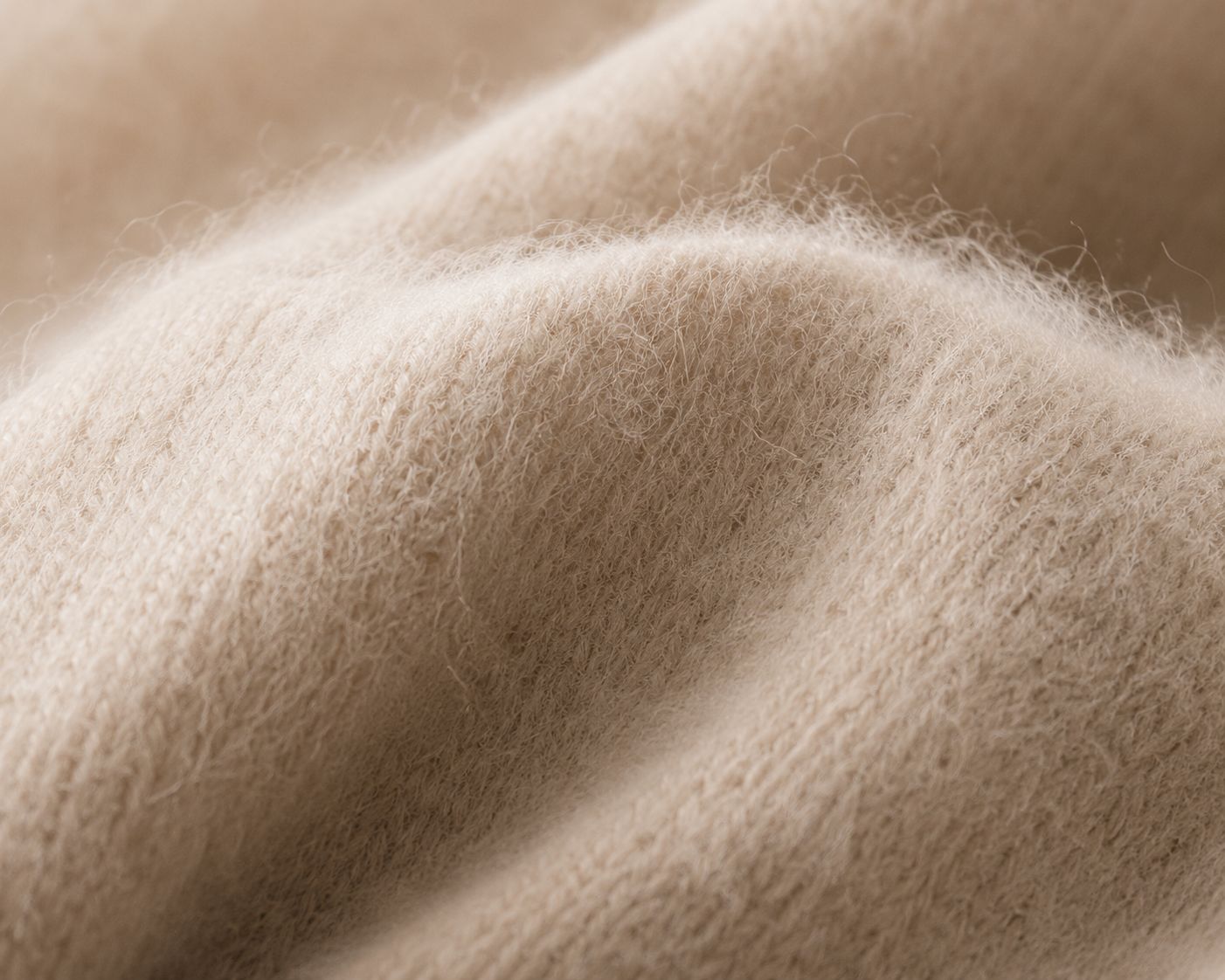
The best choice depends on the sweater's intended use. We can't just compare the fibers; we must consider how they are constructed and how they will be worn. At the factory level, we engineer warmth through careful selection of yarn ply, knitting gauge, and finishing.
A Deeper Look at Warmth and Regulation
Warmth is more than just a single number; it's a performance characteristic. We need to look at how each fiber manages heat and moisture in different environments.
| Feature | Cashmere | Merino Wool |
|---|---|---|
| Weight-to-Warmth | Higher. Provides more warmth with less weight. | Excellent, but slightly less than cashmere. |
| Insulation Type | Static Insulation. Traps still air effectively. | Dynamic Regulation. Breathes and wicks moisture. |
| Moisture Management | Good. | Superior. Absorbs and releases moisture vapor. |
| Best Use Case | Luxurious, lightweight layering for cold, dry days. | All-weather performance, from hiking to daily wear. |
For a lightweight, incredibly warm fashion piece, cashmere is the obvious choice. But for a versatile sweater that needs to perform during a commute or in changing indoor/outdoor temperatures, Merino wool's ability to manage moisture and breathe makes it the more practical and comfortable option.
Which Is Less Itchy, Cashmere or Merino?
A customer tries on a sweater in the fitting room. The first thing they feel is a prickle against their skin. That's an immediate deal-breaker and a lost sale for your brand.
The truth is, itchiness is determined by fiber diameter (micron count), not the animal it comes from. Cashmere is famous for its softness because its fibers are naturally very fine. However, high-quality, fine-micron Merino wool is also exceptionally soft and completely non-itchy.
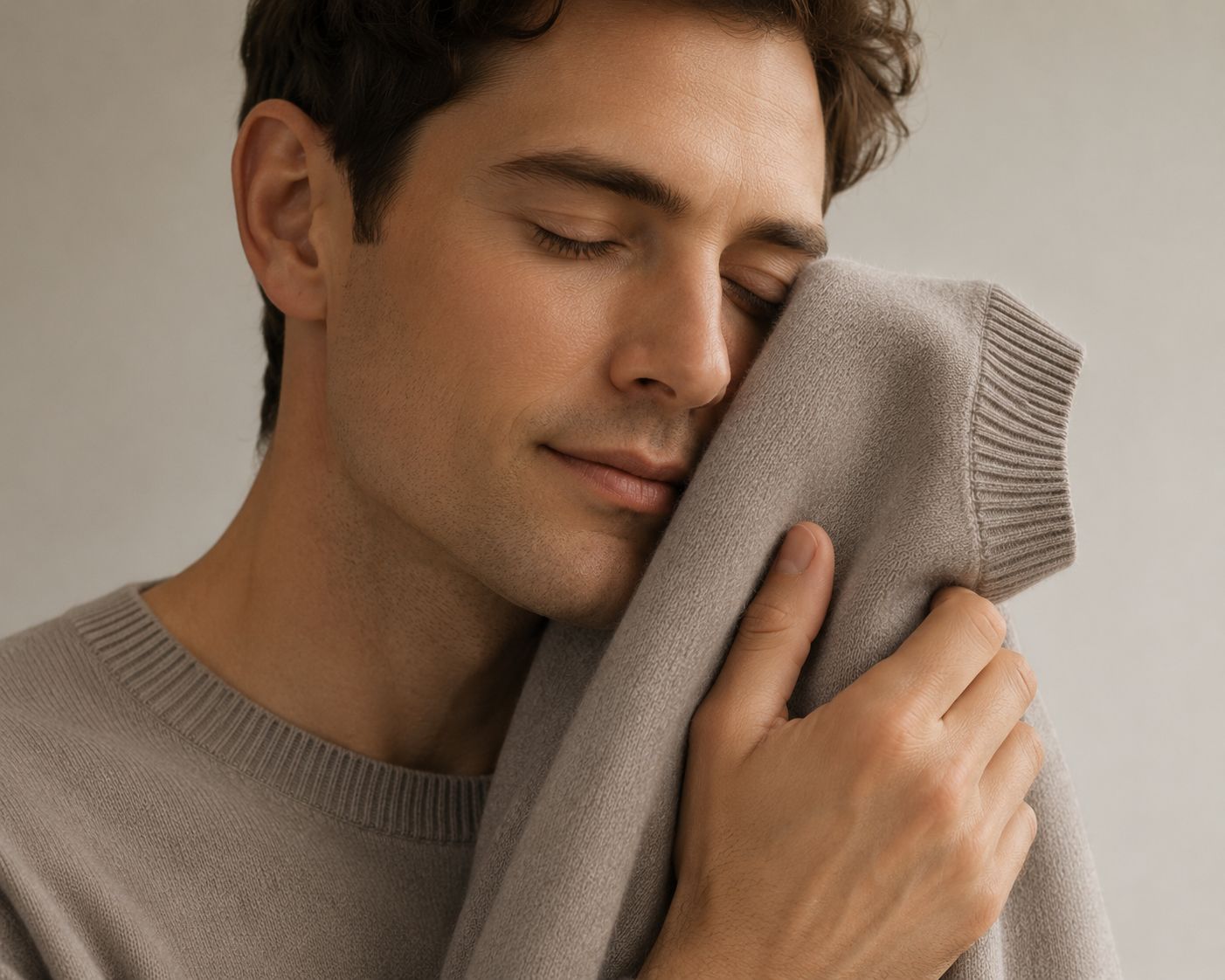
The perception that all wool is itchy comes from experience with coarse, lower-grade wools. As a manufacturer, I can tell you that the comfort of your sweater is decided long before it's knitted—it's decided when we source the yarn.
It's All About the Microns
When developing a product, we focus on the technical specifications that guarantee comfort. Both fibers can deliver a premium, non-itchy experience if you select the right grade.
- Cashmere: Typically ranges from 14 to 19 microns. This extremely low diameter is why it has a reputation for supreme softness. It feels like a cloud against the skin.
- Fine Merino Wool: We work with Merino grades under 18.5 microns. These fibers are so fine that they bend when they touch the skin, rather than poking it.
While both are soft, Merino offers an added comfort benefit: superior moisture management. It pulls moisture vapor away from the skin, keeping the wearer dry and comfortable all day long. For a garment designed for more than just looks, this functional comfort is a huge advantage.
What Lasts Longer, Cashmere or Merino Wool?
You're investing in a premium product, and you expect it to last. Your customers feel the same way. Nothing damages a brand's reputation for quality faster than a luxury sweater that pills or loses its shape after just a few wears.
When it comes to durability, Merino wool is the clear winner. Its fibers are longer, stronger, and more elastic. This means a Merino sweater will better resist abrasion, pilling, and stretching, holding its shape beautifully over time. Cashmere, with its shorter, more delicate fibers, is more prone to pilling and requires more careful maintenance.
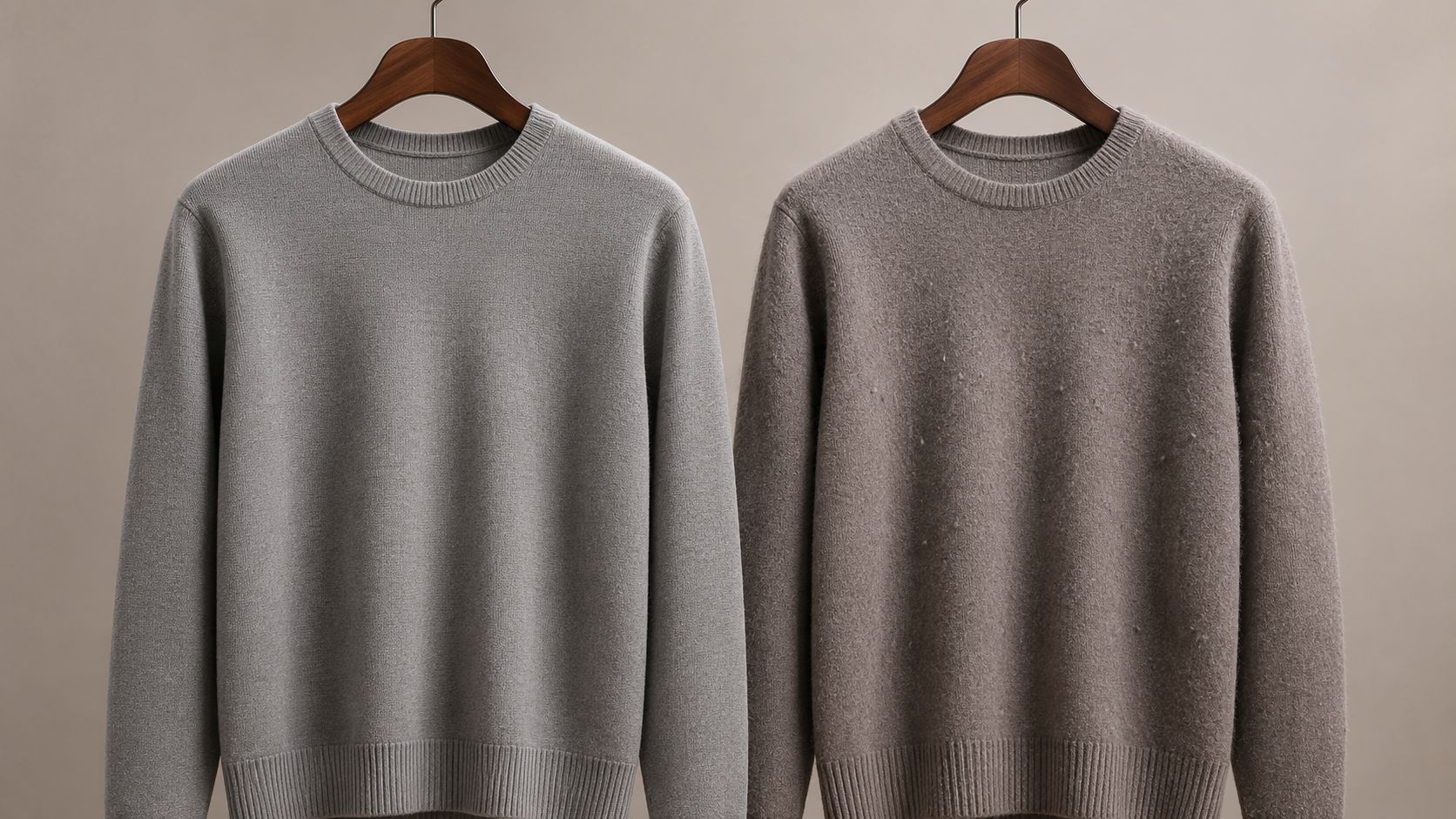
This doesn't mean cashmere is a poor choice; it simply means it's a luxury item that demands a trade-off between ultimate softness and rugged durability. As your production partner, we use techniques like fully-fashioned knitting to maximize the lifespan of both fibers.
Balancing Luxury with Longevity
Choosing between these fibers is about aligning with your product's promise. We help you make a strategic choice by considering the entire lifecycle of the garment.
| Factor | Cashmere | Merino Wool |
|---|---|---|
| Fiber Strength | Delicate. Shorter fibers are more prone to breaking. | Strong. Longer fibers resist abrasion. |
| Pilling | More prone to pilling due to short fibers. | Highly resistant to pilling. |
| Shape Retention | Good, but can stretch if not handled carefully. | Excellent. Natural elasticity helps it bounce back into shape. |
| Maintenance | Requires gentle hand-washing or dry cleaning. | Often machine-washable (with Superwash treatment). |
For a high-frequency, everyday luxury item, Merino wool offers the resilience you need. For a top-tier, special occasion piece where feel is paramount, cashmere delivers that unmatched sense of indulgence. We can also explore blends to get the best of both worlds.
Conclusion
The right choice is not about a single "best" fiber. It's about a strategy. Use cashmere for luxury, Merino for performance, and blends for balance. We're here to help you engineer the perfect sweater.