Why Merino Wool Feels Itchy and How Manufacturers Reduce It
I have worked with merino wool sweaters for many years, and I often hear one question from buyers and customers: how to stop merino wool from itching? I understand why this question matters. A sweater can look premium on a table, but the real test starts when it touches the skin. If the customer feels a small prickly feeling on the neck, chest, or wrist, the whole product experience can change.
I do not think itchiness comes from the word “wool” itself. I see it as a result of fiber diameter, yarn quality, surface hairiness, knit structure, and finishing. A coarse fiber bends less easily. It can press against the skin and create irritation. A fine merino fiber bends more easily. It can feel smoother and more comfortable. This is why I always check micron before I judge skin comfort.
I use a simple AIDA path when I explain this to brands. I first get attention by showing two merino swatches that feel different. I build interest by explaining micron, yarn twist, fiber length, and finishing. I create desire by showing how soft merino can reduce returns and build trust. I guide action by helping the brand choose the right yarn, structure, washing process, and care message.
The most important cause of itch is fiber diameter. I often explain it in simple words. If the fiber is thicker and stiffer, it can push against the skin. If the fiber is finer and more flexible, it can bend away from the skin. Fine merino, especially below 17.5 microns, is usually much better for close-to-skin wear and sensitive skin. Yet micron is not the only factor. I also check yarn twist, fiber length, hairiness control, washing, and finishing.
This is where the PAS problem often appears. The problem is that many consumers believe all wool is itchy. The pain is that a brand may lose a strong material story before the customer even tries the garment. The solution is to explain that different wool qualities feel different. I need to show the difference through touch, clear product language, and better development control.
| Factor I Check | Why It Affects Itchiness | What I Prefer for Skin Comfort |
|---|---|---|
| Fiber Micron | Thicker fibers can feel stiffer on skin. | I prefer low micron fine merino for close-to-skin styles. |
| Fiber Length | Shorter fibers can create more loose ends. | I prefer controlled fiber quality and cleaner yarn. |
| Yarn Twist | Twist affects softness and surface stability. | I look for balance, not extreme softness only. |
| Surface Hairiness | More hairiness can increase friction. | I control hairiness through yarn choice and finishing. |
| Knit Gauge | Fine gauge can feel smoother and lighter. | I often use fine gauge for premium skin-contact sweaters. |
| Finishing | Finishing changes touch and surface smoothness. | I use controlled washing and soft finishing processes. |
Can Merino Wool Cause Itching?
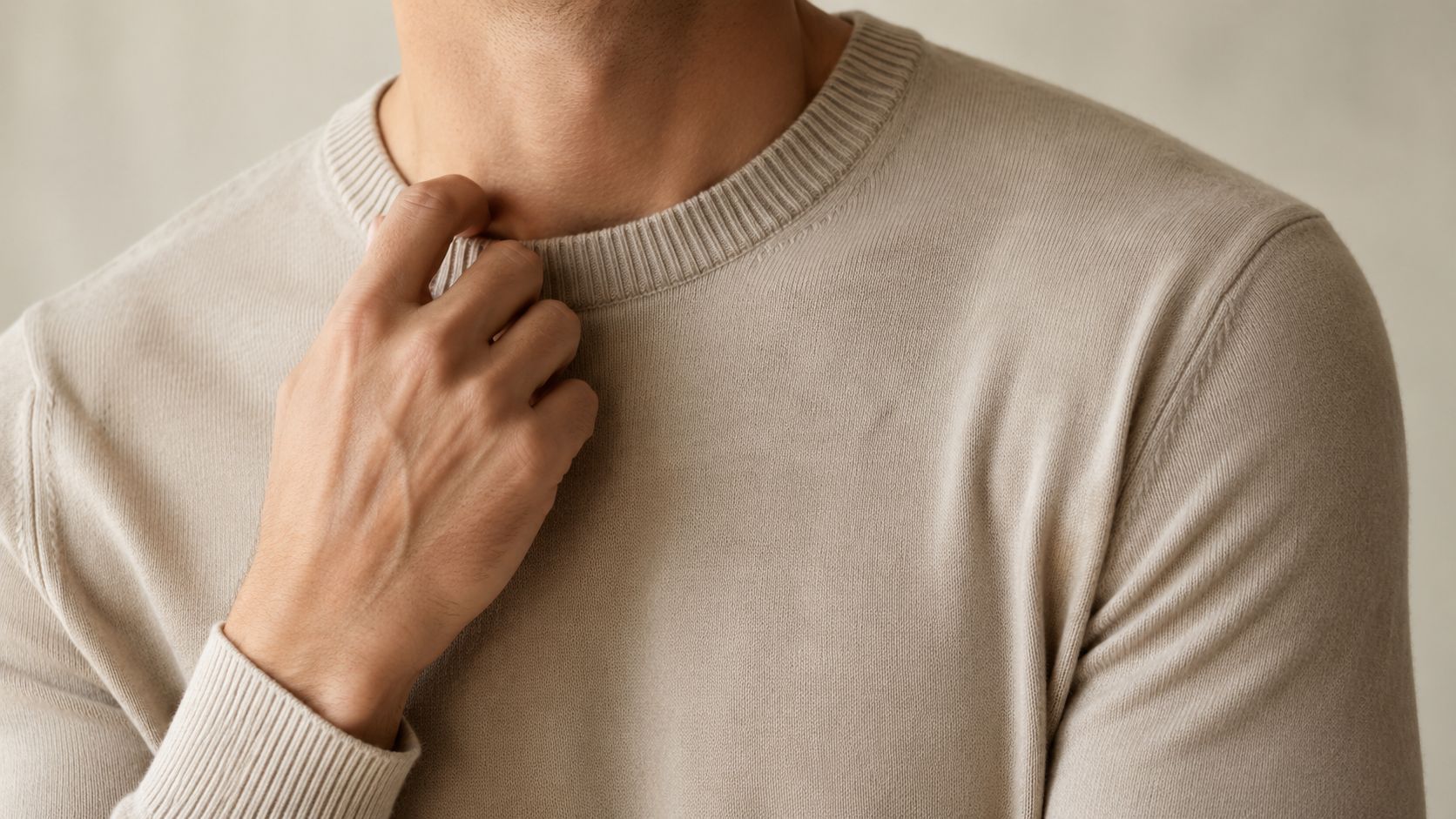
Yes, merino wool can cause itching in some cases. I do not want to say that all merino wool feels the same. Some merino yarns are finer, cleaner, and better finished. Some are coarser, hairier, or too dry on the surface. A sweater made from a higher micron merino yarn may still feel prickly for sensitive skin. A sweater with poor finishing may also feel rough even if the fiber is good.
I usually see the best skin comfort when the yarn uses fine merino, has controlled hairiness, and goes through the right finishing process. Enzyme wash can help reduce surface roughness. Silicone finishing can improve the smooth hand feel when it is used carefully. Yet I do not want to over-soften the sweater. If I chase only the first-touch softness, I may create new problems such as pilling, weak recovery, or lower durability.
Dive Deeper: I always explain itchiness as a mix of fiber behavior and garment engineering. A low micron fiber is a strong starting point, but it does not solve everything alone. If the fiber length is inconsistent, more loose ends may appear on the yarn surface. If the twist is too low, the sweater may feel soft at first, but the surface may become fuzzy faster. If the twist is too high, the yarn may feel firmer and less gentle. I need a balanced yarn. I also check how the yarn behaves after washing. Some yarns feel good before finishing but become dry after bulk wash. Some yarns become smoother after controlled relaxation. I use swatches to test these changes. I touch the fabric on the neck and inner arm area because these areas are more sensitive. I also compare the surface after light rubbing. This helps me understand if the sweater will stay comfortable after real wear. In my view, the best merino sweater is not only soft on day one. It also keeps a stable, clean, and comfortable surface over time.
For consumers, the answer is also practical. If a merino sweater feels slightly itchy, I would first check whether it is truly fine merino. I would also check how it was washed. A harsh detergent or high heat can make the surface feel worse. I would not try to fix the problem with heavy fabric softener or hot drying. Those methods can damage the natural performance of wool.
Does Merino Wool Get Softer with Washing?
Merino wool often gets softer with wearing and correct washing. I see this as normal fiber relaxation. The yarn tension settles. The surface becomes more natural. The hand feel can become smoother. A fine merino sweater may feel more comfortable after a few gentle wears and washes than it did when it first came out of production.
Yet washing can also make merino wool worse if it is done in the wrong way. High temperature can stress the fiber. Strong alkaline detergent can make the hand feel dry. High-speed agitation can increase surface friction. Hot tumble drying can damage shape and texture. This is why I always say that washing is not only a cleaning step. It is part of the garment’s long-term comfort.
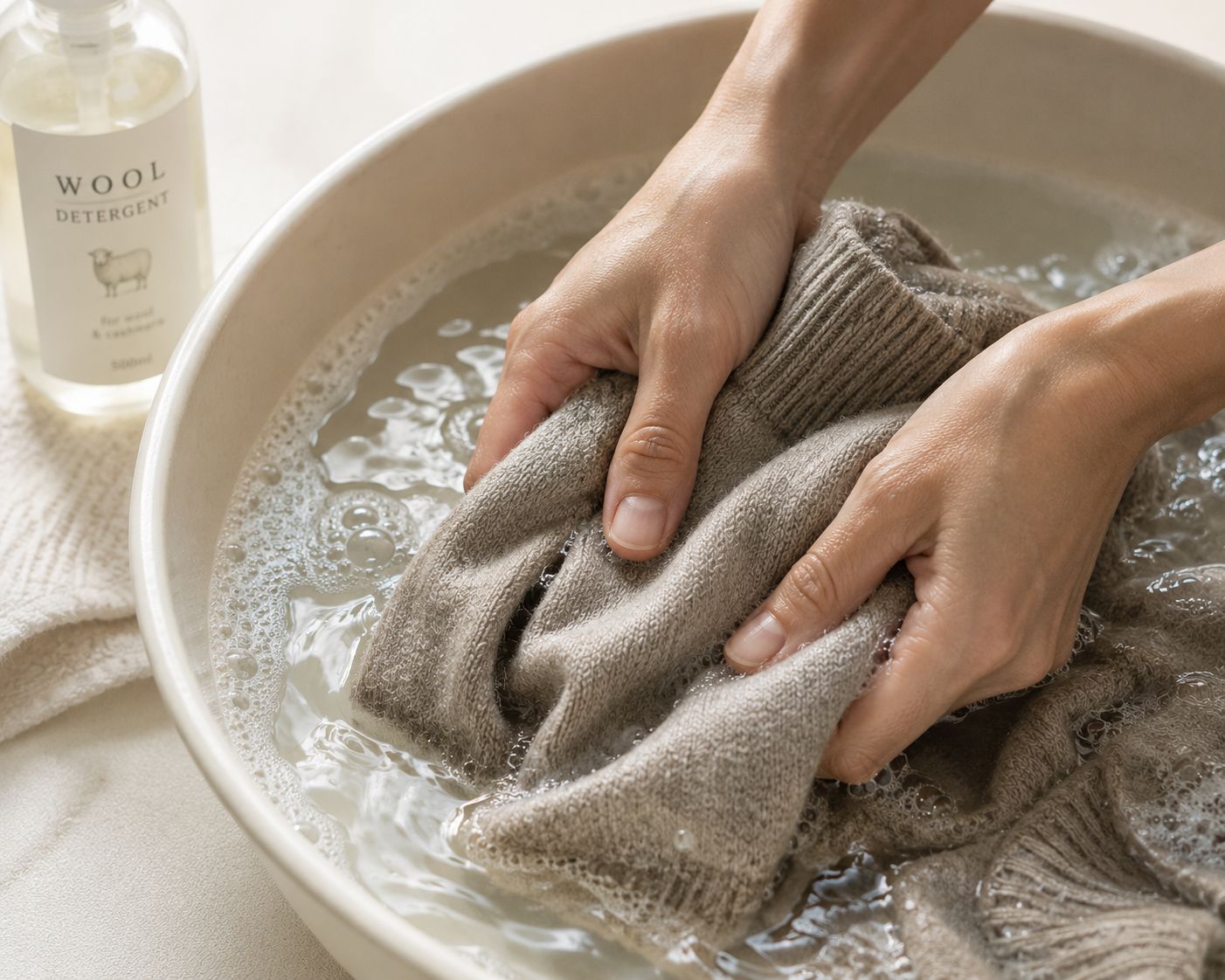
Dive Deeper: I believe correct washing can help merino wool feel more natural, but it must be gentle. I would use cool water or low temperature water. I would use a wool-safe mild detergent. I would avoid rubbing, twisting, or scrubbing. I would press out water with a towel and dry the sweater flat. This process allows the fibers to relax without forcing them. The sweater may become softer because the yarn tension releases and the surface fibers settle. Yet I avoid telling customers to use strong softeners as the first solution. Too much fabric softener can leave a coating on wool. It may reduce breathability, moisture behavior, and the clean natural feel of the fiber. I also avoid high heat because heat can change the surface and cause shrinkage or roughness. In production, I use controlled finishing for a reason. The factory can manage water temperature, time, chemicals, and mechanical action. A home washing machine may not be as controlled. So the best advice is simple. I treat merino wool with patience. I let it soften through gentle care, not through force.
This point matters for brands because the customer may not know the difference between good washing and damaging washing. If the care label is too simple, the customer may use a normal detergent and a hot dryer. Then the sweater feels worse, and the brand receives the complaint. I prefer clear care guidance on the label, website, and product page.
Which Type of Wool Is Least Itchy?
Fine merino wool is one of the least itchy wool types when it is developed well. I usually recommend low micron merino for close-to-skin sweaters, lightweight pullovers, base layers, and sensitive-skin styles. A fine merino fiber can bend more easily on the skin, so the wearer feels less prickling. This makes it a good choice for premium knitwear that needs both comfort and a clean look.
Still, I do not say that all fine merino is equal. The yarn must be good. The knit structure must support comfort. The finishing must be controlled. I also need to consider durability. A sweater that is extremely soft may feel wonderful at first, but it may pill faster if the yarn is too loose or the structure is too open. I need to balance softness, pilling risk, recovery, and long-term wear.
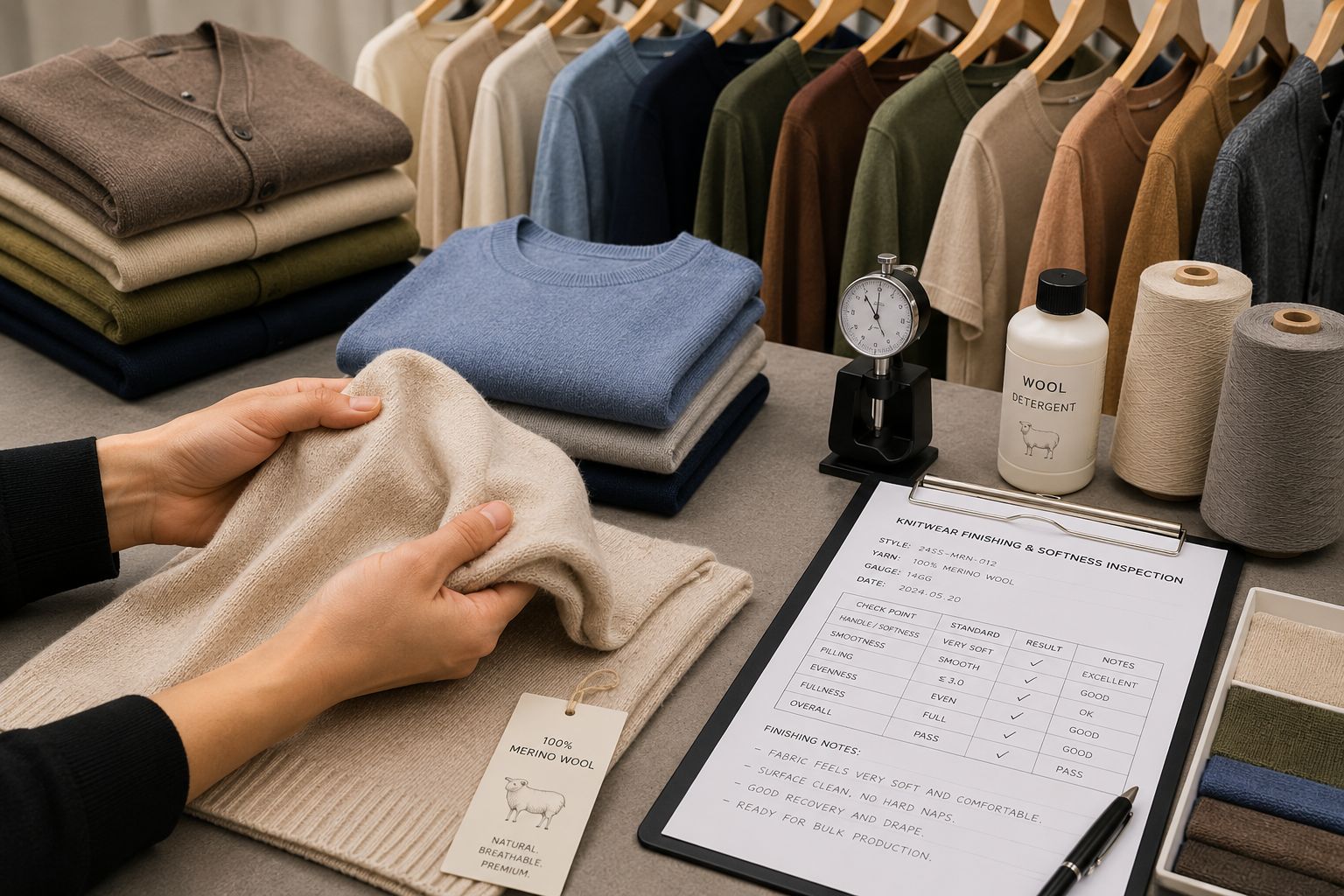
Dive Deeper: Knit structure and gauge can change the way wool feels on the skin. A fine gauge sweater, such as 16G, is usually lighter, smoother, and more even on the surface. It can feel better for direct skin contact because the loops are smaller and the fabric is more compact. A coarse gauge sweater can feel warm and rich, but it may create more texture against the skin. If the structure is too loose, the yarn surface may move more and create more friction. Fully-fashioned knitwear can also improve comfort because it can reduce heavy seams and uneven stress points. A bulky seam at the shoulder, armhole, or side can irritate the skin even when the yarn itself is soft. In fully-fashioned production, I can shape panels more cleanly and control linking better. This helps the sweater sit more naturally on the body. I also think about finishing. Enzyme wash may reduce surface fuzz. Silicone finishing may improve smoothness. Yet both must be controlled. Too much finishing can weaken the natural hand feel or affect long-term performance. So I treat least-itchy wool as a full system. I start with low micron merino, but I finish with structure, testing, and balanced finishing.
For brands, the least itchy wool is usually the one that matches the product purpose. If the sweater is made for direct skin contact, I would choose fine merino with low micron and a smoother gauge. If the sweater is an outer layer, I may accept a slightly stronger wool because it will not sit directly on skin. The wrong choice often happens when a brand uses one wool story for every style.
I also think consumer education is part of comfort. Some customers try to soften merino wool with high heat, heavy fabric softener, or rough washing. These methods can make the sweater worse. I would tell customers to use gentle wool detergent, cool water, low friction, and flat drying. If the sweater is still itchy after proper care, the issue may be the fiber quality or yarn structure, not the washing method.
From a manufacturing point of view, I reduce itchy complaints before the sweater reaches the customer. I select low micron merino when the product is close to skin. I review yarn hairiness. I test swatches after finishing. I check surface friction and hand feel. I also discuss pilling risk with the brand. If the buyer asks for extreme softness, I explain the trade-off. Softer can mean more delicate. More delicate can mean higher pilling risk. A good premium sweater should not only feel soft in the first five seconds. It should also stay comfortable and stable through real wear.
This is the PAS issue I see in many markets. The problem is that customers expect merino wool to be soft, but they may still feel itch if the product is poorly developed. The pain is that the brand may face returns and negative reviews. The solution is not to overpromise. The solution is to control micron, yarn quality, structure, finishing, and care education. When these parts work together, merino wool can give a very comfortable skin feel.
Conclusion
I see merino wool itchiness as a controllable problem, not as a fixed weakness of wool. If someone asks me how to stop merino wool from itching, I start with the fiber. I check the micron. I check the yarn quality. I check surface hairiness, knit gauge, finishing, and care method. Fine merino, especially lower micron merino, usually gives a much better skin feel than coarse wool.
Merino wool can also become softer with correct wearing and gentle washing. Yet wrong care can make it rougher. High heat, harsh detergent, heavy softener, and hot drying can damage the comfort story. I prefer cool water, wool-safe detergent, low friction, towel pressing, and flat drying.
As a manufacturer, I believe skin comfort starts in development. I can reduce itchy risk through low micron yarn, better hairiness control, suitable twist, fine gauge knitting, fully-fashioned construction, controlled finishing, and real wear testing. For brands, I would add one more step. I would explain wool comfort in simple words. Customers should know that not all wool is the same, and good merino needs both good manufacturing and good care.