I have worked with wool knitwear for many years, and I often see one small problem create a big worry for customers. A wool sweater catches on a zipper, a ring, a bracelet, a bag strap, or even the edge of a desk. One yarn loop is pulled out. The sweater still looks almost fine, but the customer thinks it is ruined. This is why I want to explain how to fix snag in wool sweater from a manufacturer’s point of view.
I always start this topic with a simple AIDA path. I get attention by showing a pulled yarn on a sweater. I build interest by explaining why knitted loops can be pulled out more easily than woven yarns. I create desire by showing that many snags can be repaired if the yarn is not cut. I guide action by giving a safe repair method and by explaining how brands can reduce snagging risk before the sweater reaches the customer.
A snag does not always mean a hole. This is the first thing I tell buyers and consumers. In many cases, the yarn has only been pulled out of the knitted surface. The yarn is still connected to the structure. If I handle it with care, I can often bring it back to the inside of the garment and reduce the visible problem. If I cut it, I may turn a small snag into a real break.
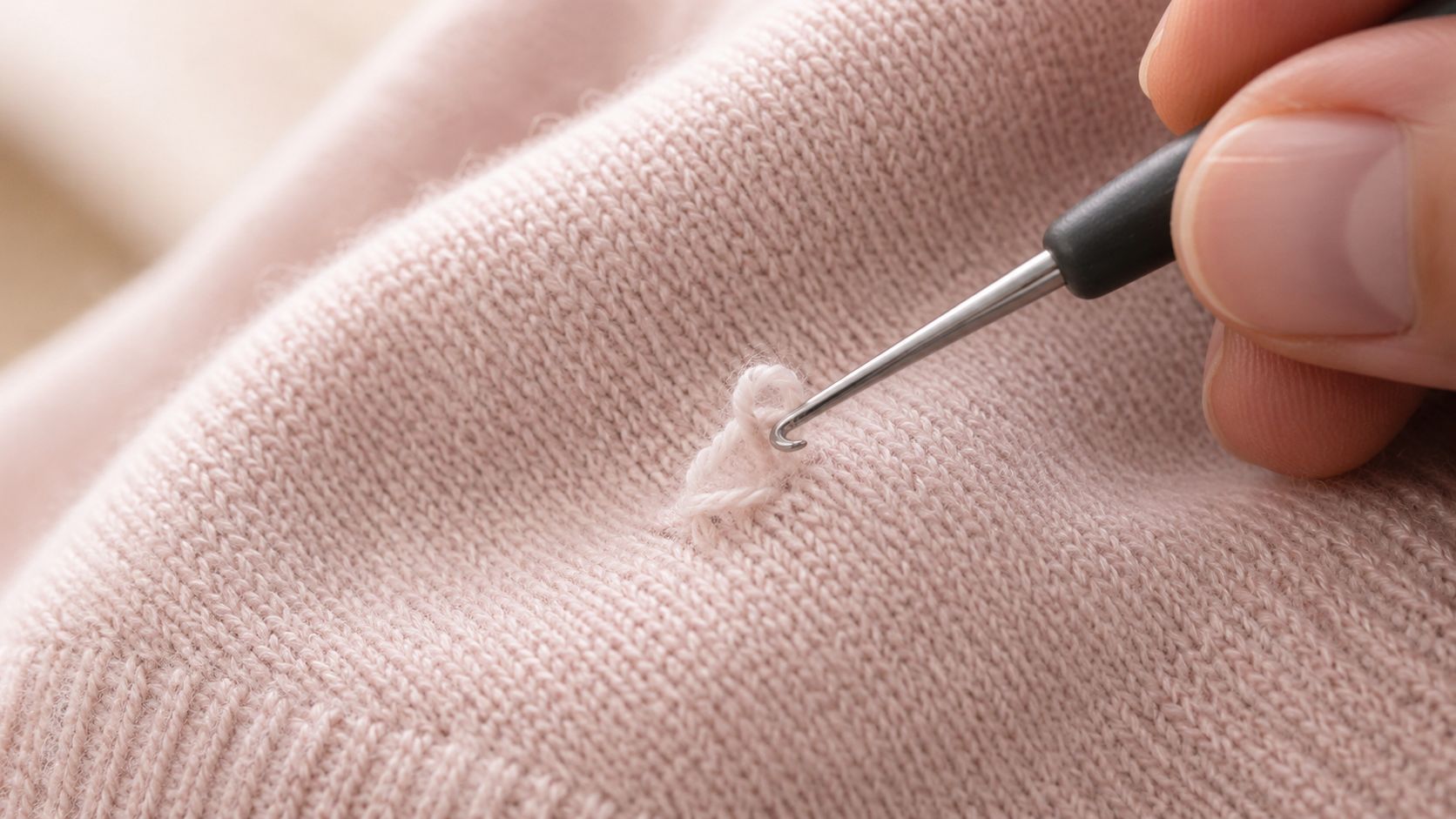
The root reason comes from the loop structure of knitwear. A knitted fabric is made from loops that hold each other. This structure gives wool sweaters softness, stretch, and comfort. It also means the yarn can move. When a sharp object catches one loop, the yarn can be pulled out from the surface. Compared with woven fabric, knitwear is usually more flexible, but that flexibility also makes it more exposed to snagging.
I see this issue often in soft sweaters, chunky sweaters, and loose-gauge styles. A 7G sweater can feel warm and full, but its loops are larger and easier to catch. A low-twist yarn can feel soft and lofty, but it may also be easier to pull out. A fine 16G sweater can be more compact, but it can still snag if the yarn is caught by a sharp edge. So I do not see snagging as a simple defect. I see it as a risk that comes from the nature of knitted structure.
| Problem Type | What I See | What It Usually Means | How I Handle It |
|---|---|---|---|
| Snag | One yarn loop is pulled out. | The yarn may not be broken. | I pull the yarn back to the inside. |
| Hole | The yarn or structure is broken. | The fabric has an open break. | I mend it or use professional repair. |
| Pilling | Small fiber balls form on the surface. | Fibers have rubbed together. | I remove pills carefully, not like a snag. |
| Laddering | Loops run down in a line. | The loop structure is coming undone. | I stop the run quickly and repair the loops. |
How to fix a snag in a wool sweater
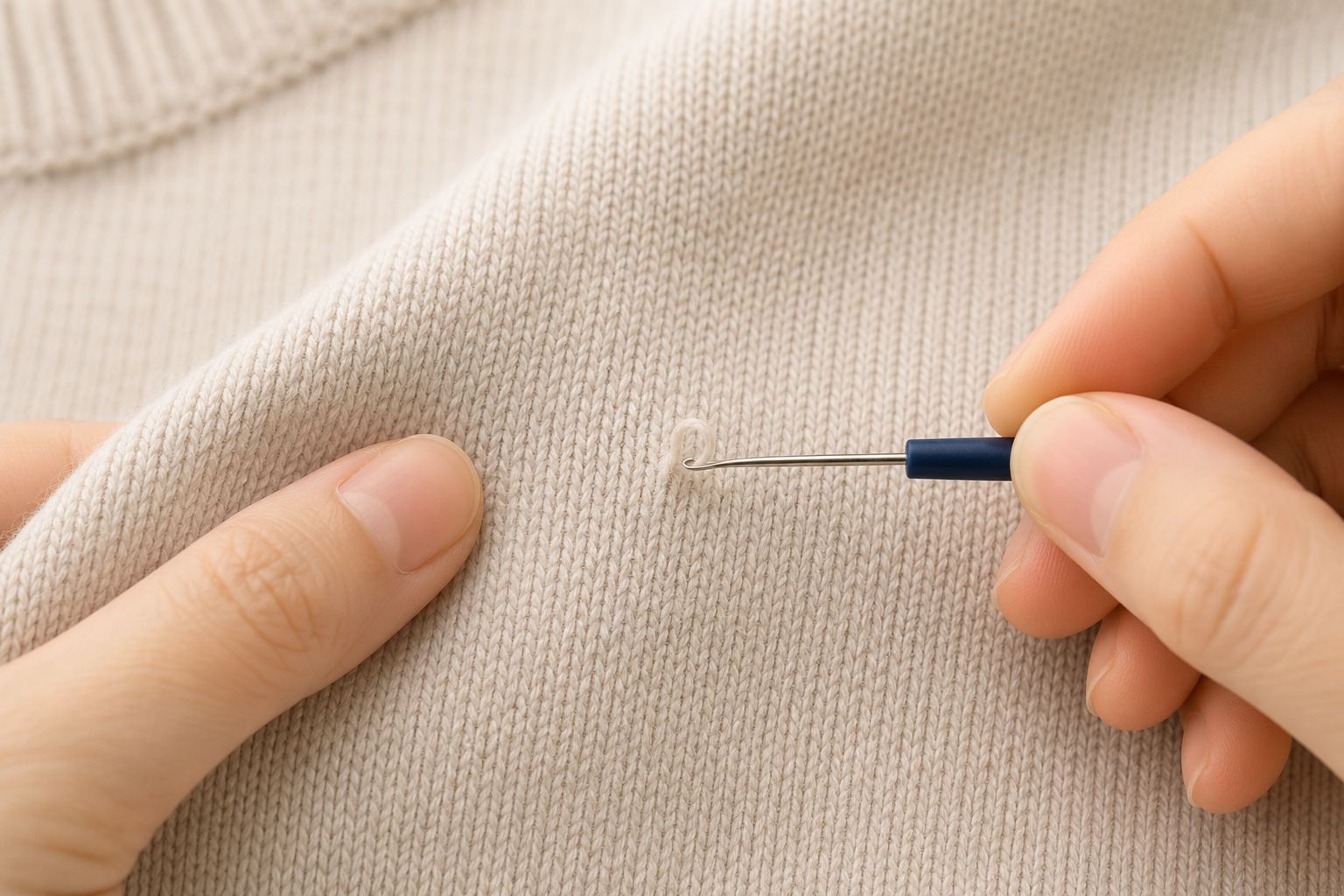
When I fix a snag in a wool sweater, my first rule is simple. I do not cut the pulled yarn. Cutting may feel like the fastest solution, but it is often the worst choice. The yarn belongs to the knitted structure. If I cut it, I may create loose ends. Those loose ends can open further during wear or washing. A small pulled loop can become a hole.
My usual method is careful and slow. I lay the sweater flat. I look at the snag from the front and the back. I do not pull the yarn tighter. I use a snag repair needle, a fine crochet hook, or a hand sewing needle with a smooth point. I bring the pulled yarn to the inside of the sweater. Then I gently adjust the nearby loops with my fingers. If the fabric looks tight around the snag, I relax the area with very light steam. I never press hard with a hot iron.
Dive Deeper: I always explain to customers that a snag is not something to hide by cutting. It is something to move back into the knit structure. The pulled yarn often comes from a nearby loop. If I cut it, I remove part of that loop system. The sweater may still look okay for a moment, but the damage can grow later. This is especially true for wool, cashmere, and soft blends because the fibers can move and relax during wear. When I repair a snag, I first make sure the sweater is not under tension. I do not hang it. I do not stretch it across a table. I place it flat and let the fabric rest. Then I pull the snag to the inside from the exact point where it came out. I work from the back whenever possible because I want the front surface to stay clean. After the yarn is inside, I spread the surrounding loops little by little. I use my fingers, not force. If I use steam, I keep it gentle and short. Steam can help wool relax, but too much heat and pressure can flatten the surface or change the shape. A correct repair should make the snag less visible without weakening the fabric.
For a home repair, I would keep the process simple. I would turn the sweater inside out. I would pull the snag through to the inside with a snag needle or small hook. I would secure nothing too tightly. I would gently smooth the area. If the pulled yarn is very long, I would not cut it at once. I would first bring it inside and spread the tension around the nearby loops. Only a professional repair person should trim or secure loose yarn ends when the structure is broken.
Can a wool sweater be repaired?
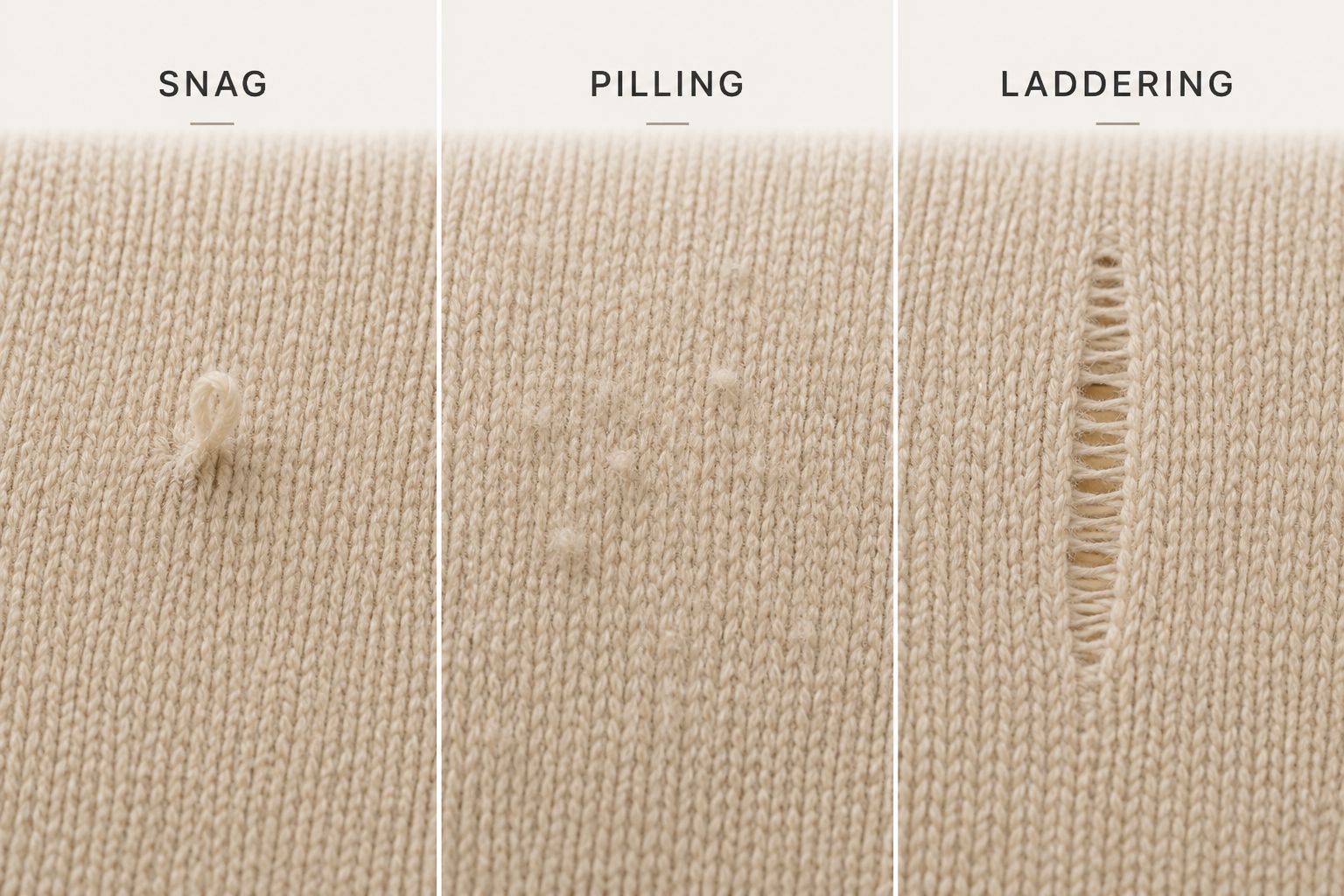
Yes, a wool sweater can often be repaired, but I need to know what kind of problem I am dealing with. A snag is usually easier to repair than a hole. A snag means the yarn has been pulled out. A hole means the yarn has broken or the structure has opened. Pilling is not a snag. It is a surface issue caused by fiber rubbing. Laddering is also different. It means loops are running down in a line, and it needs quick repair before the run grows.
This difference matters because each problem needs a different solution. If a customer treats pilling like a snag, the repair will not work. If a customer treats a snag like a hole and cuts the yarn, the damage may become worse. If a customer ignores laddering, the loops may continue to open. I always tell brands that clear consumer education can prevent many unnecessary complaints.
Dive Deeper: In my factory work, I often separate repair cases into structure problems and surface problems. A snag is usually a structure movement problem. The yarn has moved away from the surface position, but it may still be part of the garment. This gives me a chance to guide it back. A hole is different because the yarn has broken or the loop connection has failed. I may need to use matching yarn, duplicate stitch, invisible mending, or professional reknitting. Pilling is a surface fiber problem. The garment has small fiber balls because friction has pulled loose fiber ends together. I would use a fabric shaver or sweater comb carefully, but I would not pull pills like snags. Laddering is more urgent because one loose loop can lead to more loose loops. I need to stop the run and secure the structure. Consumers often confuse these problems because they only see that the sweater surface looks damaged. This is why I think brands should use simple visuals on care pages. If a customer can identify a snag, hole, pill, or ladder correctly, the customer is less likely to make the damage worse. A small education step can save the sweater and protect brand trust.
As a manufacturer, I also consider the material. Cashmere can snag more easily than merino wool in many cases because it is softer and often made with shorter, finer fibers. Merino wool can be more resilient, but it can still snag if the knit structure is loose or the yarn twist is low. Blended yarns with a suitable amount of nylon or other strength fiber can improve abrasion resistance and reduce snag risk in high-wear styles. I do not use these blends for every product, but I consider them when the sweater is designed for frequent use.
What is snagging in knitting?
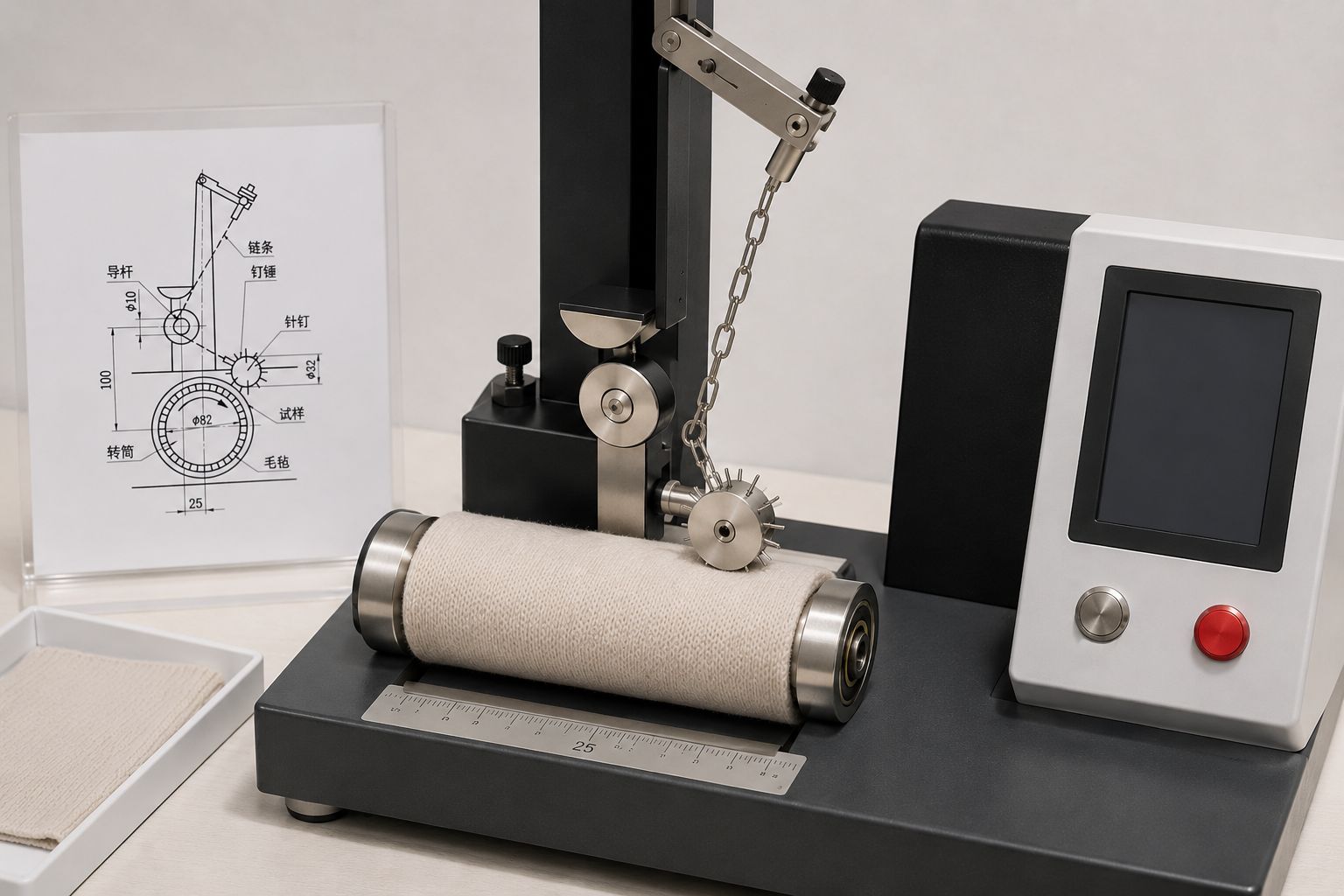
Snagging in knitting means a yarn or loop is caught and pulled out from the fabric surface. It happens because knitted loops are flexible and exposed. The same loop system that gives a sweater comfort can also allow yarn movement. This is why I pay close attention to gauge, yarn twist, fiber type, stitch structure, and finishing when I develop wool sweaters.
Gauge is one of the first things I check. A low-gauge sweater, such as 7G, has larger loops and a more open structure. It can look rich and warm, but it can catch more easily. A higher-gauge sweater, such as 16G, is usually more compact. It can have better structural stability and better snag resistance. Still, gauge is only one part of the answer. Yarn structure matters too. A low-twist yarn can feel soft and fluffy, but it may be easier to pull. A higher-twist yarn can be more stable, but it may feel firmer.
Dive Deeper: I see snag resistance as a balance between softness and stability. Many brands want a sweater to feel very soft at first touch. I understand this. A soft sample can impress a buyer in a showroom. Yet if I make the yarn too loose, the final garment may not perform well in real life. The customer may wear a shoulder bag, sit near rough furniture, or layer the sweater under a coat with a metal zipper. These everyday contacts can pull loops from the fabric. This is why I test and adjust before bulk production. I look at yarn twist. I check the gauge and stitch density. I review the linking and seams. I also consider snag resistance testing when the style is likely to face high friction. Fully-fashioned construction can help because the panels are shaped during knitting and the tension distribution is cleaner. It does not remove snagging risk, but it can improve shape and structure control. I also think about fiber choice. Cashmere gives a luxury touch, but it may need more careful wear. Merino wool can give a better balance of softness and resilience. A wool-nylon blend may be better for high-frequency use. The best choice depends on the product promise.
For brands, snagging should not be treated only as an after-sales problem. It should be controlled during development. I would start by choosing the right yarn for the wearing scene. I would avoid using very loose yarn in a product that will face heavy friction. I would test swatches before sample approval. I would compare different gauges and stitch structures. I would also review whether the style needs a repair kit, spare yarn, or a simple care card.
I also believe consumer education is part of quality control. If a customer sees a snag and cuts it, the sweater may become worse. If the customer knows to pull the yarn back to the inside, the sweater may be saved in a few minutes. Brands can explain this through the website, hangtags, social media, and after-sales emails. A short care message can reduce returns and bad reviews. It can also show that the brand understands knitwear, not only design.
This is the PAS issue I see often. The problem is that snagging is common in soft knitwear. The pain is that customers may panic and cut the yarn. The small snag can then become a hole, and the brand may receive a complaint. The solution is to design better, test earlier, and teach repair clearly. I need to reduce risk in production. The brand needs to teach the customer what to do. The customer needs to avoid cutting the yarn.
Conclusion
I see a wool sweater snag as a repairable problem in many cases. A snag is usually not the same as a hole. It often means the yarn has been pulled out but has not broken. The safest first step is to stop pulling and stop cutting. I would lay the sweater flat, bring the yarn back to the inside with a snag repair needle or fine hook, adjust the nearby loops gently, and use only light steam if needed.
I also see snagging as a product development issue. Knitwear is built from loops, and loops can be caught. Gauge, yarn twist, fiber type, stitch density, and construction all affect snag resistance. A chunky 7G sweater and a soft low-twist yarn may feel beautiful, but they may need more careful wear. A compact 16G sweater, a balanced twist, or a suitable blend may give better stability.
If I had to give one simple message, I would say this. Do not cut a snag in a wool sweater. Bring it back to the inside first. Then let the fabric relax and recover. For brands, I would add one more message. Do not wait for complaints to manage snagging. Control it in development, support it with testing, and teach customers the right repair method. This is how I protect the sweater, the customer experience, and the long-term trust behind premium knitwear.