I have worked with wool sweaters for many years, and I often hear one question from brand teams: what is the real difference in merino wool vs regular wool? I understand why this question matters. A sweater is not only a fabric product. It is also a promise about comfort, warmth, fit, and value. If I choose the wrong wool, the sweater may feel too rough. It may pill faster than expected. It may also fail to match the wearing scene.
I usually start this topic with a simple AIDA path. I first get attention by placing a fine merino swatch next to a regular wool swatch. I then build interest by explaining micron, crimp, fiber source, yarn twist, and gauge. I create desire by showing how the right wool can improve comfort and product value. I guide action by helping the brand choose the right wool for the right sweater, instead of choosing the most expensive option by default.
The core difference between merino wool and regular wool comes from fiber fineness, crimp, and sheep breed. Merino wool usually has finer fibers. It often feels softer on the skin. It can also support better breathability and temperature control. Regular wool is a wider category. It can be thicker, firmer, and more structured. It can work well for heavy sweaters, outdoor layers, and styles that need more body.
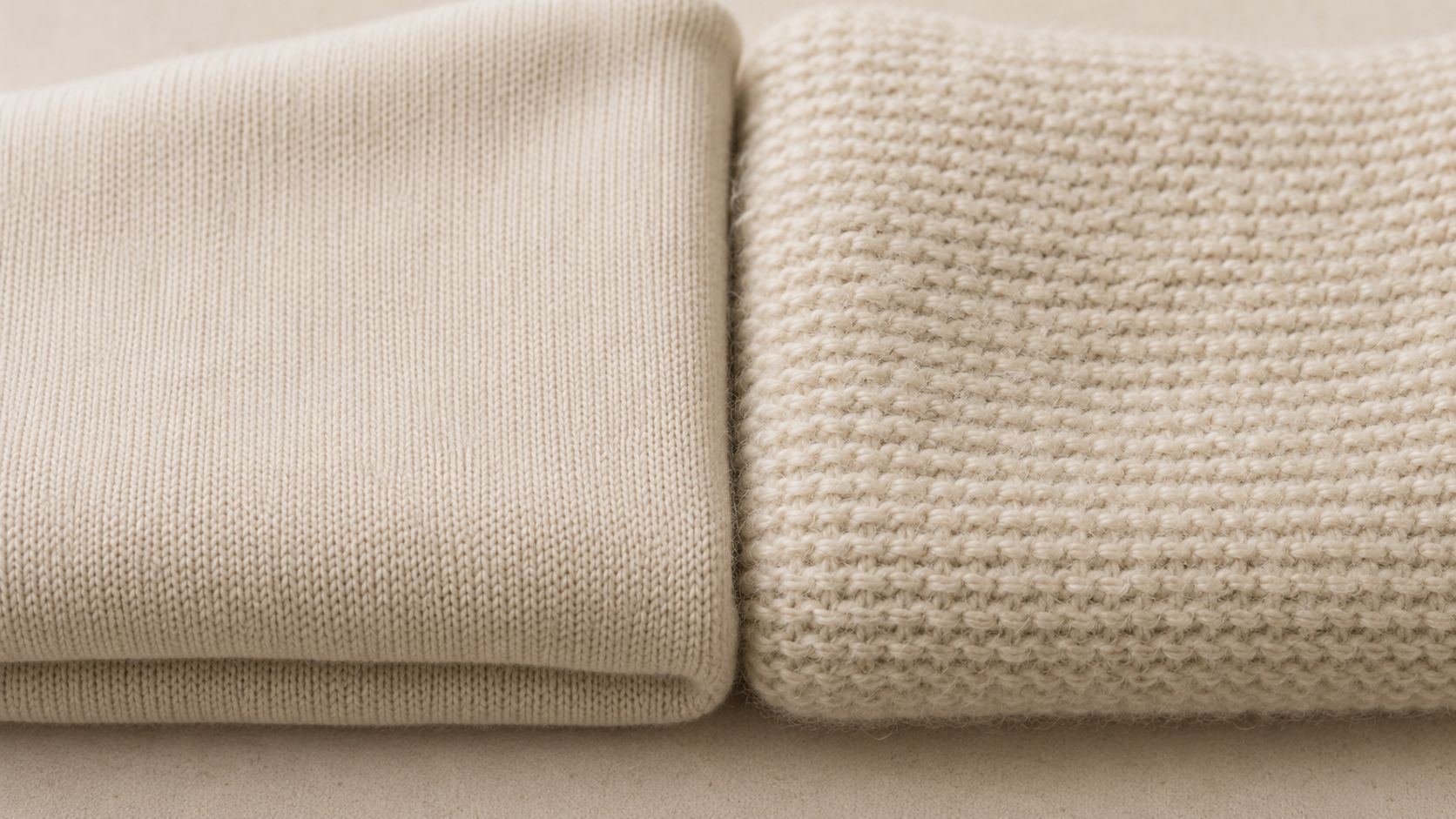
I do not believe merino wool is always better than regular wool. This is a common misunderstanding. Fine merino is a strong choice for lightweight, premium, and close-to-skin knitwear. Regular wool still has value in chunky knitwear, winter outer layers, rugged styles, and high-wear use cases. In my work, I never judge wool only by price. I judge it by the final product target.
| Point I Check | Merino Wool | Regular Wool |
|---|---|---|
| Fiber Fineness | I usually expect finer micron and a softer hand feel. | I expect a wider range, from soft to coarse. |
| Skin Comfort | I use it for close-to-skin and premium sweaters. | I use it more carefully for direct skin contact. |
| Structure | I use it when I want softness and lightness. | I use it when I want body, thickness, and strong structure. |
| Warmth | I like it for light warmth and moisture comfort. | I like it for heavy warmth and stable winter layers. |
| Best Use | I choose it for fine-gauge, luxury, and business knitwear. | I choose it for chunky, outdoor, and durable knitwear. |
Why is merino wool better than regular wool?

Merino wool can be better than regular wool when the sweater needs softness, lightness, and skin comfort. I use fine merino when a brand wants a refined sweater that can sit close to the body. I also use it when the customer expects a smooth hand feel, clean surface, and less itch. The main reason is fiber fineness. Fine fibers bend more easily against the skin. Coarse fibers feel stiffer and can create a prickly feeling.
Merino wool also has a strong comfort story. It can help the wearer feel warm without too much bulk. It can also manage moisture well in daily wear. This is useful for business travel, office wear, and light winter layering. When I develop sweaters for mid-to-high-end menswear brands, merino wool often gives me a good balance of softness, function, and premium appearance.
Dive Deeper: I usually explain itchiness through fiber stiffness, not through the word “wool.” Many consumers say they cannot wear wool because wool is itchy. I think this belief often comes from older, coarser wool garments. When a fiber is thick and stiff, the fiber ends can press into the skin. This creates the scratchy feeling. Fine merino can reduce this feeling because the fiber is thinner and more flexible. When I use merino below 19.5 microns, the sweater can feel much more comfortable for many people. Still, I do not rely on micron alone. I also check yarn twist, washing, finishing, and stitch structure. A yarn with very low twist may feel soft at first, but it may pill more easily. A yarn with too much twist may feel firm and less luxury. I need balance. I want the sweater to feel good in the showroom, and I also want it to perform after real wear. This is why I always test swatches before bulk production. I touch them, wash them, check recovery, and compare surface change. Merino wool can be better, but only when the yarn and garment structure are controlled well.
This is where the PAS problem appears. The problem is that many shoppers think all wool will scratch. The pain is that brands may avoid wool or choose the wrong fiber story. The solution is to explain fine merino in simple words. I show the customer that not all wool feels the same. I also support the claim with touch, testing, and clear care guidance.
Why is merino wool better than regular wool?
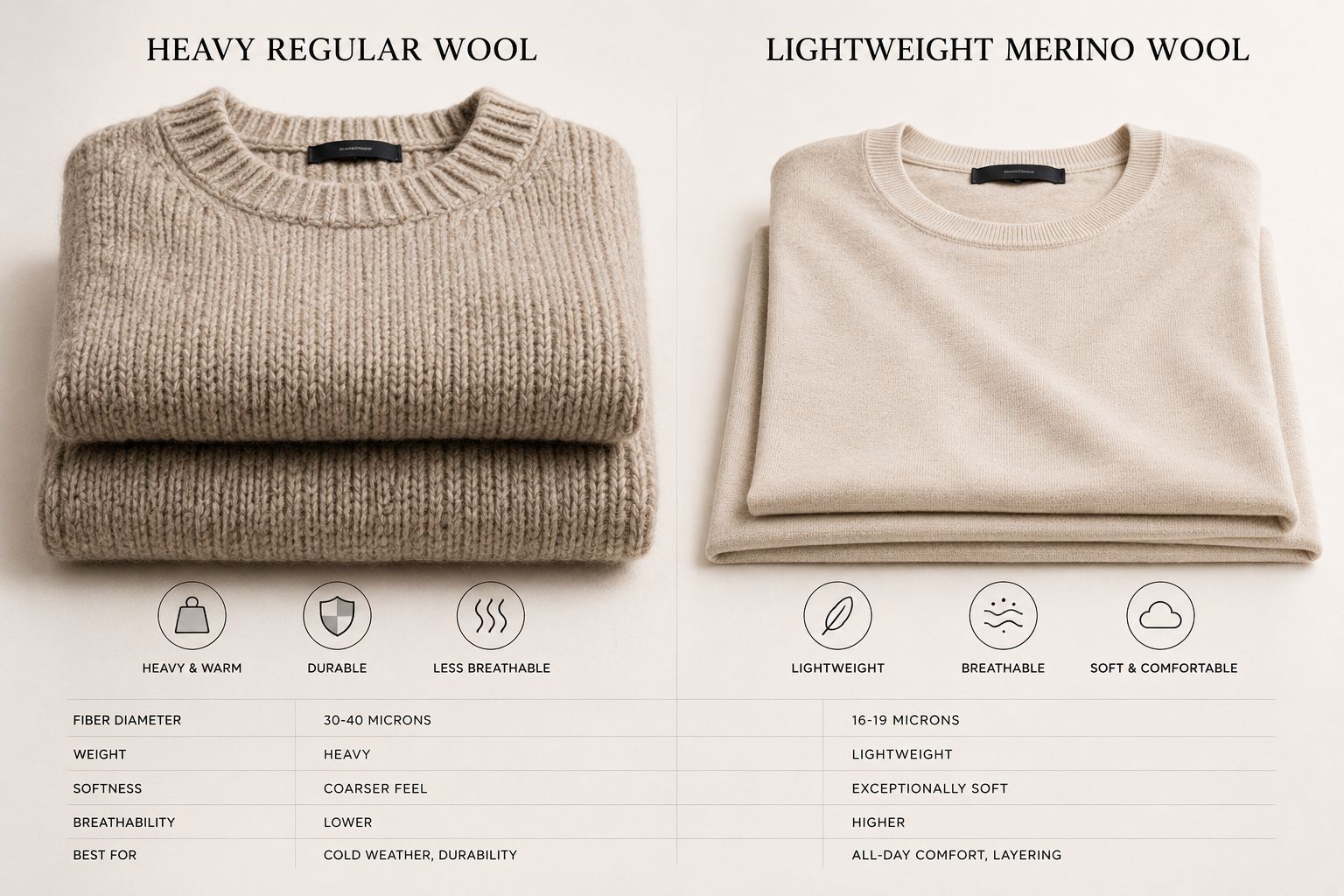
I keep this same question here because I hear it in two different ways. Some people ask why merino wool feels better. Other people ask whether merino wool is always the better choice. My answer is more careful. Merino wool is better for some sweaters, but it is not better for every sweater. A fine merino sweater can feel soft, light, and modern. A regular wool sweater can feel thicker, stronger, and more protective.
For example, I may use merino wool for a fine-gauge crew neck, a premium cardigan, or a lightweight polo sweater. I may choose regular wool for a chunky fisherman sweater, a heavy winter pullover, or a rugged outdoor-inspired style. In those products, the customer may want weight, structure, and long-term wear. Regular wool can support that better than very fine merino in some cases.
Dive Deeper: Warmth is another area where many people oversimplify the answer. They may ask whether merino wool is warmer than regular wool. I do not answer with only the fiber name. I check yarn structure, twist, fabric density, gauge, and garment weight. Merino wool is very good for a high warmth-to-weight feeling. It can give comfort without making the sweater feel heavy. It can also help with moisture management when the wearer moves between warm indoor air and cold outdoor air. Regular wool may feel heavier, but that weight can become useful in thick winter sweaters. A 7G or 5G regular wool sweater with a dense stitch may hold a strong shape and create real cold protection. A 16G fine merino sweater may look refined and feel smooth, but it may not give the same heavy winter feeling. I also look at the end use. If the sweater is for business travel, merino is often the better answer. If the sweater is for a thick winter collection, regular wool or a wool-rich blend may be more suitable. So I do not teach brands to rank wool by luxury only. I teach them to connect the fiber with the product job.
This is important for product development managers. If a brand forces merino into every style, it may miss the best material for heavy and structured knitwear. If a brand uses regular wool for every style, it may lose the comfort needed for close-to-skin premium products. The better approach is to build a yarn map for the collection. Each style should have a clear reason for its wool choice.
Which wool is best for sweaters?

The best wool for sweaters depends on the product. I choose fine merino for high-end business sweaters, light luxury styles, close-to-skin pullovers, and smooth fine-gauge knitwear. I choose regular wool for chunky sweaters, heavy winter layers, outdoor-inspired products, and styles that need structure and durability. I choose blends when I need to balance softness, cost, strength, and care performance.
I also think about pilling and wear. Merino wool is soft because the fibers are fine. Yet fine fibers can move and form pills when they rub against each other. This does not mean merino is poor. It means the garment needs the right yarn engineering and the right structure. I check yarn twist, ply, stitch tension, and finishing. I also use pilling tests when the brand needs a clear performance target.
Dive Deeper: In manufacturing, the final quality of a wool sweater does not come from the fiber name alone. It comes from the full chain of decisions. Merino wool can give a premium hand feel, but it also needs careful control. If the yarn is too soft and loose, the sweater may look beautiful in the sample room but pill quickly after wear. If the stitch tension is not stable, the garment may lose shape. If the linking is poor, the seams may feel bulky or weak. Fully-fashioned construction can help because the panels are shaped during knitting. This can give better tension balance and cleaner shape than some cut-and-sew methods. I also pay attention to Martindale testing when pilling risk is important. The test result helps the brand understand how the fabric may behave under rubbing. Superwash treatment can improve wash stability, but it can also change part of the natural hand feel. So I discuss this trade-off with the brand early. I do not wait until bulk production to solve these issues. I prefer to test swatches, check samples, review wash results, and set the right care label before the order becomes large.
For brands, the best choice starts with positioning. If I am developing a premium office sweater, I may choose fine merino. If I am developing a heavy winter capsule, I may choose regular wool or a wool blend. If I need softness with more structure, I may suggest a merino blend or a wool-cashmere blend. The material must support the customer promise.
I also believe that consumer education is part of product quality. Many customers think high price means no pilling and no shape change. I understand why they expect this, but wool does not work that way. A fine natural fiber still needs proper care. A premium sweater can still pill in high-friction areas if it is worn hard. A soft sweater can still stretch if it is hung when wet. This is why I like clear washing labels, simple product page explanations, and honest performance language.
In my own development work, I try to help brands avoid two mistakes. The first mistake is selling merino wool as if it were perfect and impossible to damage. The second mistake is treating regular wool as cheap or outdated. Both ideas are too simple. Merino wool and regular wool both have value. The real skill is matching the fiber to the right design, gauge, structure, and customer use.
Conclusion
I see merino wool vs regular wool as a product development decision, not a simple winner-and-loser question. Merino wool is usually finer, softer, lighter, and better for close-to-skin comfort. It is a strong choice for fine-gauge sweaters, premium menswear, business knitwear, and light luxury products. Regular wool can be thicker, stronger, and more structured. It is useful for chunky sweaters, outdoor layers, cold-weather styles, and products that need a more durable feel.
If I need to make a clear choice, I start with the sweater’s purpose. I choose fine merino when I need softness, comfort, and refined appearance. I choose regular wool when I need body, warmth, and long-term structure. I choose blends when the product needs a balance of performance, price, and hand feel. Then I support the choice with yarn testing, fully-fashioned development, pilling checks, wash review, and clear care guidance. This is the manufacturer’s perspective. A better sweater does not come from a famous fiber name alone. It comes from choosing the right wool for the right product.