Traveling with your favorite sweaters is a nightmare. They get squashed in your luggage and come out looking wrinkled, stretched, and shapeless. We’ll show you how to pack them right so they arrive looking as good as you do.
The best way to fold sweaters for travel is to protect their structure. Lay the sweater face down, fold the arms inward to make a rectangle, then fold the body in half or thirds. For lightweight knits, rolling is often a better choice to avoid creases altogether.
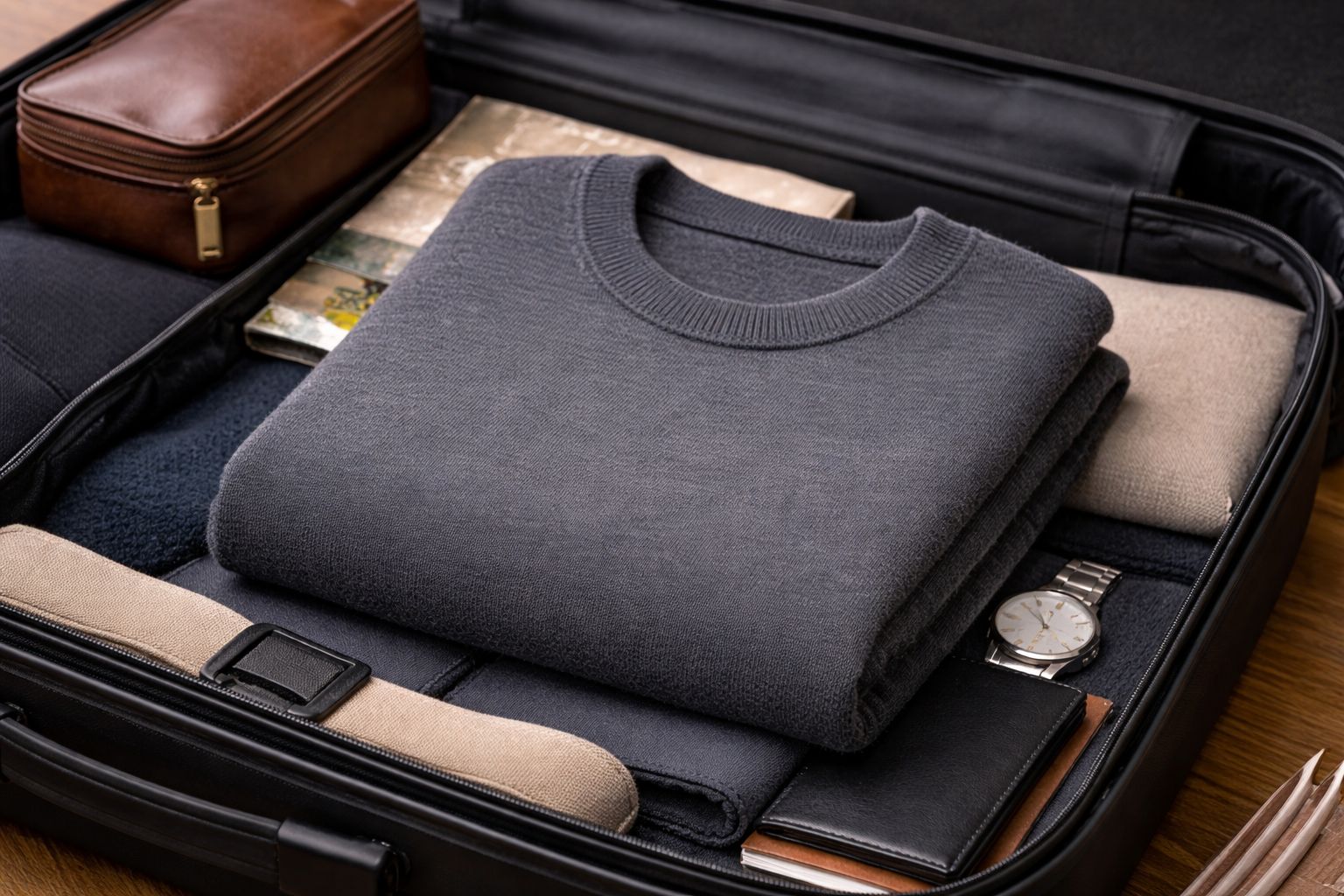
You now have the basic method. But this technique isn't a one-size-fits-all solution. Different sweaters, especially those with different weights and textures, need different care. The real secret is understanding why knits get misshapen in the first place. This knowledge is what separates an amateur from a pro. Knowing this will change how you pack forever. Let’s look at the details so you can keep your knitwear looking perfect, no matter where you go.
How to fold sweaters for a trip?
You’re packing for a trip and worried about your knitwear. Stuffing sweaters into a suitcase is a recipe for disaster. It can ruin their shape and leave ugly, stubborn creases. But there's a simple folding technique that protects the garment's integrity.
Lay the sweater face down on a flat surface. Fold each arm inward so they cross over the back, forming a clean rectangle. Then, fold the sweater body from the bottom hem up, either in half or in thirds. This method avoids creasing the center and protects the shoulders.
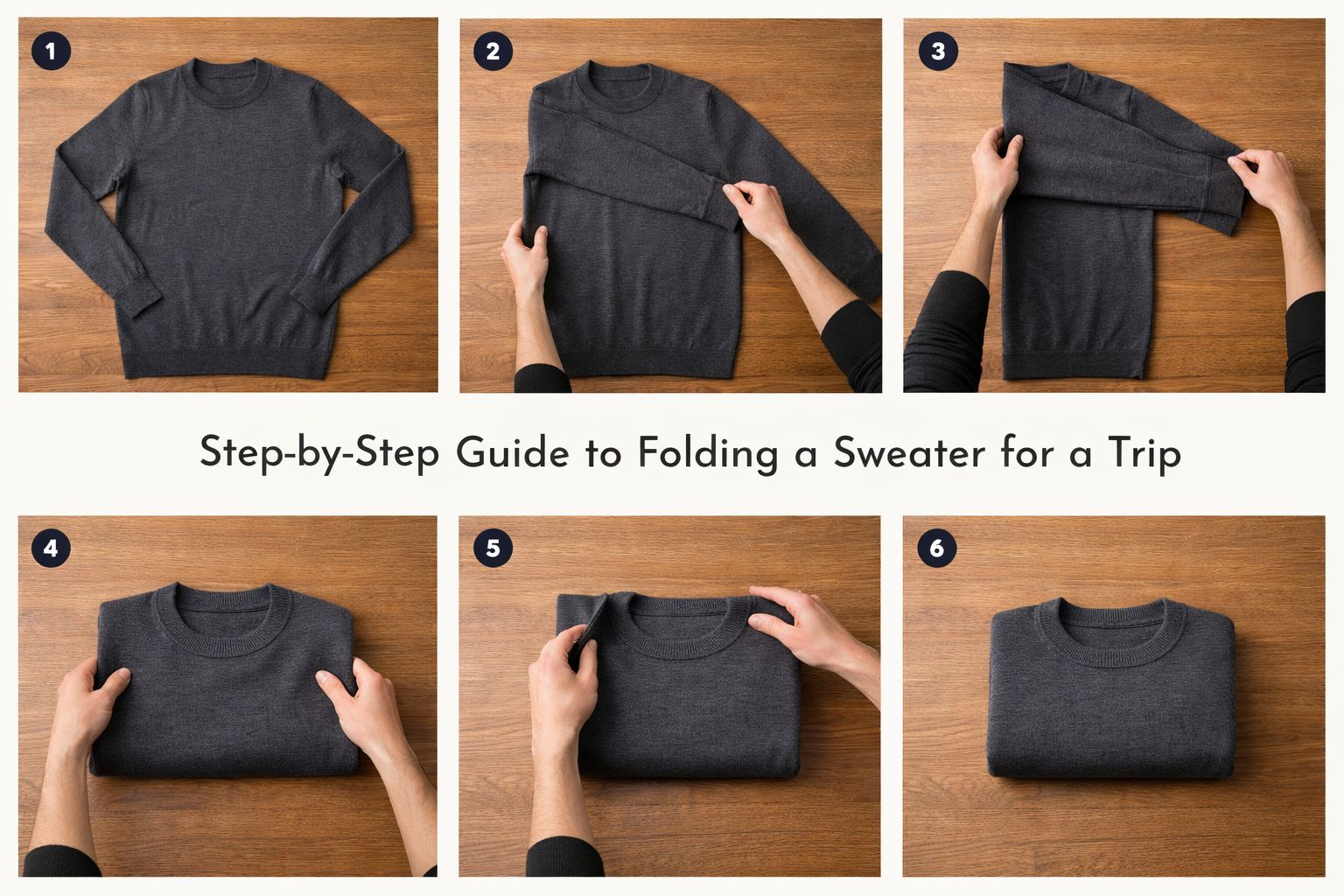
This method works because it's designed around the very nature of knit fabric. In my 13 years in this industry, the biggest misunderstanding I see is people treating knitwear like any other fabric. It's fundamentally different. A woven shirt is made from a grid of threads crossing over and under each other. When you fold it, the threads lock into a sharp line. A sweater is different. It's made from a single continuous yarn looped together. Think of it as a series of tiny, interconnected springs. This structure gives sweaters their wonderful stretch and comfort. But under pressure in a suitcase, those loops can shift, pull, and get distorted, leading to wrinkles and stretching. The core principle of folding a sweater is not to flatten it, but to disperse stress and protect its three-dimensional structure. By folding the arms in and then folding the body, you create a stable, padded block that supports itself. You're not creating any sharp fold lines down the most visible parts of the garment.
| Fabric Type | Structure & Behavior | Best Packing Method |
|---|---|---|
| Knitwear | Made of interlocking loops that can shift and stretch under pressure. Prone to distortion, not sharp creases. | Folding or Rolling (depending on weight) to distribute stress. |
| Woven | Made of a tight grid of threads. Holds its shape but forms sharp, lasting creases when folded. | Folding along seams to manage predictable creases. |
Using packing cubes can take this a step further. Once your sweater is properly folded, placing it in a packing cube protects it from the weight and movement of other items in your luggage. The cube acts like a protective shell, ensuring the sweater stays in its folded shape and the loops aren't being pulled in different directions.
How to fold sweaters so they don't crease?
You arrive at your hotel, open your suitcase, and pull out your sweater. It’s a mess of wrinkles and strange fold lines. Now you're scrambling for an iron or a steamer, hoping you can fix it before your dinner reservation.
To prevent creases, rolling is your best friend, especially for fine-gauge sweaters. Lay the sweater face down, fold the arms in to make a neat rectangle, and then roll it tightly but gently from the bottom hem up to the collar. This technique avoids any hard folds.
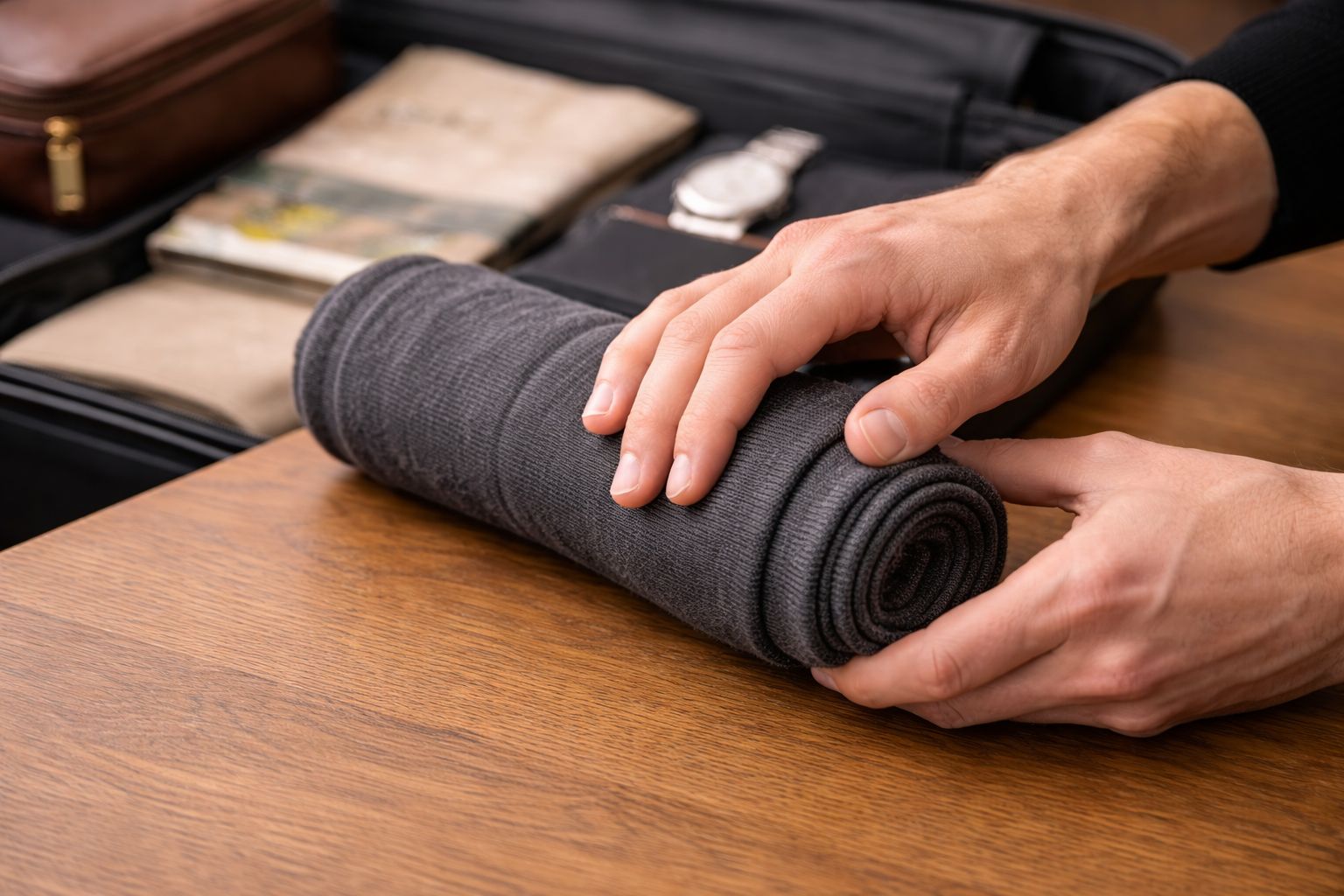
The rolling method is a game-changer for many types of knitwear, but it’s not a universal solution. The decision to fold or roll depends entirely on the sweater's weight and thickness, which in our industry, we call "gauge." Gauge refers to the number of needles per inch on a knitting machine. A higher gauge, like 16G or 14G, means more needles, finer yarn, and a lighter, denser fabric. A lower gauge, like 7G or 5G, uses fewer needles and thicker yarn, resulting in a heavier, chunkier knit. For travel, this distinction is everything.
Fine-gauge sweaters, like a classic merino wool crewneck, are perfect for rolling. Their lightweight structure is resilient and less prone to stretching. Rolling them into a compact cylinder eliminates fold lines and actually saves a bit of space. However, if you try to roll a thick, low-gauge cable-knit sweater, you'll create a bulky, awkward log that takes up too much room. More importantly, the tension from rolling can put uneven stress on the thick yarn and distort the sweater’s pattern and shape. It’s simply too much mass to be rolled effectively.
| Sweater Type | Gauge (Typical) | Best Method | Why? |
|---|---|---|---|
| Fine Merino Wool | 14G, 16G | Roll | Lightweight and resilient. Rolling prevents all creases. |
| Cashmere Blends | 12G, 14G | Roll | Soft and pliable, benefits from the gentle compression of rolling. |
| Mid-Weight Lambswool | 7G, 9G | Fold | Has some bulk. Folding provides more stability than rolling. |
| Chunky Cable Knit | 3G, 5G, 7G | Fold | Too bulky and heavy to roll. Folding protects its structure. |
As manufacturers, we work with brands on this all the time. When a client like Oliver, a product manager for a European label, is developing a "travel capsule," we guide them toward higher-gauge constructions and high-twist yarns. These choices build wrinkle resistance right into the garment from the very beginning.
How to fold thick cardigans for travel?
Packing a thick, heavy cardigan feels impossible. They are bulky, heavy, and have buttons and collars that seem designed to get crushed and misshapen. Just throwing it in the suitcase will leave it looking sad and stretched out.
Fold thick cardigans; never roll them. The key is to protect the placket (the front strip with buttons) and the shoulder structure. Lay it face down, fold the arms in, then fold the sides toward the center. Finally, fold the body in half horizontally.
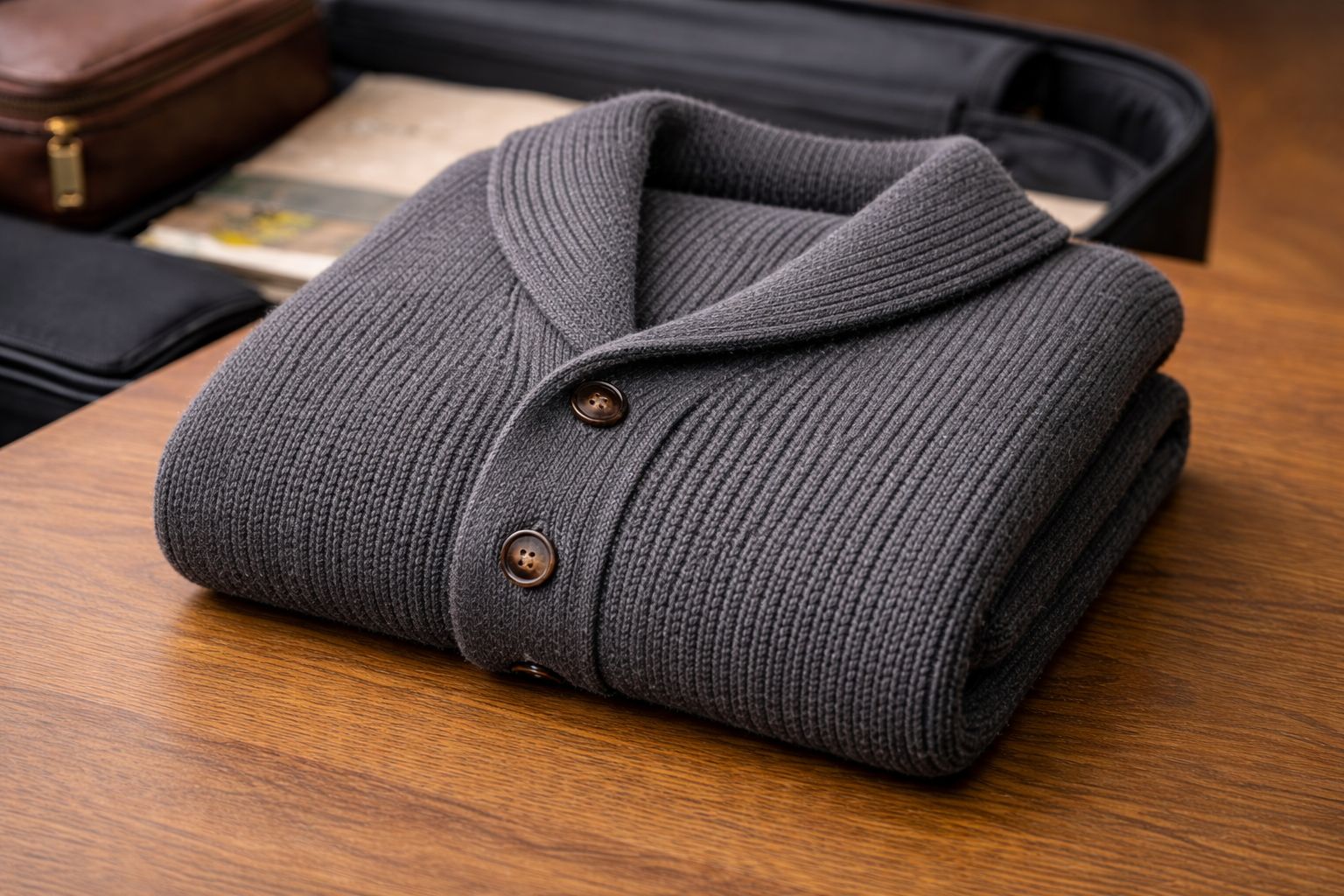
A thick cardigan is one of the most challenging items to pack. Its weight is its biggest enemy. Unlike a pullover, a cardigan has structural elements—the collar, the pockets, and especially the button placket—that can easily be damaged. Rolling a heavy cardigan will put immense stress on the buttonholes and can cause the front to sag and stretch. The weight of the rolled fabric will pull on itself, creating permanent distortion.
Here's the method we use for our chunkiest samples. First, button the cardigan completely. This helps it hold its shape. Lay it face down. Fold the arms straight back over the body. Now, instead of just folding the sweater in half, fold the two outer sides inward so they meet in the middle. This creates a thick, rectangular column with the delicate button placket safely cushioned in the center, not on an edge. Then, make one single fold horizontally. This creates a compact, stable rectangle that can be placed flat in your suitcase.
This is where the quality of manufacturing really shows. We specialize in fully-fashioned knitwear, where each piece of the sweater is knit to its exact shape and then linked together. This means the seams are stronger and the tension is continuous throughout the garment. A fully-fashioned shoulder is much better at resisting the stretching and pulling that happens during travel. However, even the best-made cardigan needs to be packed correctly. The goal is always to support the garment's structure and let it rest peacefully in your luggage, not fight against it. Place it flat on the bottom or in the middle of your suitcase, so its weight doesn't crush more delicate items.
Conclusion
The secret to traveling with sweaters is simple: respect the fabric. By understanding how knits are made, you can fold or roll them to protect their shape and arrive wrinkle-free.