Your favorite sweaters are losing their shape. Shoulder bumps and sagging are ruining your best pieces. We will show you the manufacturer's secret to perfect storage and keeping them looking new.
For long-term storage, always fold your knitwear. Hanging concentrates a sweater's weight on the shoulders, causing the delicate loop structure to stretch and deform over time. Folding distributes the weight evenly, preserving the garment's original shape and fit, especially for heavier wools and cashmeres.
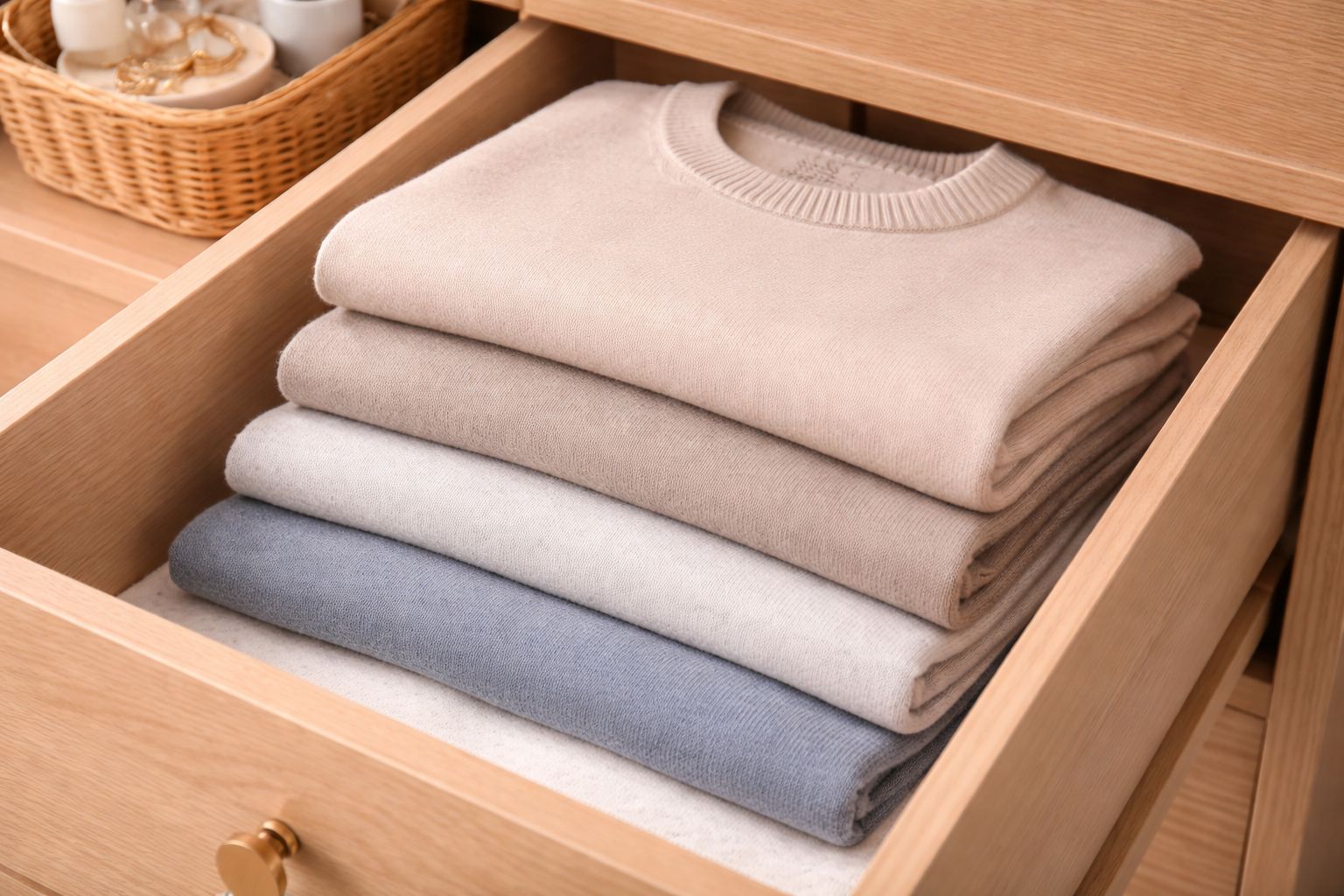
As a manufacturer, I see how garments are constructed from the yarn up. The unique loop structure of knitwear gives it that wonderful stretch and comfort we love. But that same structure is also its biggest weakness when it comes to storage. Unlike woven fabrics that have a rigid grid, a knit is a series of interconnected loops. Gravity is its enemy. Understanding this is the first step to preserving your collection. Let's explore the details that separate a well-maintained wardrobe from a closet full of misshapen garments.
What Is the Proper Way to Hang Sweaters?
You have no drawer space and must hang a sweater. But you fear the dreaded shoulder bumps. How can you hang it for a short time without causing immediate damage?
The proper way to hang a sweater is not by the shoulders. Instead, fold it in half vertically. Drape the folded sweater over the hanger's crossbar, with the arms and body hanging on either side. This method distributes the weight and avoids stretching the shoulders.
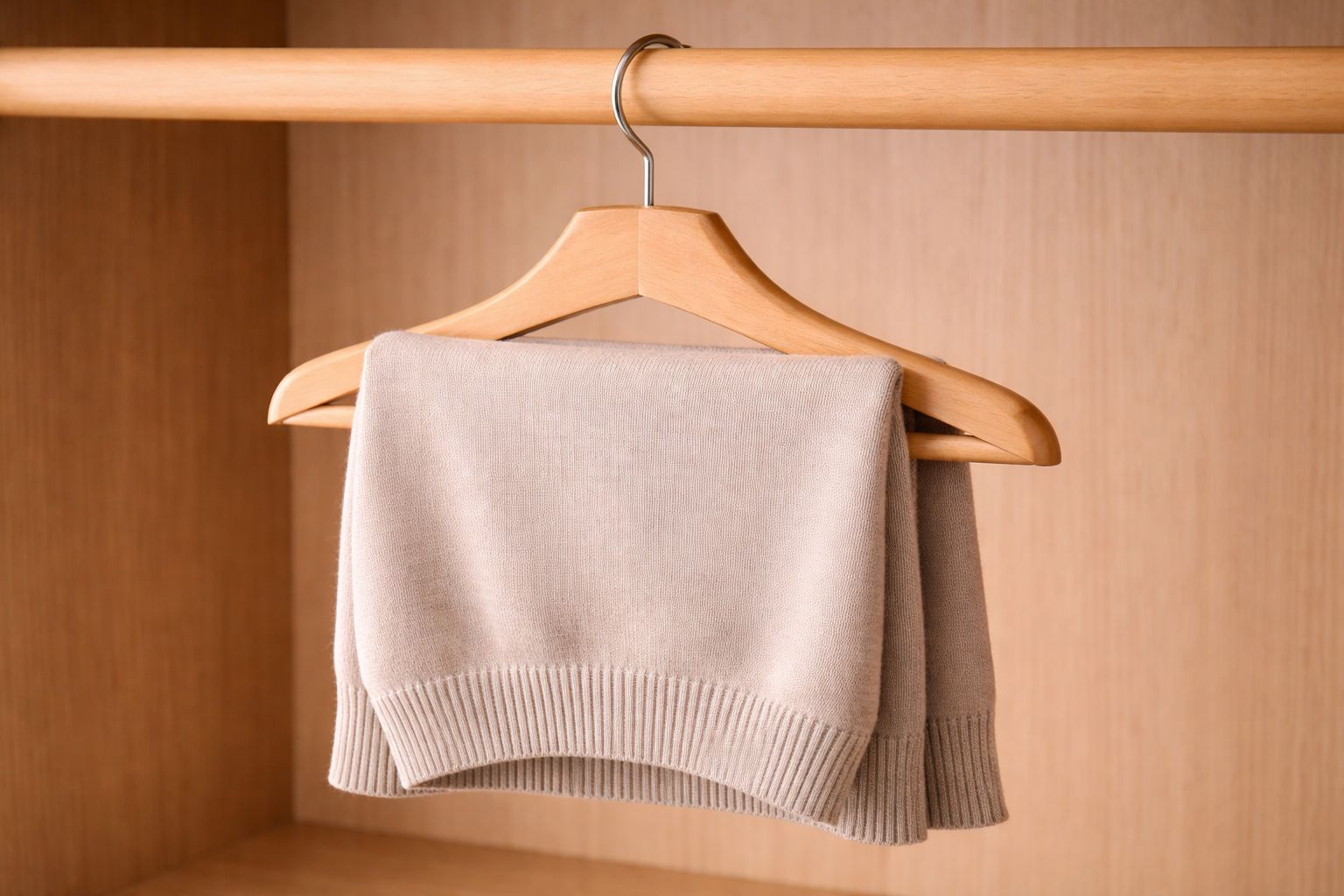
If you absolutely must hang a knit garment, you have to outsmart gravity. Conventional hanging puts all the stress on a very small area—the shoulders. This is where the damage starts. Over days, or even hours with a heavy knit, the yarn begins to stretch. The "draping" method is a much safer alternative for very short-term storage. By folding the sweater over the bar, you spread the weight across a much wider surface. This avoids creating those sharp, focused stress points. For this technique, a thicker, non-slip hanger works best. Thin wire hangers can still create a crease. I always advise our brand partners that even this method is a temporary solution. It's best for lighter, fine-gauge knits that you plan to wear the next day, not for long-term storage.
Do Sweaters Get Ruined by Hanging?
You see sweaters on hangers in every retail store. So why do your own sweaters stretch and get ruined when you hang them at home for long periods?
Yes, long-term hanging can permanently ruin sweaters. Gravity constantly pulls on the knit's loop structure, causing irreversible stretching at the shoulders and neckline. Heavy knits and soft yarns like Merino wool are particularly vulnerable, leading to a misshapen, elongated garment over time.
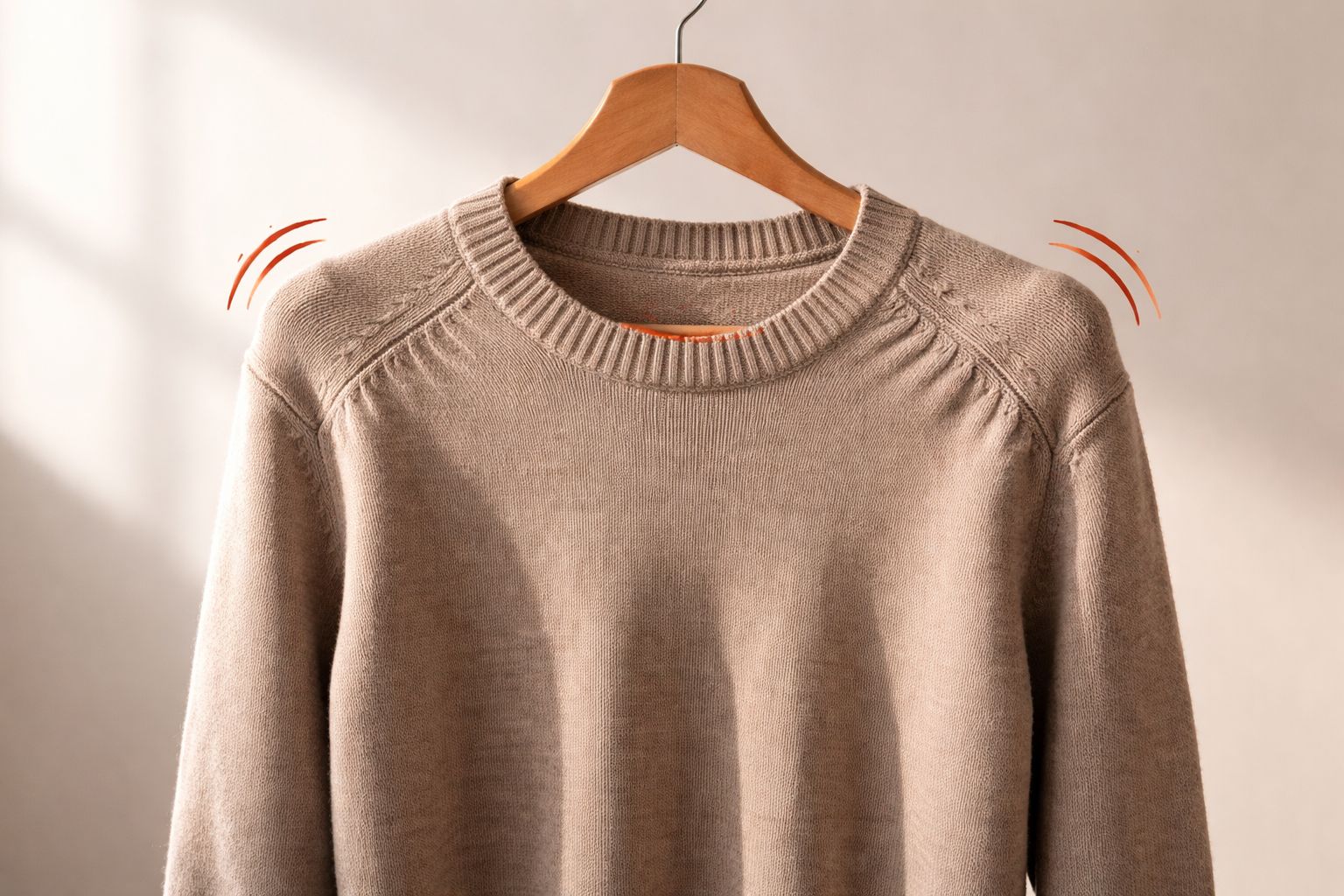
The core reason hanging causes damage lies in the fabric's construction. Knitwear is made of interlocking loops of yarn, which gives it elasticity. Woven fabric has a stable grid of threads. When you hang a knit, its own weight becomes a destructive force. Gravity pulls down on those loops, and they slowly but surely begin to deform. This is why you see shoulder bumps and why the entire sweater can grow in length. The effect is magnified by the knit's weight and gauge. A heavy 7-gauge cable knit sweater will show damage much faster than a lightweight 16-gauge Merino top.
| Knit Type | Hanging Risk | Recommended Storage |
|---|---|---|
| Heavy Gauge (e.g., 7G) | Very High | Must be folded |
| Mid Gauge (e.g., 12G) | High | Fold, short-term hang only |
| Fine Gauge (e.g., 16G) | Moderate | Fold, very short-term hang is okay |
| Cardigans (any gauge) | Very High | Must be folded (placket adds weight) |
This is a conversation I have often with product developers. We design these garments for a perfect fit, and incorrect storage is the fastest way to undo that work.
What Is the Proper Way to Store Sweaters?
After learning the risks, you're looking for the best method. Is there a perfect way to store knitwear that guarantees no stretching and preserves shape season after season?
The only proper way to store sweaters is by folding them. Folding distributes the garment's weight evenly, preventing the stress points that hanging creates. This method protects the knit structure, maintains the original fit, and is the industry-standard technique for long-term storage.
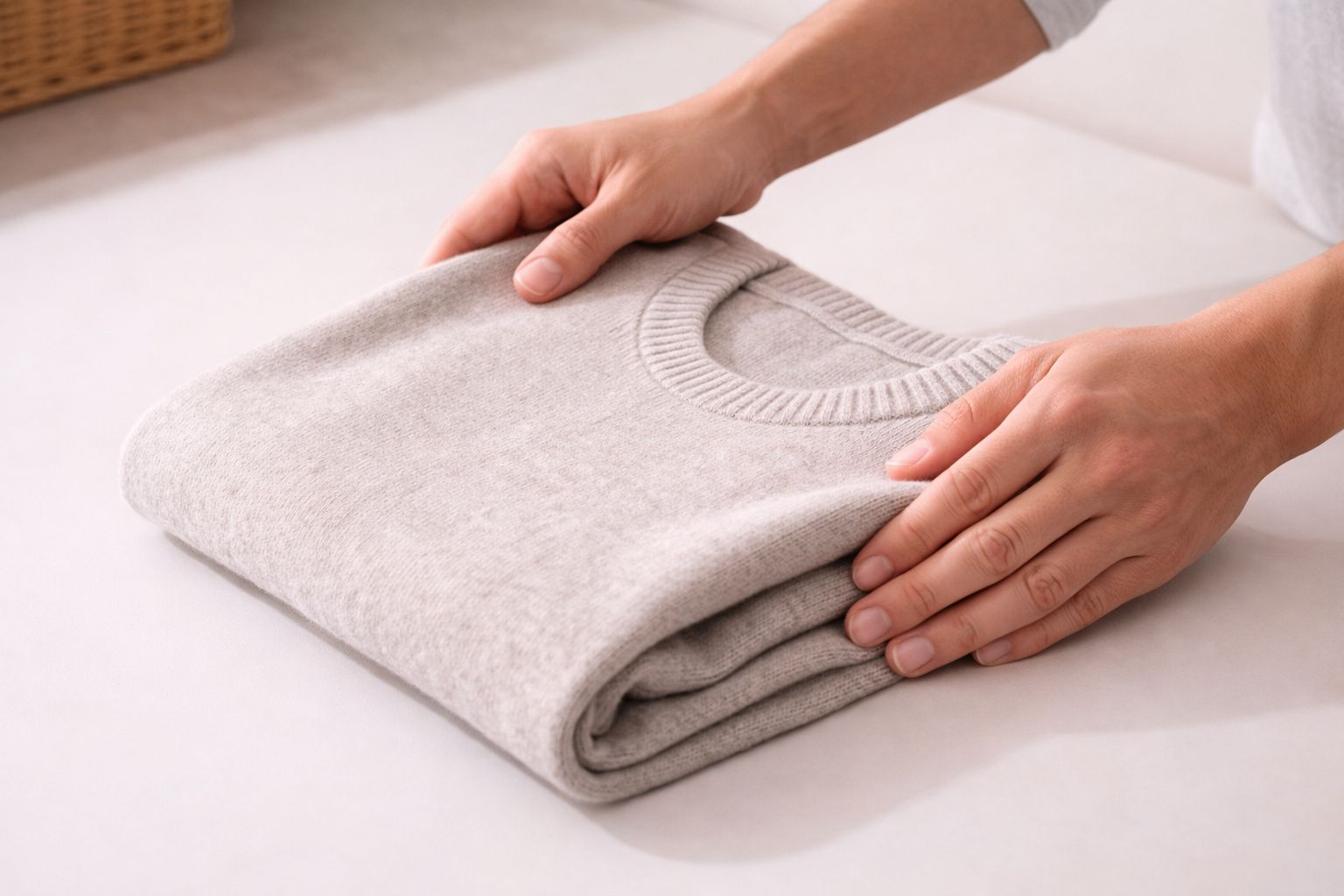
Folding is the definitive answer because it works with the nature of knitwear, not against it. It eliminates the focused pull of gravity and allows the garment to rest without tension. A simple fold is all it takes: lay the sweater face down, fold the arms in, and then fold the body in half from the bottom up. This minimizes creasing. For brands, we emphasize that customer education is part of the product's lifecycle. We recommend including clear storage instructions on care labels or online product pages. This proactive approach reduces returns related to shape loss and enhances the customer's long-term satisfaction. For seasonal storage, always clean your knits first. Then, store them folded in a breathable container, away from direct sunlight. This prevents moisture buildup and protects them from pests.
Conclusion
In short, always choose to fold your knitwear. This simple habit protects the garment's structure from gravity, ensuring your favorite sweaters maintain their shape and last for years.