Confused by all the sustainable fabric claims? Choosing the wrong cotton can hurt your brand's image and your bottom line. Let's clarify what organic cotton really means for knitwear.
Organic cotton is better for the environment because it’s grown without harmful pesticides and GMOs. For a menswear brand, however, its suitability depends on your target market, product performance needs, and budget, as it has limitations in cost and color vibrancy.

Choosing the right material goes beyond a simple label. It's about understanding the entire story behind the yarn—from the farm to the finished sweater. In my 13+ years in knitwear, I've seen brands succeed and fail based on this one decision. Let's dig deeper into the details to help you make the right choice for your brand.
What is organic cotton?
The term "organic" gets thrown around a lot, making it easy to get lost. Using it incorrectly can mislead customers and damage your brand’s credibility. Let's define exactly what it means.
Organic cotton is grown without synthetic pesticides, fertilizers, or genetically modified (GMO) seeds. It relies on natural processes to maintain soil health. For a finished garment to be truly organic, its entire supply chain must meet strict third-party standards like GOTS (Global Organic Textile Standard).

At its core, organic cotton is defined by its farming method. Unlike conventional cotton, which often relies on heavy chemical inputs, organic farming promotes biodiversity and ecological balance. This fundamental difference is what we call the product's "DNA." In our manufacturing experience at HD Merino, this translates to a yarn that is more natural, often with a slightly coarser feel and a subtle yellowish tint, making it perfect for menswear collections with a rustic, authentic aesthetic. However, it's crucial to distinguish between "100% Cotton" and "100% Organic Cotton." The first simply means no synthetic fibers are blended in, while the second requires rigorous certification. For a brand manager like Oliver, this distinction is key to avoiding misleading claims and building consumer trust.
What are the disadvantages of organic cotton?
You're committed to sustainability, but worried about practical drawbacks. Will quality suffer? Will costs spiral out of control? These concerns can stall even the most eco-conscious product development plans.
The main disadvantages of organic cotton are its higher price, weaker pilling resistance compared to combed cotton, and limited color options. Because it avoids harsh chemical treatments, achieving bright, vibrant colors and consistent colorfastness can be more challenging and require specialized finishing processes.
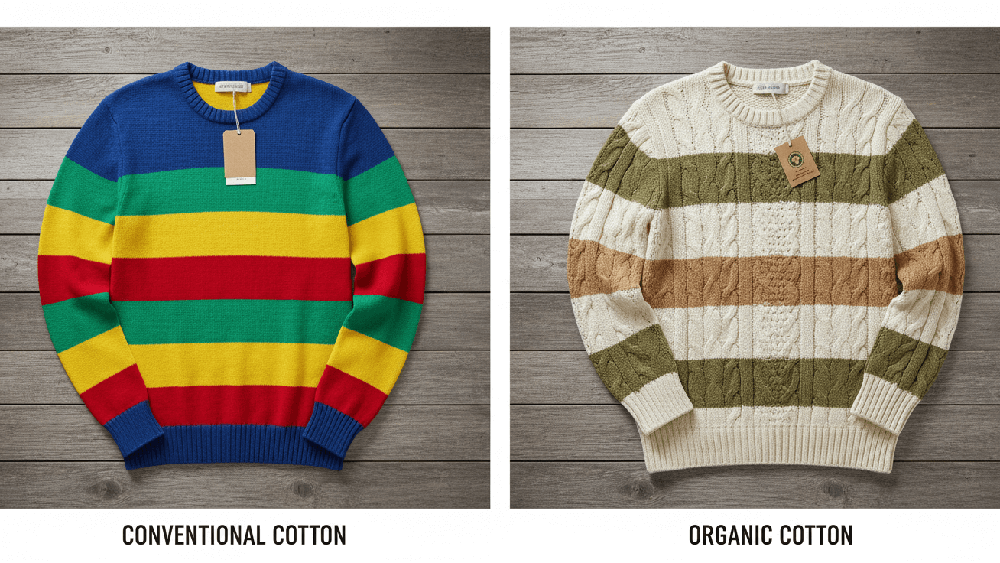
While organic cotton is an excellent choice for sustainability, it’s important for brands to understand its performance limitations. At HD Merino, we are transparent about these trade-offs from the start. For example, during the prototyping stage, we conduct standardized tests to provide clear data on key performance metrics.
| Performance Metric | Conventional Cotton | Organic Cotton |
|---|---|---|
| Pilling Resistance | Generally higher due to chemical finishing. | Can be slightly weaker; requires quality yarn. |
| Color Vibrancy | Excellent; handles intense dyes and bleaching well. | More limited to natural and earth tones; less bright. |
| Colorfastness | High and very consistent. | More dependent on the specific dyes and finishing. |
| Cost | Lower due to higher yield and subsidized farming. | Higher due to certification and lower crop yield. |
By presenting this information clearly, we help product managers like Oliver make an informed decision that balances their brand’s sustainability goals with commercial viability and product quality.
Is Pima cotton organic?
You want the luxurious feel of Pima cotton, but also need to meet sustainability targets. It feels like you have to choose one or the other, complicating your material sourcing decisions.
No, Pima cotton is not automatically organic. Pima is a specific variety of long-staple cotton prized for its softness and durability. It only becomes "organic Pima cotton" if it is grown and certified according to organic farming standards, which is less common and more expensive.
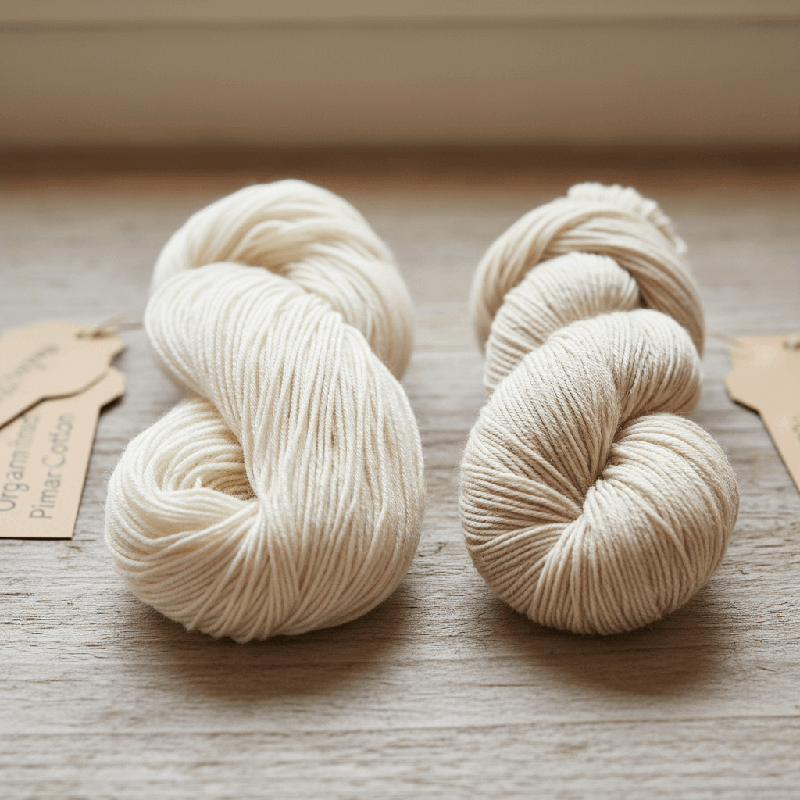
Understanding the difference between a cotton variety and a farming method is crucial for any brand developing premium knitwear. Pima cotton refers to the plant type—an extra-long staple (ELS) fiber that creates exceptionally soft and strong yarns. This makes it ideal for high-end sweaters and business-casual knits where a smooth, lustrous finish is desired. "Organic," on the other hand, describes how that plant was cultivated. While you can find certified "Organic Pima Cotton," it is a niche and costly material. For many menswear brands we work with, the choice depends on their primary goal. If the top priority is a luxurious hand-feel and high performance for a sophisticated collection, conventional Pima or Supima® cotton is often the best choice. If the brand's core message is sustainability, then standard organic cotton is a more direct and certifiable option.
Why is organic cotton better?
Your customers are asking for sustainable products, but you need to justify the switch internally. Without clear benefits, it's hard to get your team to invest in more expensive materials.
Organic cotton is better because it eliminates toxic chemicals from the environment, protecting soil health, water quality, and the well-being of farm workers. For brands, this translates into a transparent, certifiable supply chain that builds consumer trust and aligns with modern values.
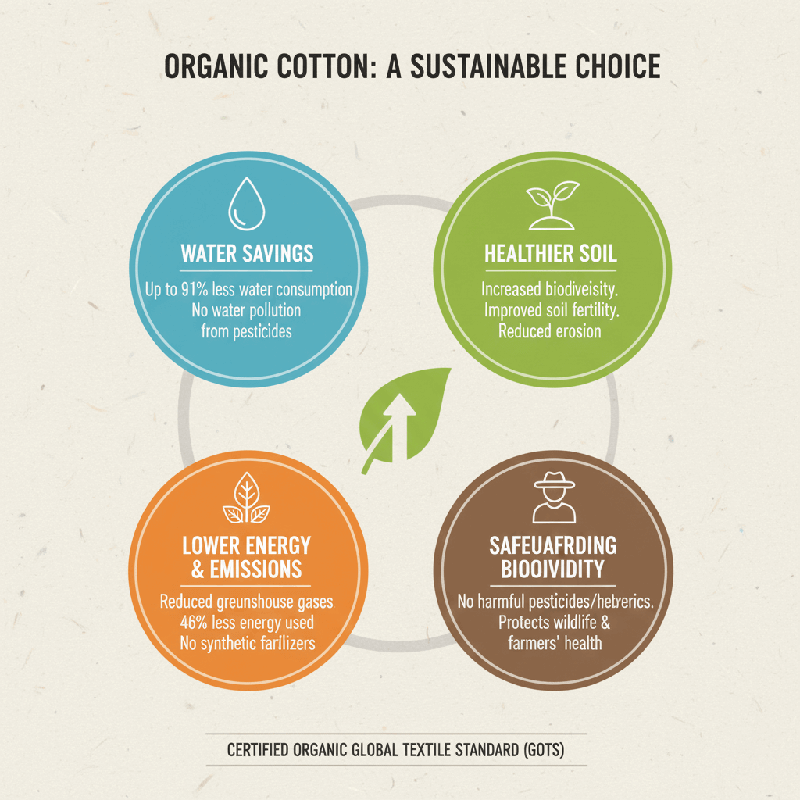
From a manufacturing perspective, the benefits of organic cotton are directly tied to brand positioning. Choosing organic is not just an environmental decision; it's a statement about your brand's values. For lifestyle, wellness, or children's wear brands, the "organic" label is a powerful marketing tool that resonates deeply with their target audience. It signals a commitment to health, transparency, and ethical production. In our factory, we've helped over 80 brands navigate this choice. Those who succeed with organic cotton build their entire brand story around it. They understand that today's consumer, especially someone like Oliver's customer, is looking for more than just a beautiful sweater—they want to know it was made responsibly. This makes the higher cost an investment in brand equity rather than just a raw material expense.
Should you buy organic cotton?
You want to make the right choice, but the decision is complex. Should you go all-in on organic, stick with conventional, or find a middle ground? The pressure to decide is high.
You should buy organic cotton if your brand prioritizes sustainability and your target customer values it enough to pay a premium. For fast-fashion or highly price-sensitive brands, better alternatives like BCI cotton or organic cotton blends may offer a more balanced approach.
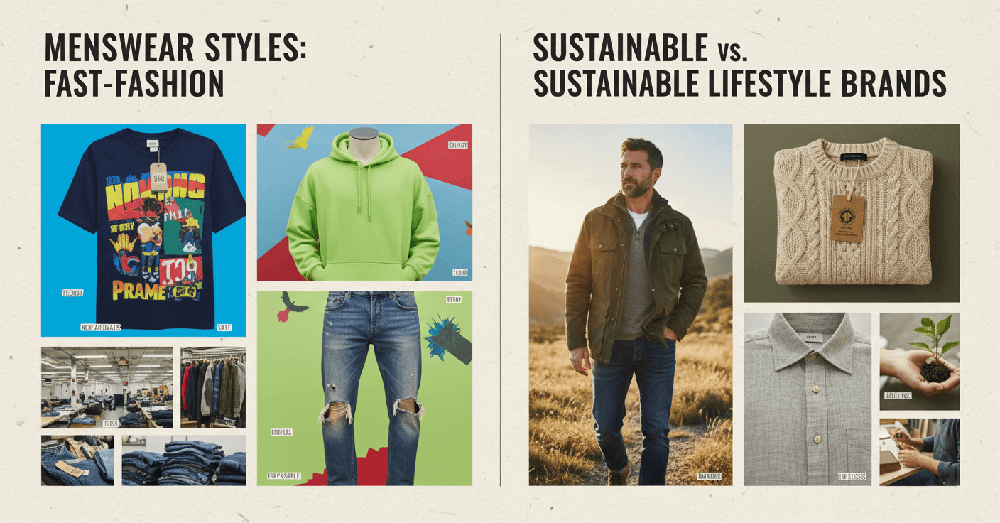
Ultimately, the decision to use organic cotton is a strategic one that should extend from your brand's DNA. At HD Merino, our philosophy is that "yarn selection is an extension of brand positioning." There is no single "best" material for everyone. The right choice depends on the experience you want to create for your customer. For a brand focused on timeless, eco-conscious essentials, 100% organic cotton is a perfect fit. For a brand that needs more flexibility in color and cost, an organic cotton blend can provide a sustainable edge while improving performance and comfort. Our role is to act as a technical collaborator, not just a supplier. We provide our clients with a range of sustainable yarn options, complete with testing data, to help them make the best decision for their budget, style, and production timeline.
Conclusion
In short, organic cotton offers significant environmental benefits. However, its higher cost and performance limits mean it isn't the right choice for every brand. A strategic material choice is key.