Choosing a "washable" yarn that fails after the first wash can lead to customer complaints and damage your brand's reputation. It's a costly mistake in both money and trust.
The best washable yarn depends on your product's end-use. Key options include Superwash Merino wool for a premium feel, durable synthetic blends for high-frequency use, and plant-based fibers like cotton for breathability. True washability relies on the fiber, treatment process, and knit structure combined.
In my years of manufacturing, I’ve seen countless brands struggle with this. They pick a yarn based on its label, only to find the finished sweater shrinks, pills, or deforms after a single machine cycle. The truth is, "washable" isn't a simple feature; it's an engineered outcome. Understanding what makes a yarn truly machine-friendly is the first step to developing knitwear that your customers will love, wear, and wash without fear.
What Kind of Yarn Is Washable?
You see "washable" on a label, but what does that actually mean for manufacturing? Not all washable yarns are created equal, and choosing the wrong type can compromise your design's integrity and feel.
Washable yarns fall into three main categories: specially treated natural fibers like Superwash wool, durable synthetic blends (e.g., nylon/acrylic), and naturally resilient plant-based fibers like cotton or Tencel. The right choice depends on your desired quality, price point, and performance needs.
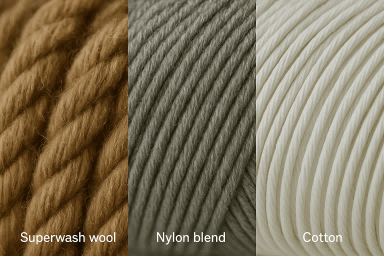
A sweater's ability to withstand washing is a team effort between the yarn material, the processing it undergoes, and the knit structure. Just because a yarn is a certain fiber doesn't guarantee washability. For example, standard Merino wool will felt and shrink in a machine. It's the Superwash treatment—a special process that removes the fiber's outer scales—that makes it machine washable. At HD Merino, we often guide partners through these choices.
| Yarn Category | Best For | Key Characteristics |
|---|---|---|
| Superwash Wool | Premium, next-to-skin garments | Soft hand-feel, rich color, machine washable on cool/gentle cycles. |
| Synthetic Blends | High-frequency wear, uniforms | Excellent shape retention, high durability, often lower cost. |
| Plant-Based Fibers | Breathable basics, summer knits | Good moisture management, hypoallergenic options, easy care. |
The decision isn't just about the fiber. It's about matching the yarn's properties to the wearer's lifestyle and your brand's quality promise.
What Is the Best Washable Yarn?
Every developer wants the "best" yarn, but what does that mean in practice? The "best" for a child's durable play-sweater is completely different from the "best" for a luxury women's cardigan.
The "best" washable yarn is one that meets the specific performance needs of your target customer. For high-frequency use like childrenswear, a durable Merino/nylon blend is ideal. For lightweight luxury, a 100% Superwash Merino offers softness and easy care without compromising quality.
Defining "best" requires looking at the end-user. I always ask our brand partners to think about their customer's daily life and washing habits.
- For High-Frequency Washing: Think kids' clothes or work uniforms. Here, durability is king. We'd recommend a Merino wool blended with a small percentage of nylon. This blend offers the softness and breathability of wool with the strength and shape retention of a synthetic, making it a workhorse.
- For Understated Luxury: For a professional's commute-friendly V-neck or a women's fine-gauge knit, the priority is softness and a premium feel. Here, a 100% Superwash Merino wool, often in a 14GG or 16GG, is the perfect choice. It provides easy care without sacrificing the luxurious hand-feel customers expect.
- For Breathable Basics: For base layers or spring/summer collections, plant-based fibers like organic cotton or Tencel blends are excellent. They are naturally easy to care for and provide comfort in warmer conditions.
The best choice is never a one-size-fits-all answer. It's a strategic decision that balances durability, feel, and cost against your customer's expectations.
How to Know If Yarn Is Truly Washable?
A supplier can claim a yarn is washable, but how can you be sure before committing to bulk production? Relying on marketing claims alone is a recipe for disaster, leading to returns and damaged brand credibility.
Verify a yarn's washability through certified lab test reports, not just sales descriptions. The three critical metrics to check are shrinkage rate (should be under ±5%), deformation resistance, and colorfastness after washing. Always request a wash test on a sample swatch.
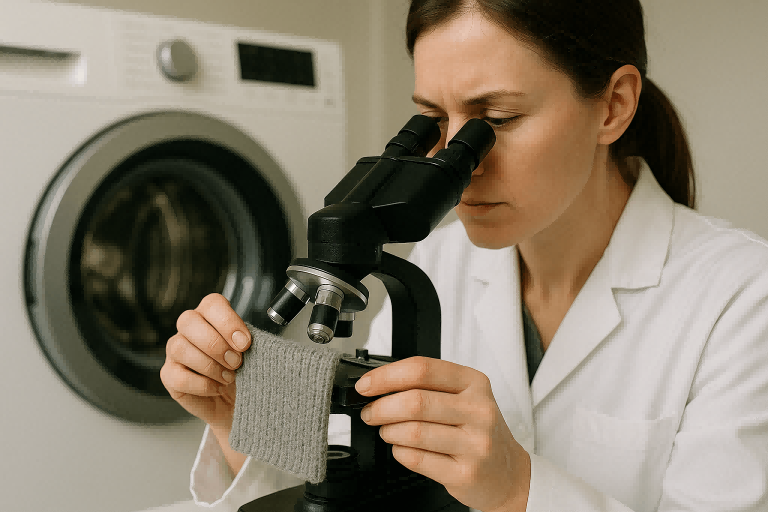
This is where a partnership with a technically proficient manufacturer becomes invaluable. A "washable" claim on a yarn card means nothing without data to back it up. In our development process at HD Merino, we treat every claim with professional skepticism until it's proven. When we recommend a washable yarn, we can provide our partners with concrete evidence. During the sampling stage, we create knitted swatches and subject them to rigorous wash tests. We then provide a formal report that documents:
- Shrinkage Rate: We measure the swatch dimensions before and after washing to confirm it stays within the acceptable industry standard (typically between ±3% to ±5%).
- Pilling Grade: We assess the fabric surface for pilling, providing a grade (e.g., Grade 4/5) to ensure a clean appearance over time.
- Overall Stability: We check for any deformation, curling edges, or loss of elasticity.
This data-driven approach removes the guesswork. It gives you the confidence that the sweater you develop will perform exactly as you—and your customer—expect it to.
Conclusion
True washability is a system, not a label. It requires matching the right yarn, treatment, and knit structure to your customer's needs, all verified by rigorous testing.