Choosing the wrong Merino wool grade creates sweaters that pill, feel rough, or go over budget. This can hurt your collection's quality and your brand's reputation. Let's fix that.
To choose the right Merino wool grade, match the fiber's fineness (micron) to the sweater's purpose. Use finer grades (13.5-16.5µm) for soft, next-to-skin luxury knitwear. Select medium grades (17.5-19.5µm) for durable, cost-effective everyday sweaters where structure and warmth are key.
Making the right choice in wool grade seems simple on the surface. Many product managers believe that "finer is always better." But with over 13 years of manufacturing experience, I can tell you that this approach often leads to production issues and unnecessary costs. The best decision is not about picking the softest fiber, but the smartest one for your design.
Let's dive deeper into what these grades really mean for your knitwear collection, from texture and performance to cost and sustainability.
What are the grades of merino wool?
The world of Merino wool is filled with terms like "Superfine" and "Ultrafine." Without clear definitions, these labels can be confusing and lead to costly mistakes in development.
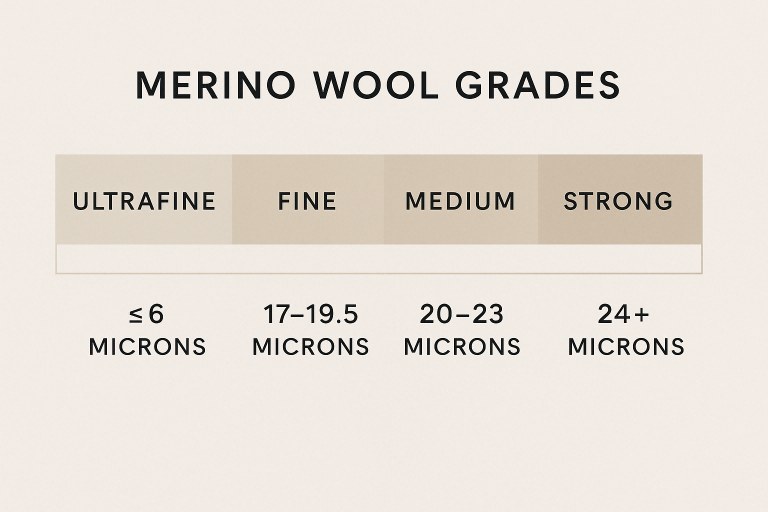
Merino wool grades are defined by the fiber's diameter, measured in microns (μm). The lower the micron number, the finer, softer, and more valuable the wool. Grades range from extremely rare Superfine (under 13.5µm) to Medium Merino (around 19.5µm), suitable for everyday wear.
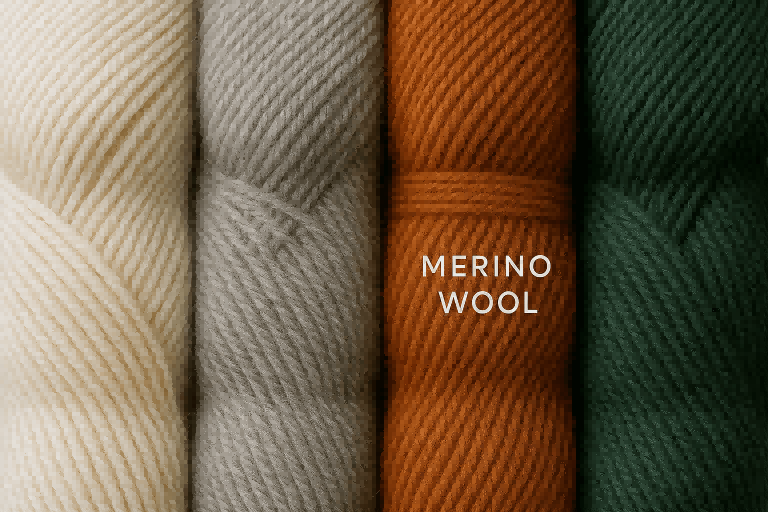
When developing a knitwear line, understanding these classifications is the first step toward getting the final product right. Each grade has a specific purpose and feel that directly impacts the garment's performance, comfort, and price point. For instance, my team has seen brands try to use a medium-grade wool for a design meant to be a lightweight, silky base layer. The result was a sweater that felt too scratchy for customers and failed to meet market expectations. At HD Merino, we use a clear system to help our partners avoid these issues.
Here is a simple table we use to guide brands:
| Wool Grade | Fiber Diameter (Micron) | Best For | Feel & Performance |
|---|---|---|---|
| Superfine Merino | 13.5µm | Luxury base layers, premium knitwear | Extremely soft, like cashmere; rare and delicate |
| Ultrafine Merino | 15.5–16.5µm | High-quality sweaters, urban commuters | Very fine and soft, great for next-to-skin |
| Medium Merino | 17.5–19.5µm | Everyday sweaters, thicker knits | Good balance of softness, warmth, and durability |
| Regular Wool | 20µm+ | Chunky outerwear, accessories | Noticeable wool feel; best for non-skin contact |
What is the best type of merino wool?
Product managers often ask for the "best" wool, thinking the finest grade is the only option. But this mindset can cause production delays, budget issues, and poor garment performance.
The best type of Merino wool is the one that correctly matches your sweater's design, target cost, and end-use. Finer grades are best for lightweight, luxury pieces, while medium grades offer better stability and cost-effectiveness for structured or heavily-textured knits.
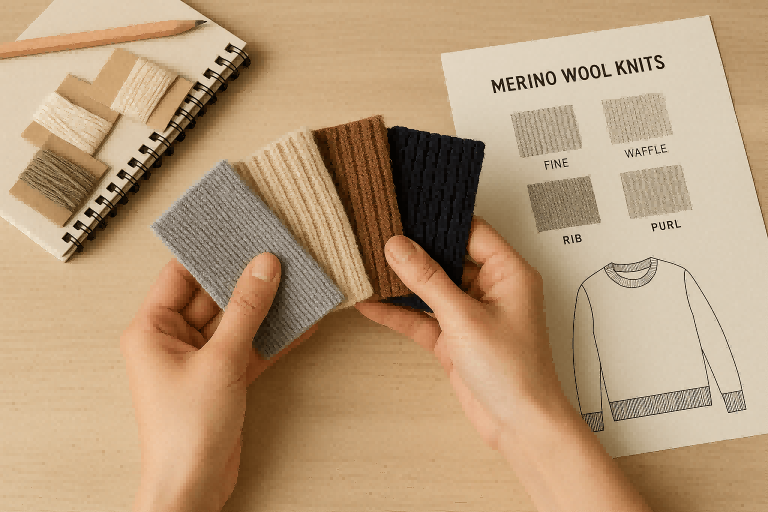
The idea that "finer is always better" is a common myth. In practice, forcing an ultra-fine yarn into a design that doesn't suit it creates more problems than it solves. For example, Superfine wool is extremely rare and difficult to handle. It requires specialized machinery with precise tension control and expert linking techniques to prevent breakage. For a product developer like Oliver, choosing this grade for a heavy-gauge fisherman's rib sweater would be a mistake. It would not only be incredibly expensive but would also lack the structure needed for the stitch to stand out. A medium-grade wool would be far more stable, cost-effective, and better suited for creating that three-dimensional texture.
Performance is another factor. Pilling, shrinkage, and colorfastness are not solely determined by the wool's fineness. These issues are often linked to yarn processing and finishing. I've seen untreated ultrafine wools pill more than a well-finished medium-grade wool. This is why having a manufacturer with in-house testing is so critical. During sampling, we can spot potential issues and recommend solutions, such as using a yarn with longer fibers or adding an anti-pilling finish to ensure the final garment is stable and long-lasting.
What is the RWS standard?
Brands are under increasing pressure to prove their supply chains are ethical. Simply claiming your wool is "good" is no longer enough; customers and retailers demand transparent proof of responsibility.
The Responsible Wool Standard (RWS) is a global certification ensuring that wool comes from farms that prioritize animal welfare, environmental sustainability, and land management. It provides a chain of custody from farm to final product, verifying ethical sourcing at every step.
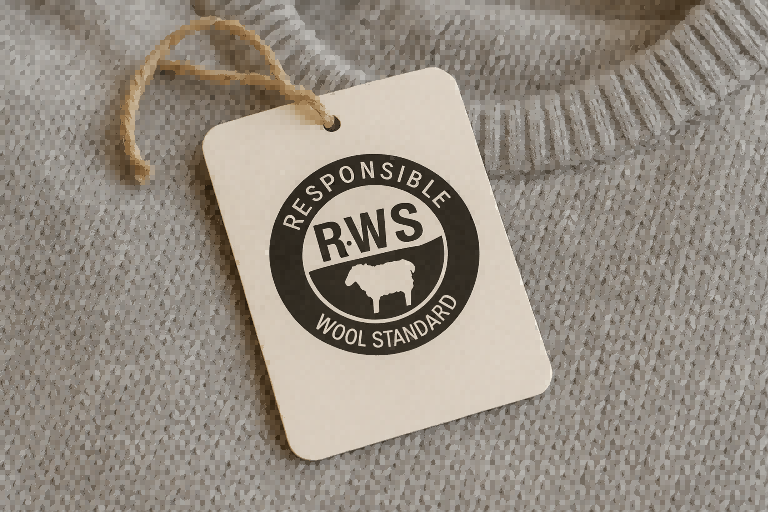
For many of our partners in Europe, the UK, and the United States, RWS certification is no longer optional—it's a requirement, especially for mid-to-high-end collections. Product managers like Oliver know that today's consumers are invested in where their clothing comes from. An RWS tag acts as a powerful signal of a brand's commitment to ethical practices, building trust and justifying a premium price point.
Deciding whether to use RWS-certified wool must happen at the very beginning of the development process. It impacts your choice of yarn supplier and manufacturing partner, as not all factories are equipped to handle RWS's strict chain of custody requirements. At HD Merino, we are certified to produce RWS garments, allowing us to source and manufacture traceable knitwear that meets global standards. Incorporating this from the start helps you build a responsible brand story and align your product with the values of the modern, conscious consumer. It’s a key decision that shapes your entire production journey.
Conclusion
Choosing the right Merino wool grade is a balance of texture, performance, cost, and ethics. Select the grade that fits your design and target customer for the best results.