Choosing the right yarn can feel like a huge gamble. Make the wrong call, and you risk poor performance and unhappy customers. The key is to understand how each fiber works.
The best yarn depends entirely on the garment's purpose. Merino wool is a top performer for warmth, moisture management, and versatility in fall/winter. Cotton is breathable and provides structure, making it great for lightweight, warm-weather sweaters or casual indoor pieces. Your choice should always start with function.

For product developers like Oliver, this choice comes up every season. I've spent over a decade in knitwear manufacturing, and I've seen firsthand how the right yarn can make a collection, while the wrong one can break it. It’s not about picking a "winner" but about making an informed decision that aligns with your brand's promise and your customer's needs. To do that, we need to go beyond the surface and look at how these fibers actually perform in the real world.
Let's break down the questions I hear most often from brands trying to balance design, cost, and quality.
What's better, wool or cotton?
Feeling stuck between wool and cotton for your next collection? The pressure is real, but it's a trick question. We need to stop asking "what's better" and start asking "what's right for the job."
Neither fiber is universally "better." Wool is superior for thermal regulation, moisture management, and odor resistance, making it a true performance fiber. Cotton is breathable, strong, and cost-effective, perfect for structured, casual styles. The best choice is always the one that matches the garment's function.
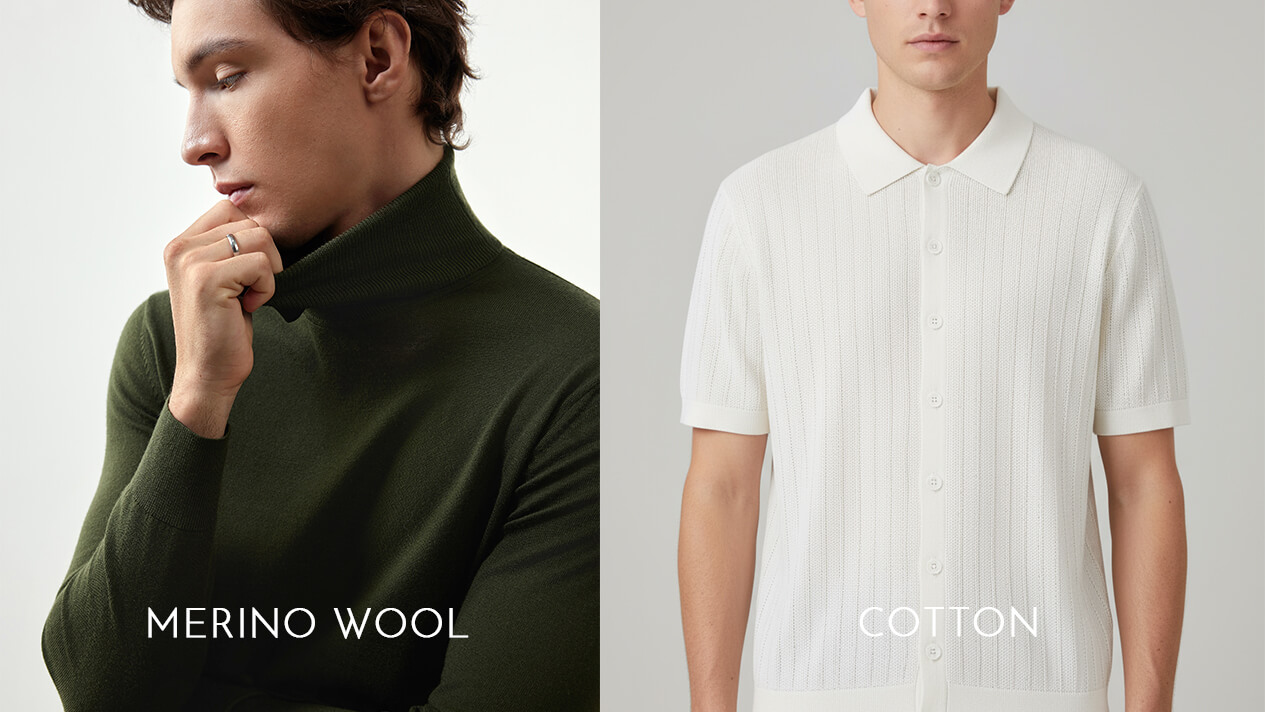
The core difference comes down to their origin. I always tell my clients to think about it simply: one is from a plant, the other from an animal. Cotton is a plant fiber (cellulose). It’s smooth and breathes well, letting air pass through easily. This is great for a hot day. Wool, especially Merino wool, is a protein fiber. It has a natural crimp, creating tiny air pockets. These pockets are what trap body heat, giving it amazing insulation. This fundamental difference in fiber structure dictates everything else. I once worked with a brand that wanted a "cozy" travel hoodie. They chose cotton for cost, but customers complained it felt cold and clammy after a long flight. The next season, we switched to a Merino blend, and the feedback was transformed. The product hadn't changed visually, but its performance had.
Core Property Showdown: Wool vs. Cotton
| Property | Merino Wool | Cotton |
|---|---|---|
| Insulation | Excellent; traps air for warmth even when damp. | Poor; loses all insulation when wet. |
| Moisture Management | Wicks moisture away from the skin; feels dry. | Absorbs moisture; feels wet and clammy. |
| Breathability | Very breathable; releases vapor. | Very breathable; allows airflow. |
| Odor Resistance | Naturally antimicrobial; resists odor buildup. | Prone to bacteria growth and odor when damp. |
| Elasticity | Excellent natural stretch and recovery. | Limited stretch; can get baggy over time. |
| Best Use Case | Fall/winter, activewear, travel, base layers. | Summer, casual wear, structured or chunky knits. |
Is wool healthier than cotton?
Are you worried about which fiber is "healthier" for your customers? With concerns about allergens and skin reactions, this is a valid question. The answer isn't just about the raw material itself.
From a natural performance standpoint, Merino wool is often healthier. It's hypoallergenic, naturally resists bacteria, and pulls moisture away from the skin, creating a dry, comfortable microclimate. Cotton breathes well but can hold dampness against the body, which can sometimes lead to irritation or chilling.

When we talk about health, we are really talking about how a fiber interacts with our skin's environment. This is where Merino wool has a clear advantage.
Moisture and Your Skin
Your skin is always releasing moisture vapor, even when you aren't actively sweating. Merino wool's protein structure actively pulls this vapor away from your skin and releases it into the air. This keeps you feeling dry and comfortable. Cotton, on the other hand, is hydrophilic, meaning it loves water. It absorbs that moisture and just holds onto it. A damp cotton garment against your skin can disrupt its natural balance and, in cold weather, can be dangerous.
The Antibacterial Advantage
Wool’s ability to manage moisture is also why it's naturally antibacterial. Bacteria thrive in damp environments. Because wool keeps the skin surface drier, it's a much less inviting place for odor-causing bacteria to grow. This is why you can wear a Merino sweater for days without it smelling, while a cotton t-shirt needs washing after one wear. This is a huge functional benefit, especially for travel pieces or base layers. However, the final "health" profile also depends on yarn processing. Certifications like RWS (Responsible Wool Standard) and GOTS (Global Organic Textile Standard) for cotton ensure that the production process, from farm to fiber, is also clean and responsible.
Why avoid cotton in winter?
Have you ever put on a cotton sweater on a damp winter day and felt even colder? It’s not your imagination. There's a very good scientific reason why cotton is a poor choice for cold, wet weather.
You should avoid cotton in winter because it acts like a sponge. Once it gets wet from sweat, rain, or snow, it loses all its insulating ability and actively pulls heat from your body. This process, called conductive heat loss, can make you feel cold fast.

In my years of manufacturing, I've seen brands market thick, chunky cotton sweaters as "cozy winter knits." It's a classic mistake. While they feel warm and heavy in a dry store, their real-world performance is poor. Here's the simple breakdown: Dry cotton has air pockets that provide some insulation. But cotton fibers can absorb up to 27 times their weight in water. When they get wet, water fills all those air pockets. Since water conducts heat away from the body about 25 times faster than air, a wet cotton sweater basically becomes a personal cooling system. This is why hikers have a saying: "cotton kills."
Merino wool, in contrast, performs completely differently. It can absorb up to 30% of its own weight in moisture vapor without even feeling damp to the touch. Even when it is eventually saturated, its crimped fibers maintain their structure, keeping those insulating air pockets intact. This is why a wool sweater can keep you warm even when it's damp. For any menswear brand creating functional winter collections, choosing Merino wool or a wool-dominant blend is not just a style choice—it's a commitment to performance and comfort.
Is wool or cotton better for skin?
Does the fear of creating an "itchy" sweater keep you up at night? When it comes to next-to-skin comfort, especially for sensitive skin, the answer isn't as simple as wool vs. cotton.
For sensitive skin, Superfine Merino wool is often the superior choice. Its incredibly fine, flexible fibers bend gently against the skin, eliminating itch. While cotton is soft, its tendency to hold moisture can lead to a clammy, uncomfortable feeling and potential irritation for some wearers.
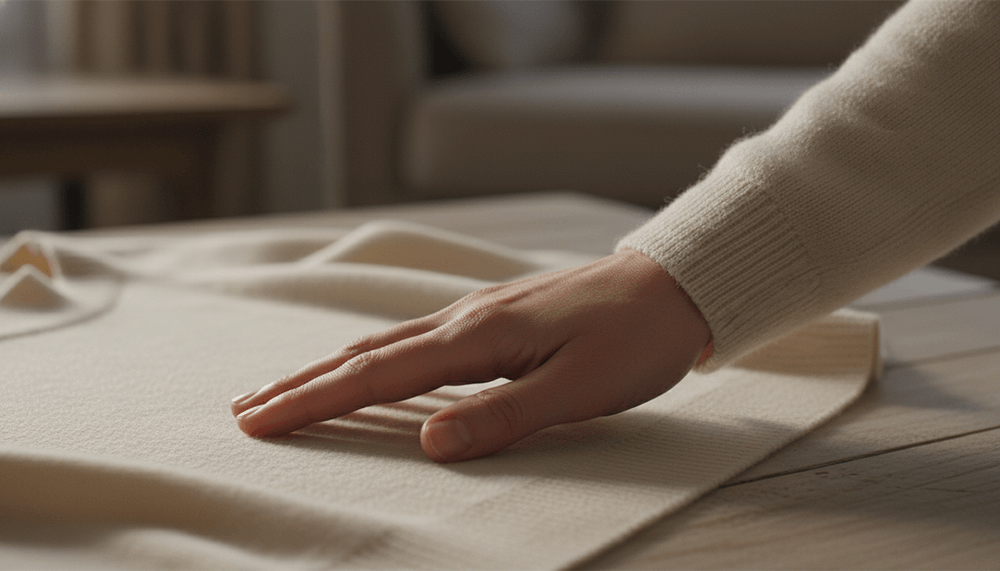
The old idea that "all wool is itchy" is completely outdated. That reputation comes from traditional, coarse wools with thick, rigid fibers that poke the skin. Modern Merino wool is a different story entirely, and it all comes down to a single measurement: the micron.
Understanding Microns and Comfort
A micron is a unit of measurement for the diameter of a wool fiber. The lower the micron number, the finer and softer the wool.
| Micron Range (μm) | Wool Type | Sensation & Best Use |
|---|---|---|
| > 24 μm | Coarse Wool | Itchy. Best for carpets or rugged outerwear. |
| 16.5 - 24 μm | Medium/Fine Wool | Can feel prickly to some. Good for mid-layers. |
| 13.5 - 16.5 μm | Superfine Merino | Silky soft, no itch. Ideal for base layers, luxury sweaters. |
As you can see, Superfine Merino fibers are so thin that they can't stand rigidly. When they touch your skin, they simply bend. This is why they don't itch. We often produce base layers and lightweight sweaters for premium brands using 15.5-micron Merino, and the softness rivals that of cashmere. While cotton is naturally soft, its comfort is compromised when moisture is present. For a garment designed to be worn all day, Merino's ability to stay dry makes it a more comfortable and skin-friendly choice in the long run.
Conclusion
Ultimately, the choice between wool and cotton is about intent. Wool offers superior warmth and performance, while cotton provides breathability and structure. Define the garment's purpose first, and the right yarn will follow.