Ask ten designers what defines quality in knitwear, and you’ll hear ten different answers — softness, density, shape, colour depth, even how quietly the piece drapes when folded.
In truth, knitwear quality is never the result of one factor. It’s the balance between yarn, gauge, and texture — three decisions that turn a simple sweater into something that feels intentional, well-engineered, and timeless.
For brands working with premium knitwear manufacturers, understanding these dimensions is essential. They influence not only how a garment looks on the hanger, but also how it behaves after dozens of wears.
Let’s look at how these subtle technical choices shape the feel and longevity of modern merino knitwear, and why thoughtful control of structure remains one of fashion’s quiet luxuries.
Yarn Choice: The Foundation of Knitwear Quality

Every knitted garment begins with a line of yarn. The quality of that yarn — its fibre content, fineness, twist, and consistency — sets the tone for everything that follows.
Fibre quality defines the hand-feel and performance. Fine merino wool fibres (typically 15.5–19 microns) offer natural elasticity and warmth without weight, while coarser wools can feel stiffer and less resilient. For spring collections, blends with cotton or silk soften the handle and add breathability.
Twist and ply control stability. A higher twist creates a firmer, more compact fabric, while lower twist yields softness but risks pilling. Two-ply yarns are common in premium knitwear because they balance both — strength and smoothness.
Then there’s consistency. Uneven spinning leads to patchy tension, affecting both drape and gauge control. At HD Merino, yarn lots are tested for evenness and colour fastness before knitting begins, ensuring every panel behaves predictably.
The yarn sets the character of the knit. Everything that follows — from gauge to finishing — depends on how faithfully that yarn can express the designer’s intention.
Gauge & Density: Precision in Every Stitch
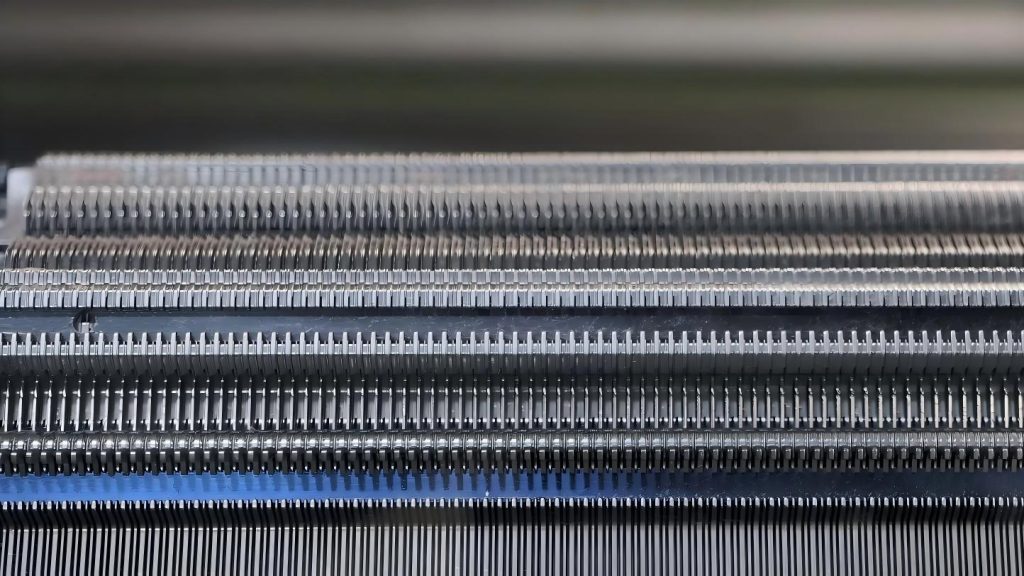
Gauge — the number of needles per inch on a knitting machine — is the architectural skeleton of the fabric. It determines weight, elasticity, and the visual grain of the surface.
A 7-gauge knit feels chunky and tactile; a 14-gauge merino sweater reads refined, almost woven. Each has its place, but the choice communicates something about the brand’s personality.
In the world of men’s luxury knitwear, fine gauges (12–16) often dominate because they achieve that ideal balance between structure and comfort — thin enough for layering, substantial enough to hold shape.
Density matters as much as gauge. Too tight, and the garment feels rigid; too loose, and it loses its line after washing. The secret is to align gauge with yarn count: finer yarns need higher gauges to create smooth, stable fabrics.
A well-constructed piece shows its quality in silence — no ripples along the hem, no twisting at the sleeve. The eye reads “balanced,” even if the wearer can’t explain why.
Texture & Stitch Structure: Where Design Meets Feel
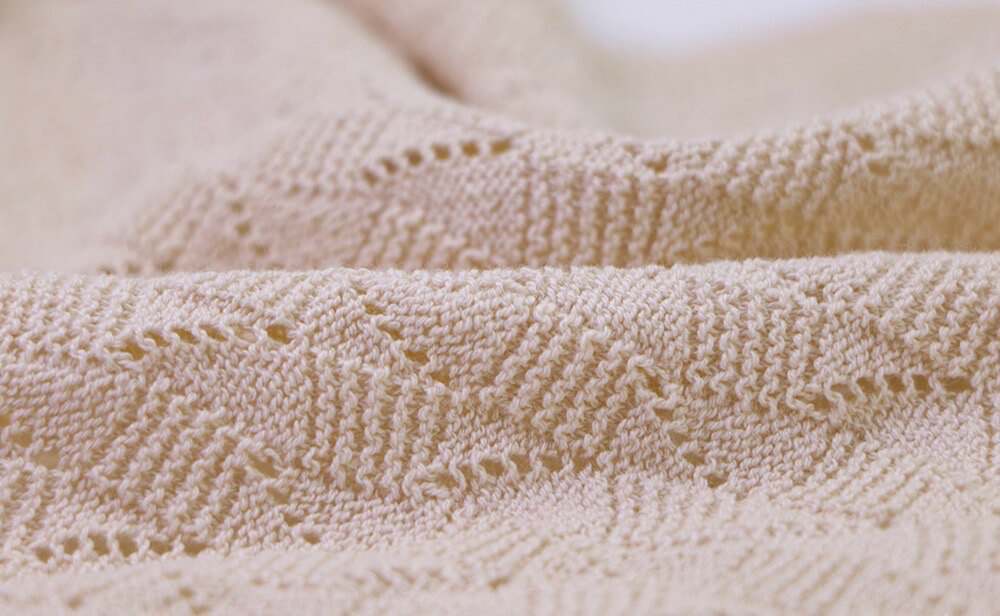
Texture gives knitwear its soul. From Milano ribs to subtle ottoman ridges or lightweight links-links, structure turns technical control into visible artistry.
Different stitches influence not only look but also dimensional stability. A Milano stitch, for instance, creates a compact, structured fabric perfect for jackets or fitted polos. Jersey stitches bring softness and flexibility; ribs add recovery and contour. Combining them demands care — each structure stretches differently, and tension mismatches can cause distortion during finishing.
Texture also controls perception. A flat surface looks formal; a raised stitch catches light and feels tactile. Designers use this to shape brand language: merino knitwear in a clean Milano signals precision, while a brushed fisherman rib evokes warmth and heritage.
Quality is rarely about how complex a stitch looks. It’s about how confidently it performs — how the pattern stays aligned, the edges remain calm, and the surface feels balanced across panels.
Fit, Balance & Longevity: The Real Tests of Quality
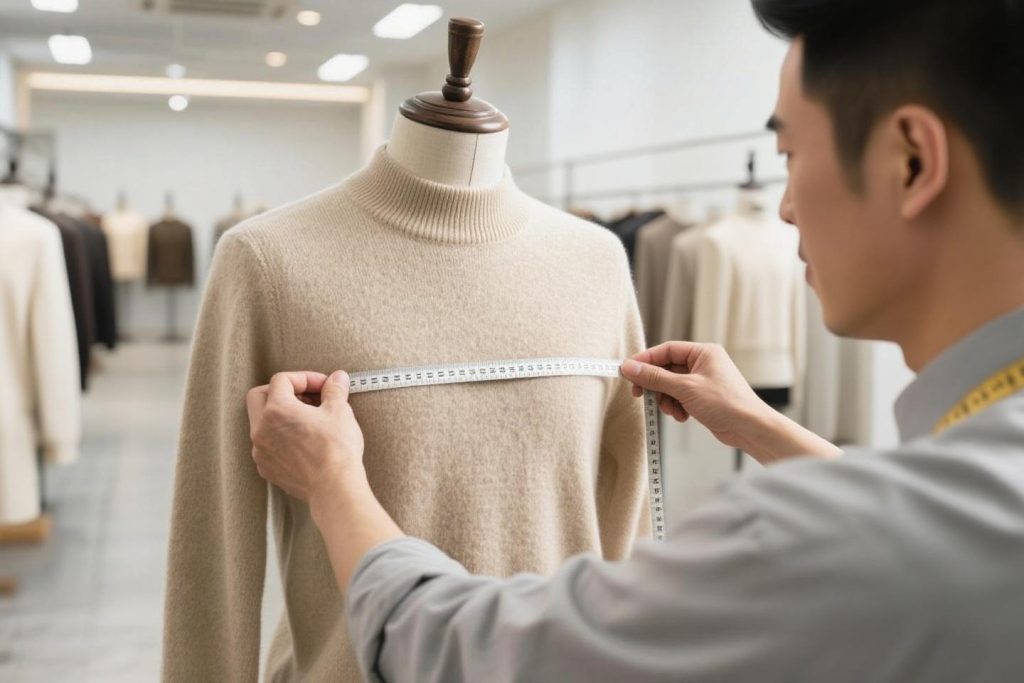
A sweater’s true quality reveals itself after wear. Does it keep its line? Does the collar stay flat? Does the hand-feel remain supple rather than limp?
Each of these answers traces back to yarn selection, gauge control, and stitch structure. When those three align, the garment retains its designed shape — even after repeated washing or stretching.
Fine-gauge merino holds elasticity naturally, but only if the knitting tension and finishing respect its fibre memory. Poorly balanced knits may twist after pressing or shrink unevenly at the shoulder. That’s why consistent pre-washing, tension testing, and blocked finishing are part of every serious manufacturer’s protocol.
Durability isn’t the opposite of softness. In high-end production, the two coexist. You can have a sweater that feels light as air and still keeps its structure a year later. The secret lies in controlled tension and responsible washing — invisible details that define true knitwear quality.
Quality Decisions Brands Should Make
For design teams and product developers, the conversation around knitwear quality should begin early — not at the QC stage.
Here are a few practices we’ve seen improve results for luxury collections:
-
Test multiple gauges early. Don’t decide the stitch before knowing how your yarn behaves under different densities. A half-gauge change can transform both drape and cost.
-
When reviewing samples, check tension as well as colour and texture. Tension consistency shows how the yarn will behave over time — whether it’s likely to relax, twist, or stay balanced after washing.
-
Balance ambition with stability. Complex textures look exciting on screen, but simple, balanced structures often last longer and wear better.
-
Collaborate closely with your manufacturer. A mill that understands pattern programming and finishing can translate creative sketches into viable production.
Quality is a shared language between design and manufacturing. The sooner both sides speak it, the more consistent the result.
Quality as the Invisible Signature
True knitwear quality isn’t always visible in a photo. It’s felt in the hand, recognised in the fit, and confirmed months later when the piece still looks new.
From yarn selection to stitch density and final finishing, every decision contributes to a garment’s integrity. In premium knitwear, nothing is accidental — even restraint becomes a design choice.
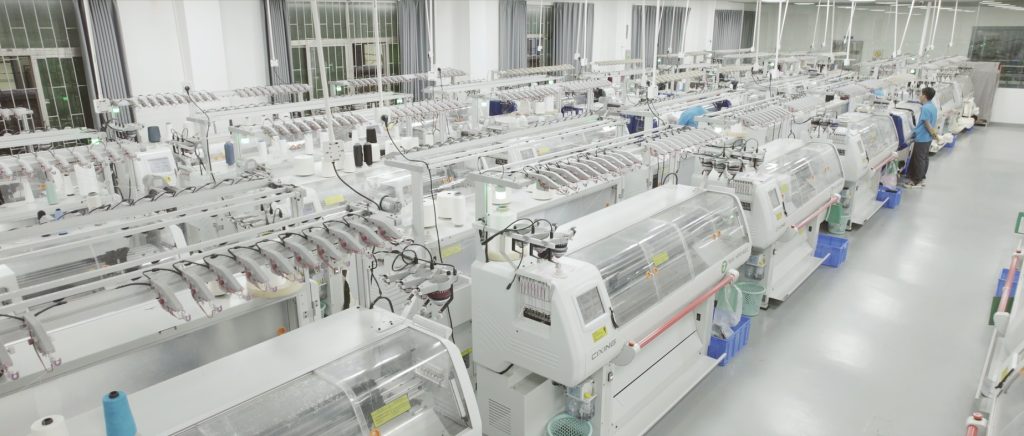
At HD Merino, this philosophy guides every stage of our process. We help brands refine yarn, gauge, and texture combinations to achieve collections that feel precise, natural, and enduring. Because when every detail aligns, quality becomes effortless — not a claim, but a quiet signature woven into every stitch.